
Hwange National Park: Info about Main Camp and simple self-drive safari routes
Self-driving is a wonderful way to experience Hwange National Park, especially if you’re on a budget, or going on a long overland African trip. While the main A8 road leading to Hwange National Park has its fair share of potholes, experienced overland explorers still visit Hwange, Zimbabwe’s largest wildlife reserve – and the rewards are great.
The roads in Hwange National Park park are a mixture of tar and gravel. In this article, I’ll provide some information about Main Camp, and outline two short self-drive routes that we did from the Main Camp during the month of August. I’ll share photos of the water holes, picnic spots, toilets, and wildlife viewing hot spots in this area of the National Park.
Note that it’s recommended that you self-drive around Hwange using a 4×4 vehicle, especially from December to March. There’s a whole article dedicated to Driving in Zimbabwe here.
This article about our self-drive game drives in Hwange National Park is part of our 20-day Cape Town and Zimbabwe holiday, which we self-booked and self-drove. You can read the in-depth article of how we planned the entire 20-day trip here.
Also check out my article detailing the road conditions from Bulawayo to Hwange National Park and the Hwange National Park travel guide.
You can also choose to self-drive to a safari lodge and go on guided game drives provided by the lodge, in their vehicles. This article is about doing the actual game drives independently with your own vehicle (or a rented vehicle).
Why do a self-drive safari in Hwange National Park?
Cons to a self-drive safari
- Vehicle: You won’t be in a specialised open-sided, high-clearance safari vehicle, so visibility might be affected. If there are any break downs, you will have to deal with these yourself.
- Local expertise: You won’t be led or protected by an experienced, trained safari guide. This means that if you’re self driving, you might not see as many animals, such as lion or leopard. You also might not be familiary with animal behaviour and put your safety at risk. If you’re new to safaris, a guide is invaluable in finding the more elusive animals and bringing the joy of tracking to life: a guide’s knowledge, expertise, and personality usually elevates a safari to a higher level. Professional guides also carry licensed weapons and are trained to view the animals in a way that keeps both you and them as safe as possible.
- Some restricted access: Most of the roads in the enormous Hwange National Park are available for everyone, but there are some private concessions belonging to particular safari camps. If you self-drive, you won’t be allowed to drive in the private concessions.
- Type of safari: Certain types of game drives, such as night drives or walking safaris, are only allowed to be done when led by a professional guide. If you’re self-driving, you can only do game drives during daylight hours.
Pros to a self-drive safari
- Budget savings: Hwange’s all-inclusive safari lodges can be pricey, and if you can’t find one that suits your budget or dietary preferences, you might choose to self-cater and self-drive.
- Freedom: You’ll have the independence to do game drives on your own terms if you self drive. Typically, the scheduled morning game drives start early, because that’s when you’re most likely to see wildlife. If you self-drive, you have more choice about what time you’d like to leave in the morning, what time you’d like to eat, and so on. If you have young children, or members of your party who would rather have that exciting wake-up call later on in the day (traded for seeing fewer animals), you might choose to self-drive.
- Privacy: You won’t need to share a vehicle with other guests. Sometimes it’s rewarding to share the safari experience, but if other guests continually ask the guide to stop to examine every ant hill, this could prove frustrating.
- More luggage space: Fly-in safaries often have luggage restrictions. If you use your own vehicle, you can bring a lot more with you.
- The good news is that you will still almost certainly see elephant and many other animals. Hwange has one of the largest elephant populations on earth, and herds roam freely throughout the park and across its unfenced boundaries. Always stop the vehicle a good distance away if an elephant is crossing the road in front of you. Wait until it is well away from the road before proceeding.
Information about Main Camp in Hwange National Park
Most self-drive visitors to Hwange National Park will visit the north east of the Park, which means starting from Main Camp area. The turnoff to Main Camp is 283 km from Bulawayo, and 172 km from Victoria Falls town, off the A8 road at junction known as ‘Cross Mabale’. Follow the signs to ‘Main Camp’.
After the turnoff you’ll pass the Hwange National Park airstrip (optimistically called an airport, but it’s currently for charter flights only), the Painted Dog Conservation centre (info here), and signs to a few private safari lodges. Main Camp is 23 km from the Cross Mabale turnoff, on a comfortable tar road.
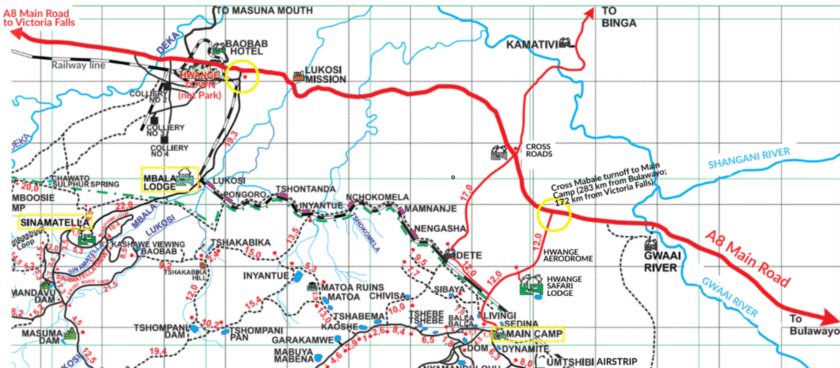
The red line in the above map shows the main road (A8) that links Victoria Falls, Hwange and Bulawayo. You can see the Cross Mabale turnoff circled in yellow, centre right. A full-sized, A4 printable Hwange map can be found here.
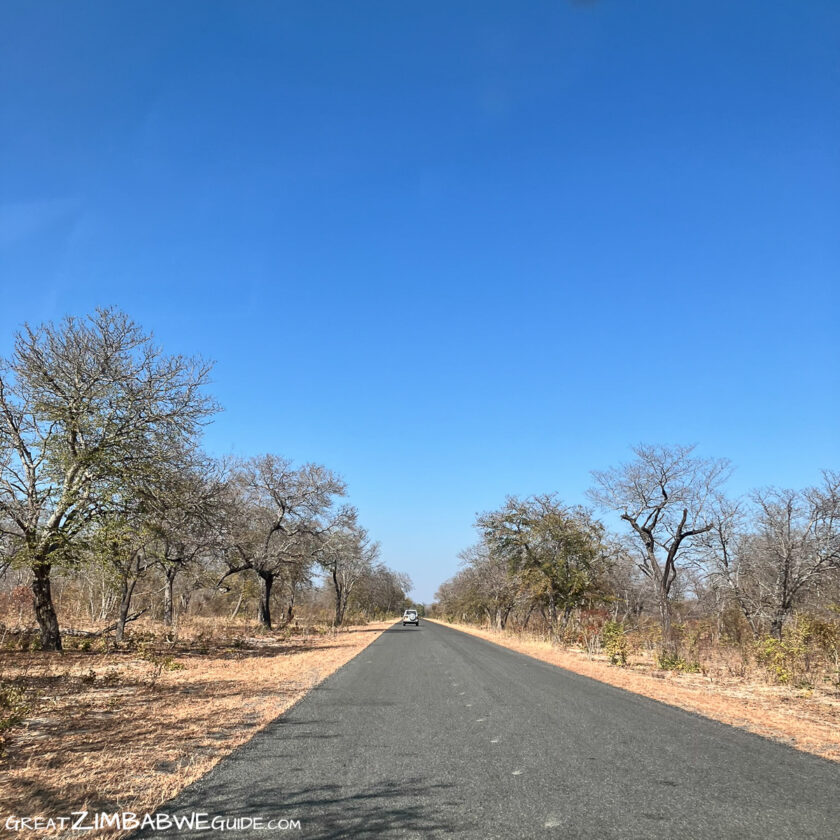
A new gate was being constructed at Hwange’s Main Camp entrance when we were there (August 2024). I didn’t take any photos of the build, but it will be interesting to see what this looks like when it’s finished – whether it will blend into the natural environment, or stick out like a white elephant.
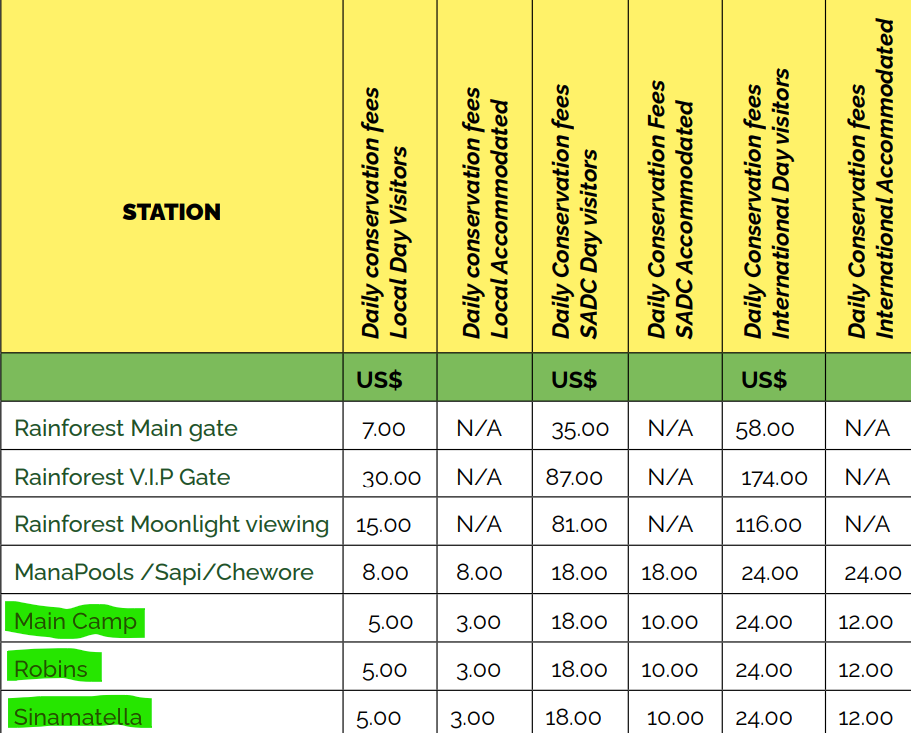
The name ‘Main Camp’ is misleading, because it’s not just a camp site. Main Camp is the central visitor centre for Hwange National Park, with a cafe, information area, accommodation and reception. All visitors to the park need to pay daily entry fees, and self-drive visitors usually pay these fees here at Main Camp. Prices can be found on the ZimParks website here (see the ‘download’ icon). Here’s a snapshot of the fees at the time of publication in 2026 (highlighted in green). The pricing structure is explained in the Hwange travel guide.
We had been staying in a private safari lodge located just outside of the National Park, in the Sikumi Forest area, so we did the short drive from there into the park each day for our self-drive game viewing.
There’s a reception office and a restaurant at Main Camp – I paid US$1.50 for a Coke, but sadly they had no ice, so it wasn’t as refreshing as hoped.
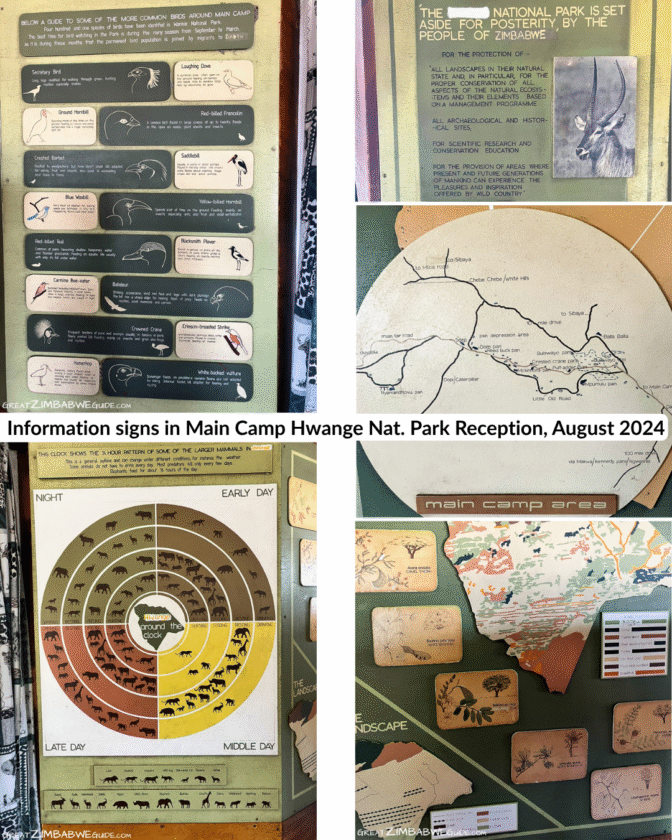
It’s worth spending some time looking at the display information at the Main Camp Reception. Yes, it’s dated, but much of the information is still relevant. Hwange’s pre-Independence name was Wankie, and this has either been painted over, or just left on some of the signs. Either there’s either no budget or desire to make new signs, but I liked them for their historical interest.
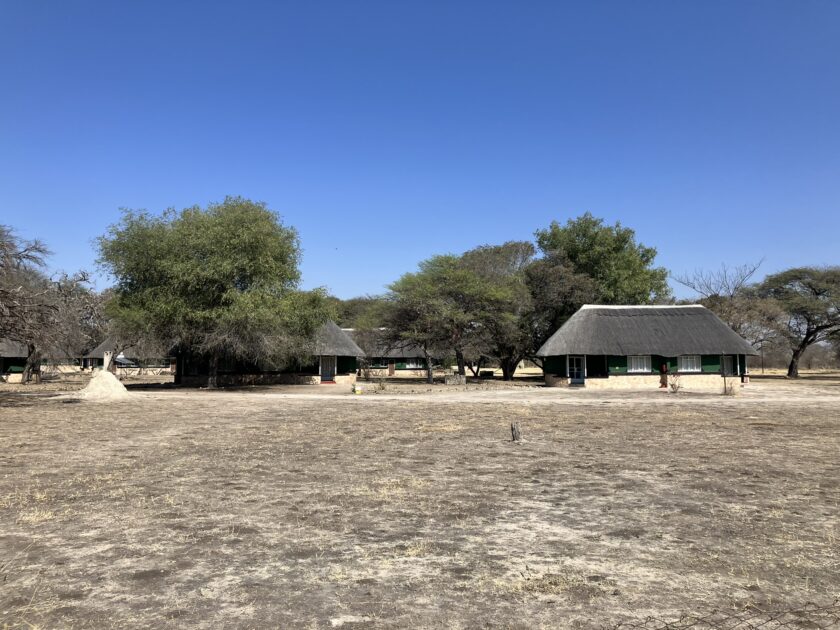
There are lodges, camp sites and toilets at Main Camp in Hwange. Accommodation is booked via the Government ZimParks website.
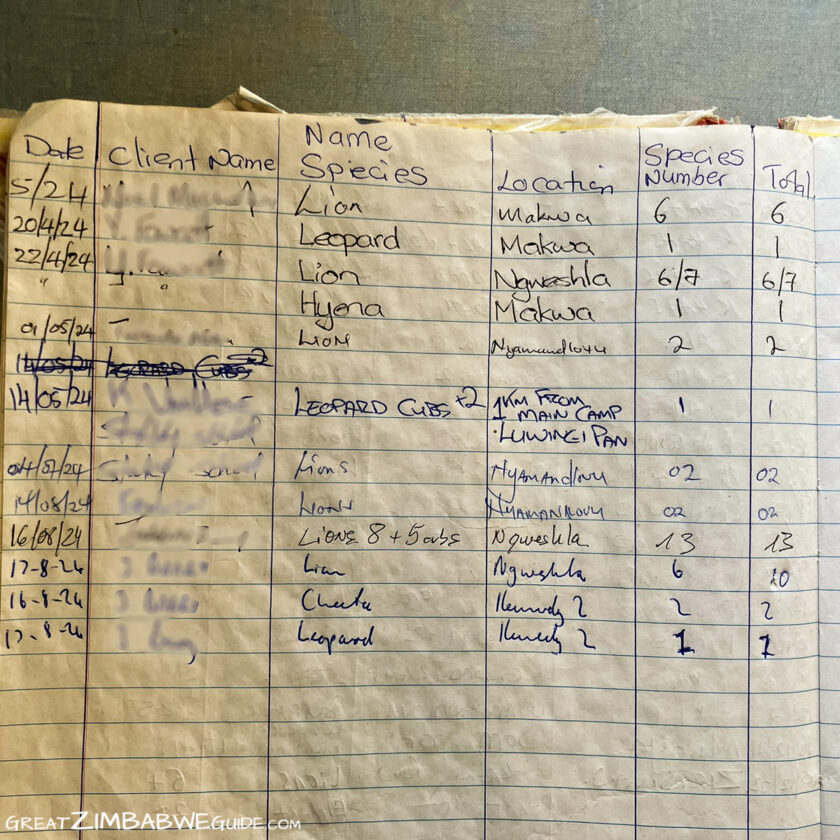
After paying the fees at the Main Camp reception, you can continue with your self-drive safari drive. I relish the guest book at reception – fellow travellers record wildlife sightings by writing the species and location in the book. As you can see, we were eager to visit Makwa, Ngweshla, Nyamandlovhu and Kennedy 2 when we had a peek.
Top tip: If you’re keen to see a particular animal, ask the Main Camp Reception whether they have any suggestions. They’ll often have local expertise, as well as chatter from other recent guests.
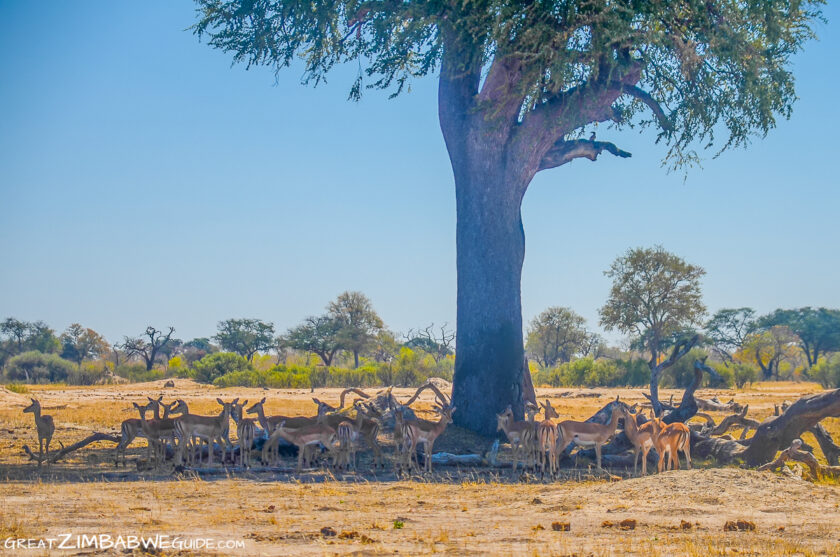
A herd of relaxed impala were grazing next to the cars parked at Main Camp Reception – almost in touching distance. What a welcome! This photo is from another group of impala further in the park.
Hwange self-drive safari route from Main Camp: #1
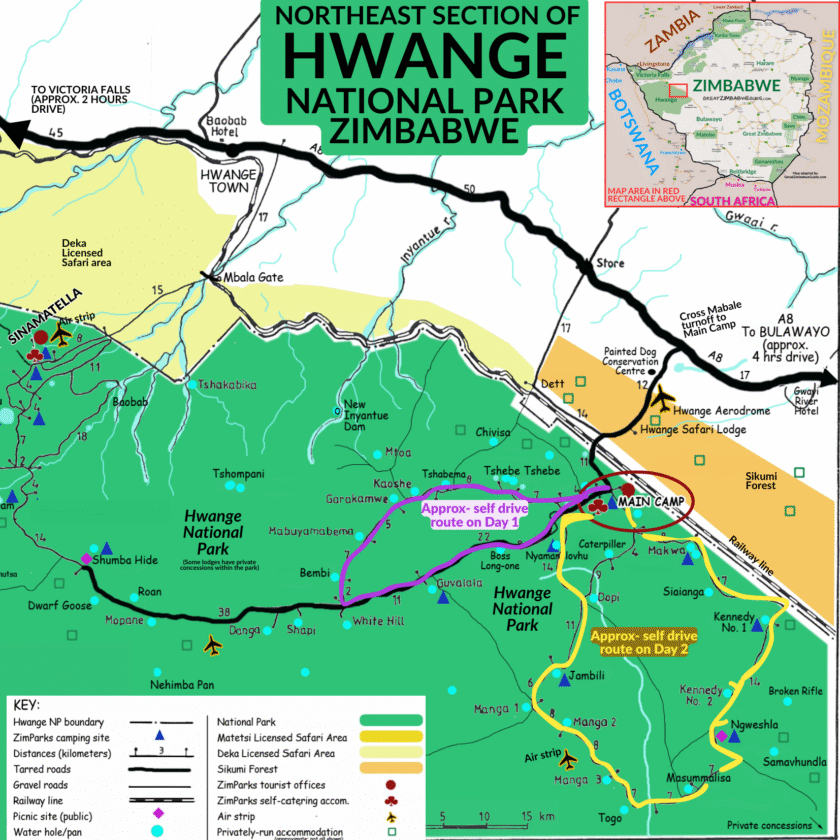
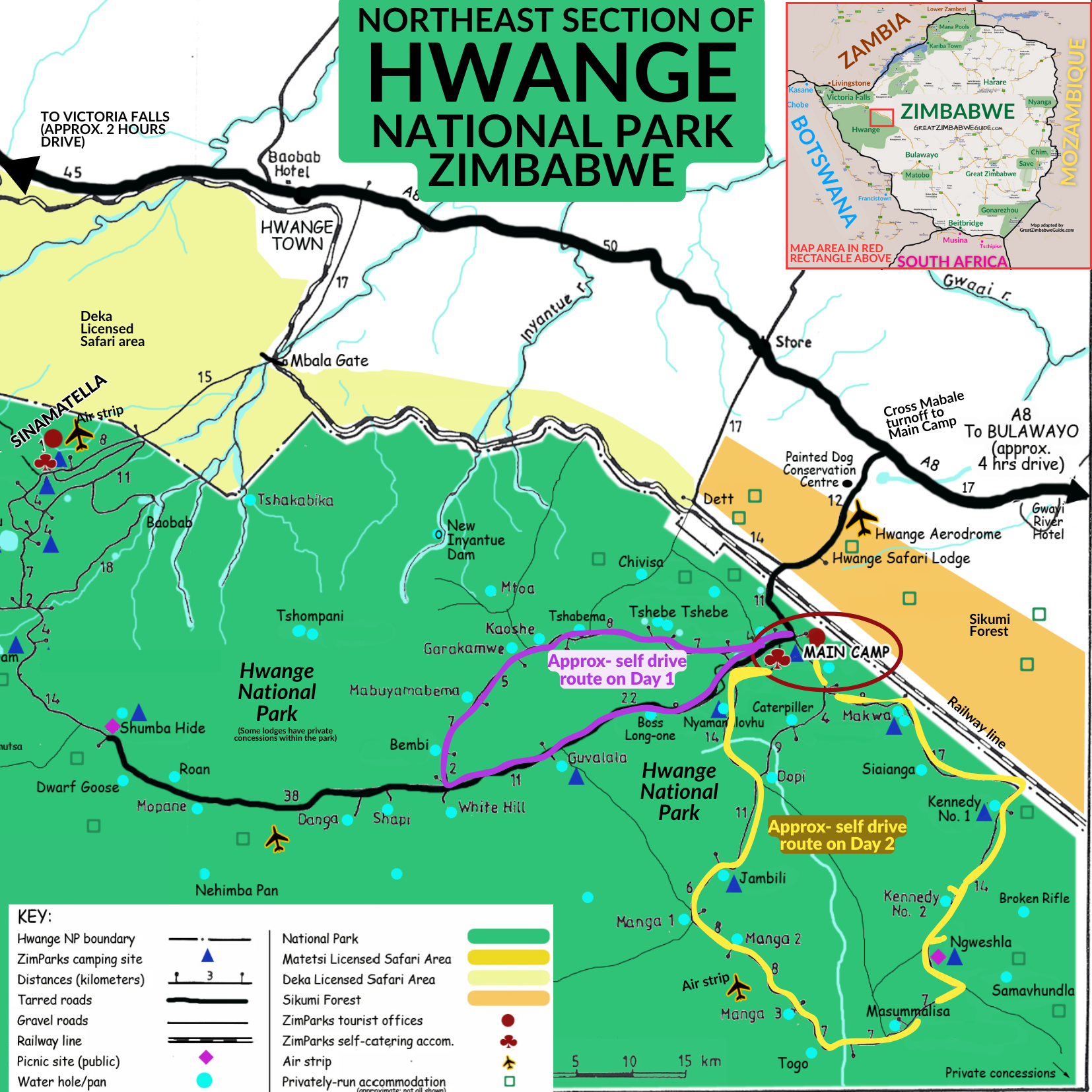
On the first day, we headed east from Main Camp, on Ndlovu Drive. This is a 180-kilometer loop named after the elephants that call this area home. The route included driving past Tshebe Tshebe, Kaoshe, Mabuya Mabena Bembi/Bembesi, White Hill, Guvalala, and Boss Long One water holes. It’s in purple in the map below.
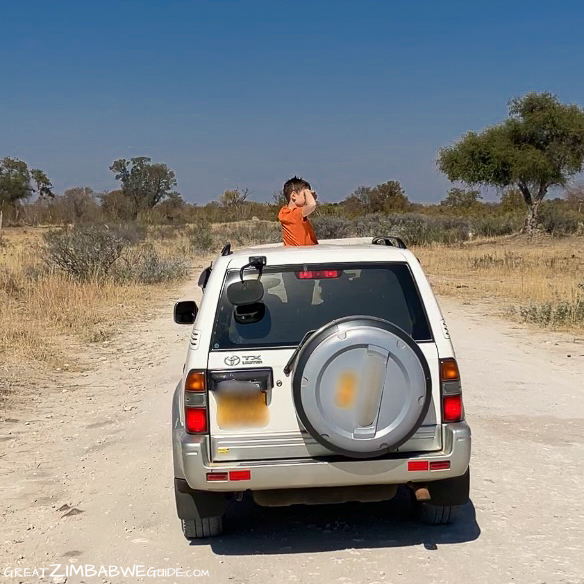
Duration: This route took us roughly five hours to drive around, stopping for sightings and snacks. We did it with our kids aged between 2 and 9 years old, and even the youngest didn’t complain about the time spent in the car.
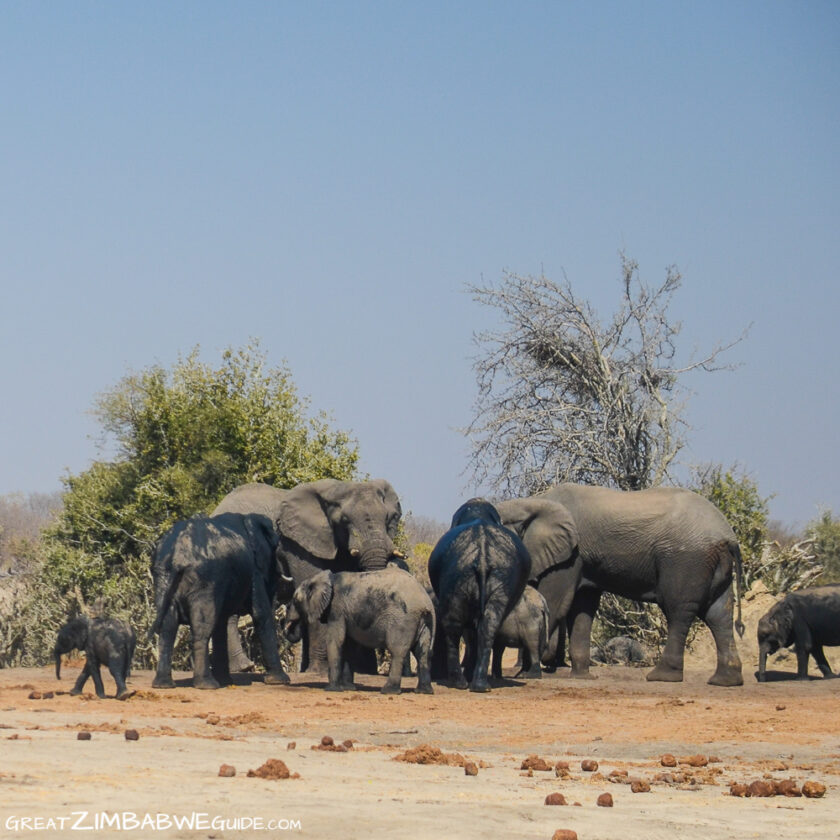
Not long into the drive, we were buoyed by our first sighting: a herd of 14 elephant, including babies, raising their trunks in curiousity as they investigated our presence.
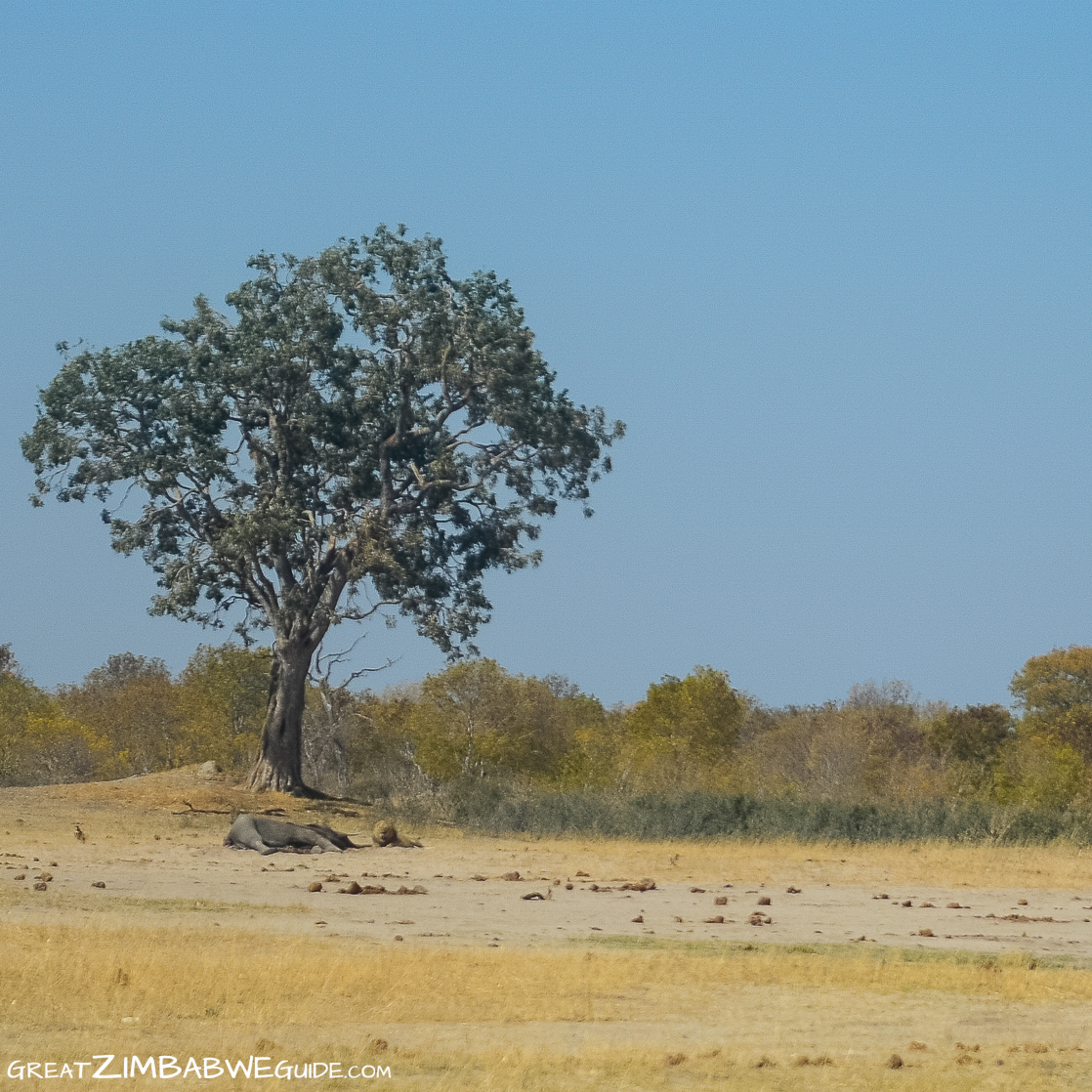
We continued, binoculars at the ready. Before long, we saw a male lion next to an elephant carcass. This was the only lion sighting of our trip, and we were thankful to have seen lion at all. Not the clearest photo below, because it was a fair way from the road and I didn’t have a zoom lens.
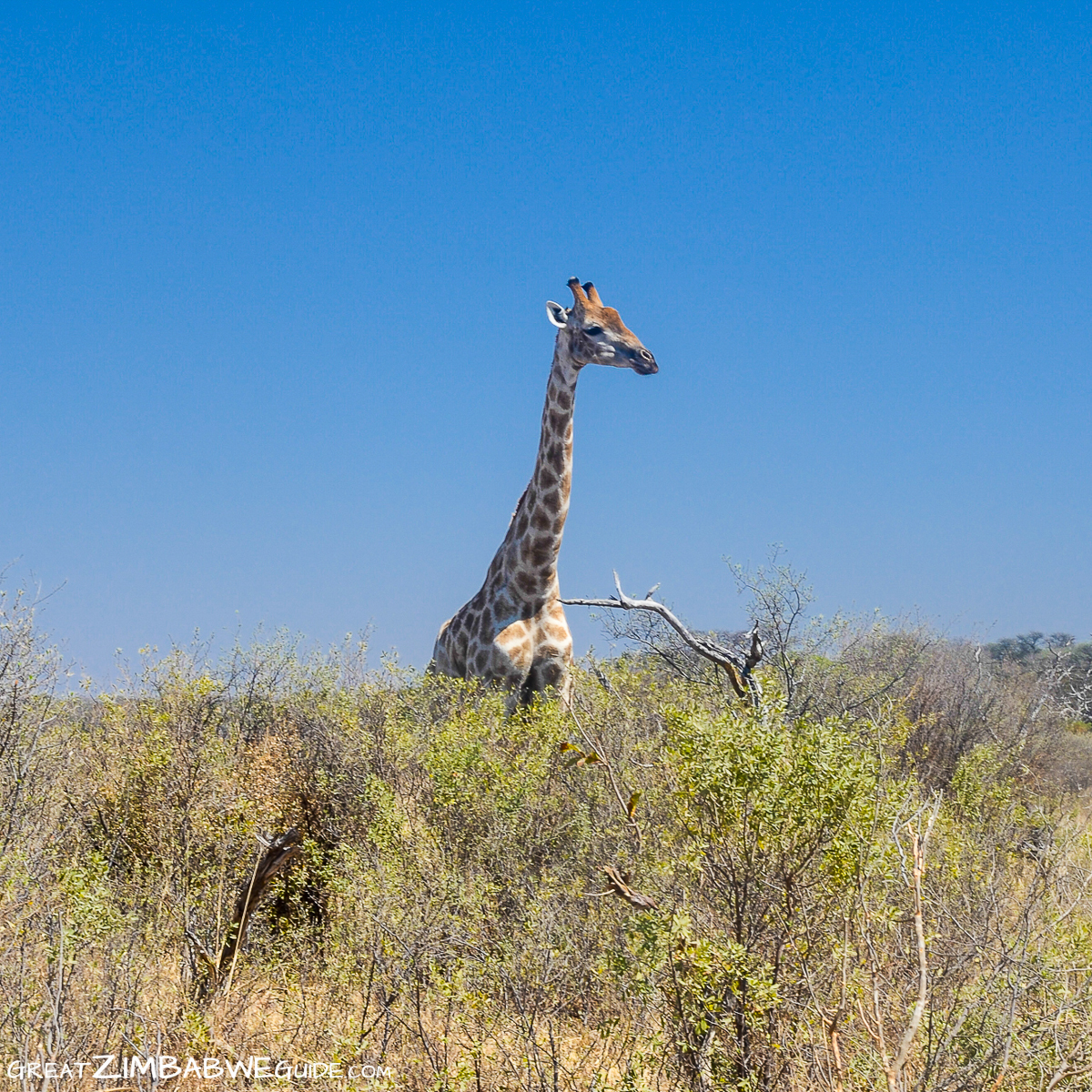
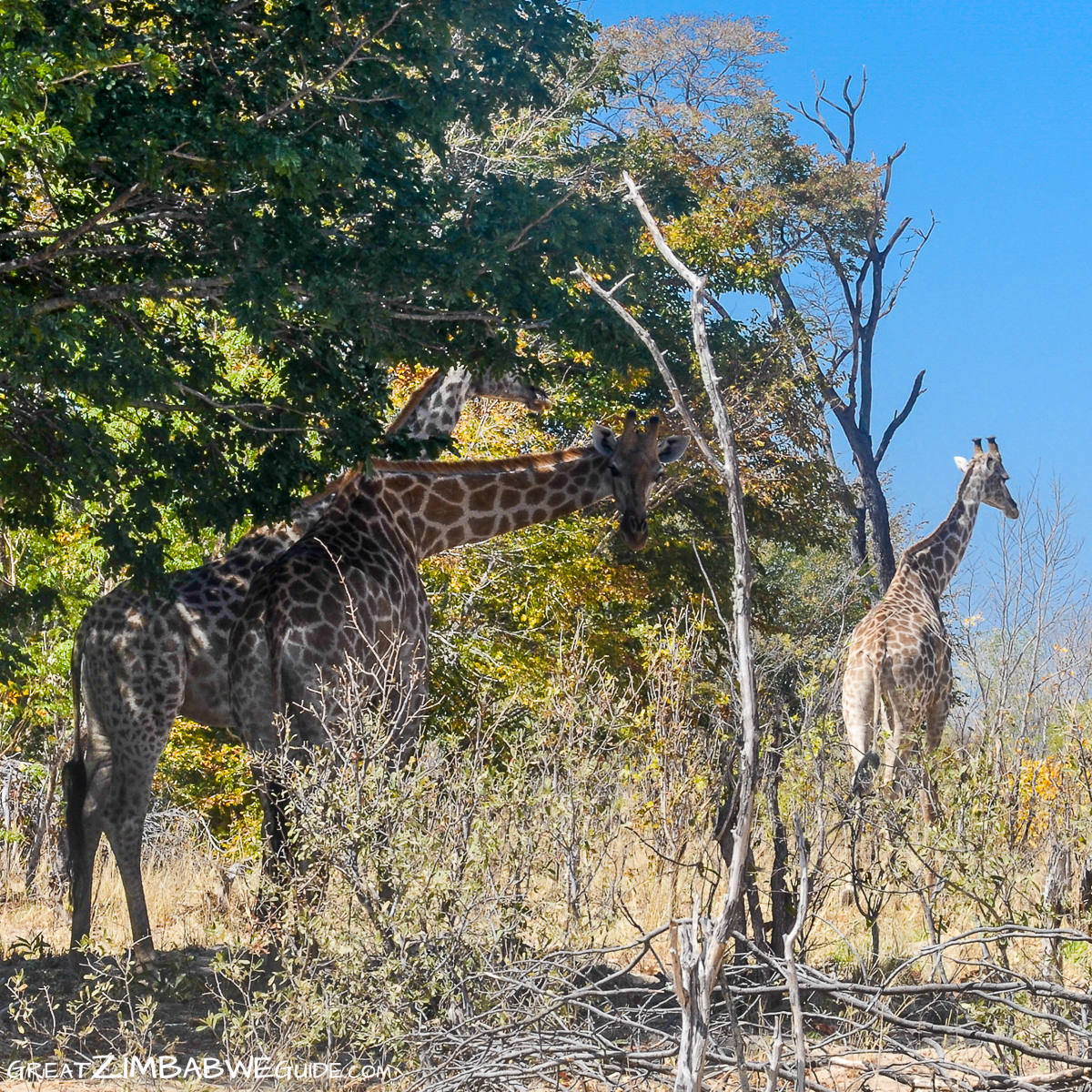
Giraffe, wildebeest, warthog, crocodile, hippo, even an ostrich – and of course, many more elephant were checked off our sighting list. We returned to our accommodation feeling excited by all we had seen – and desperate for a cool swim in the pool!
Thinking about a Zimbabwe safari?
Not sure how to fit Hwange into your trip?
Get independent, practical advice on your Zimbabwe itinerary, including where to go, how long to stay, how to get around and how to make the most of your time.
Hwange self-drive safari route from Main Camp: #2
For our second day, we followed the Sikumi Forest area; the yellow route marked on the map below. This included Nyamandlovhu, Masummalisa/Masumamalisa, Ngweshla, Kennedy 1 & 2, and Makwa water holes.
Duration: This route took us approximately 4 hours, including stopping for sightings and picnics.
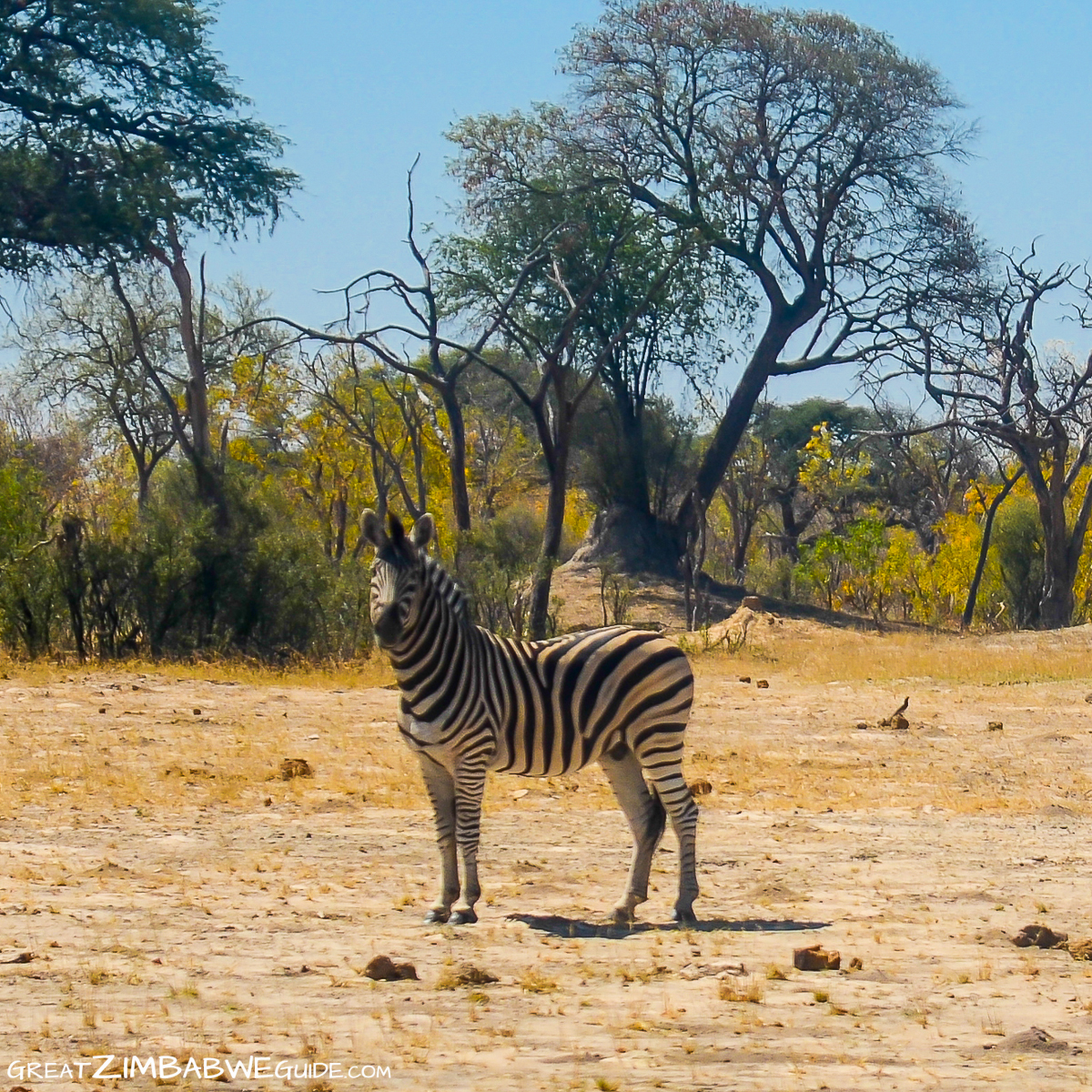
In addition to the ever-present elephant, we saw sable antelope, sabra, Cape buffalo, secretary bird, and jackals.
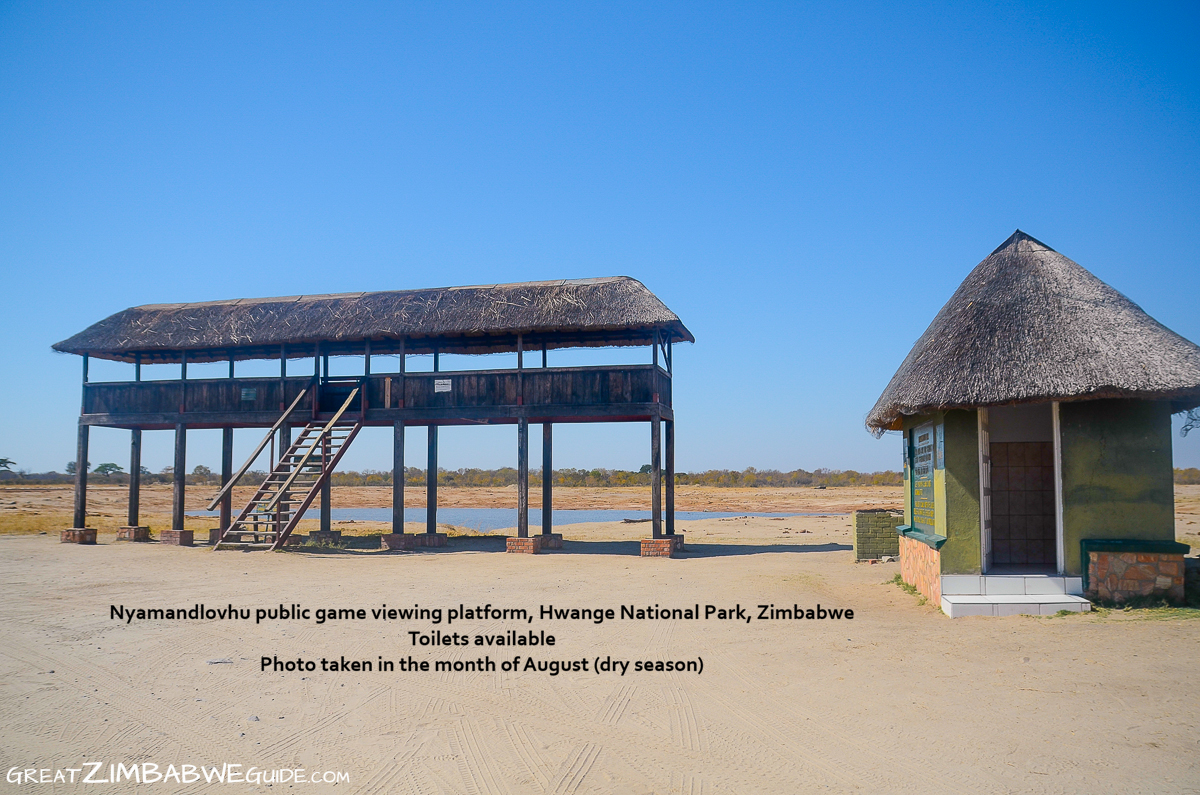
Here are some photos of the viewing platform at Nyamandlovhu, sometimes spelled Nyamandhlovhu. You can get out of the car to stretch your legs, go up to the platform for a better view of animals at the water hole, and perhaps use the toilet (bring your own toilet paper.
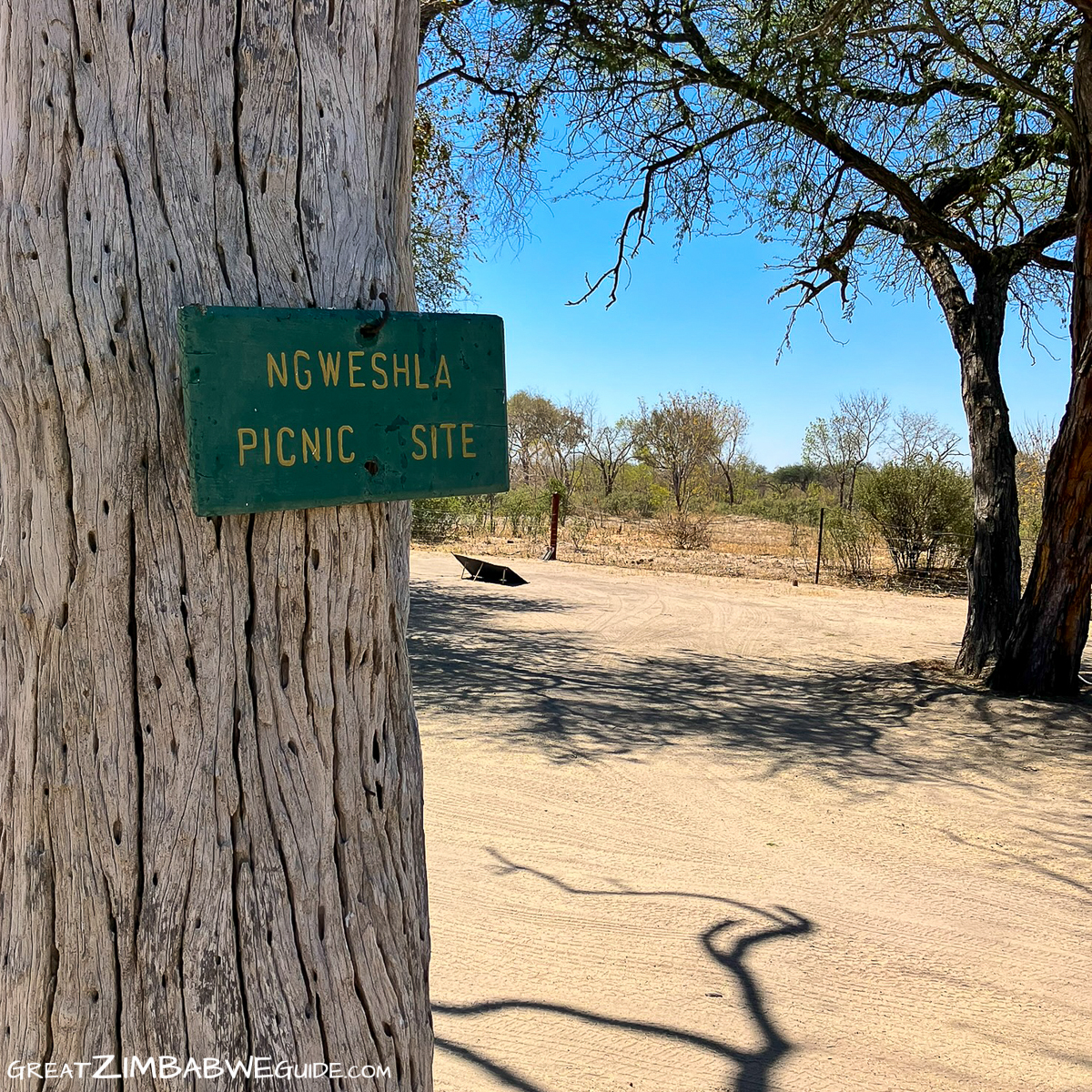
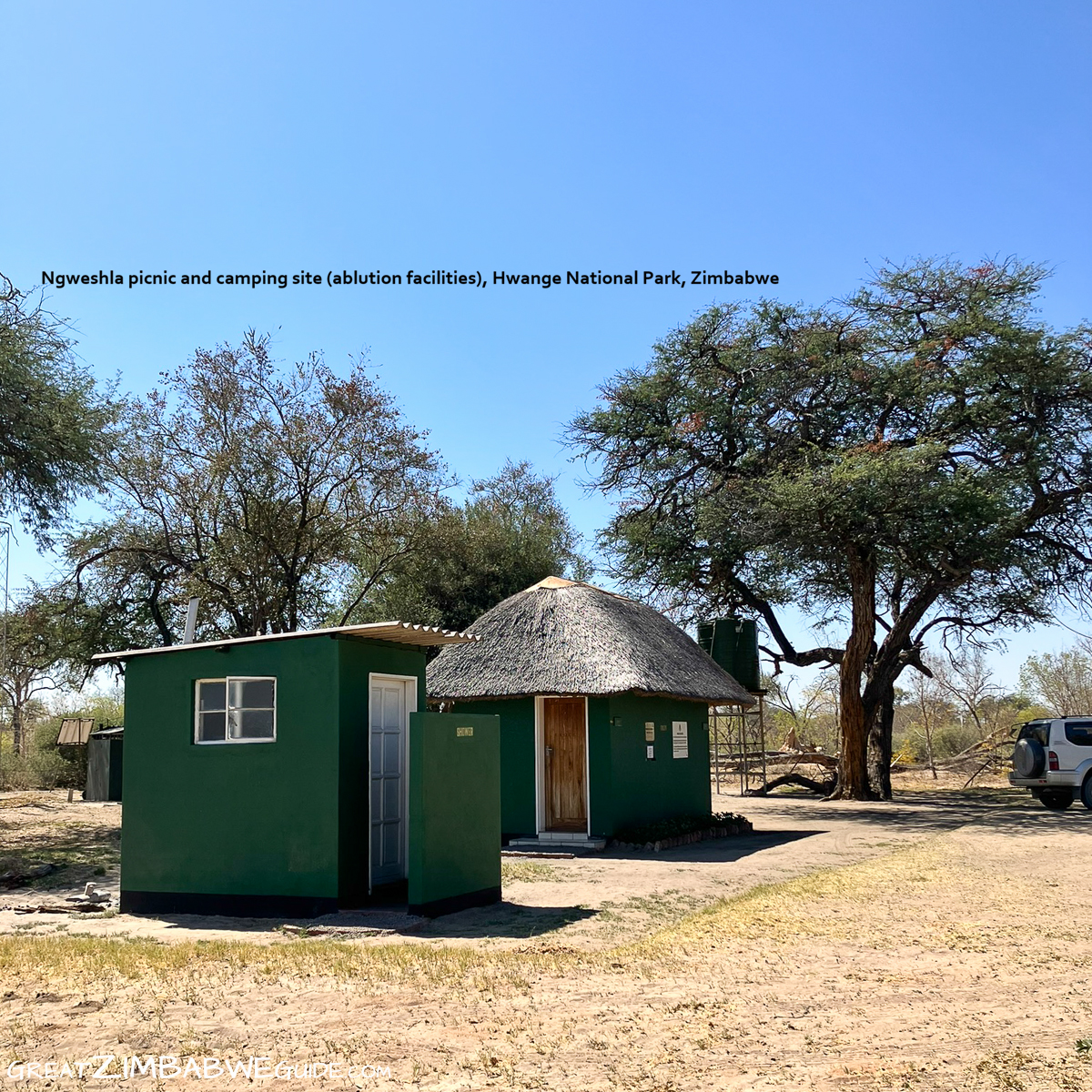
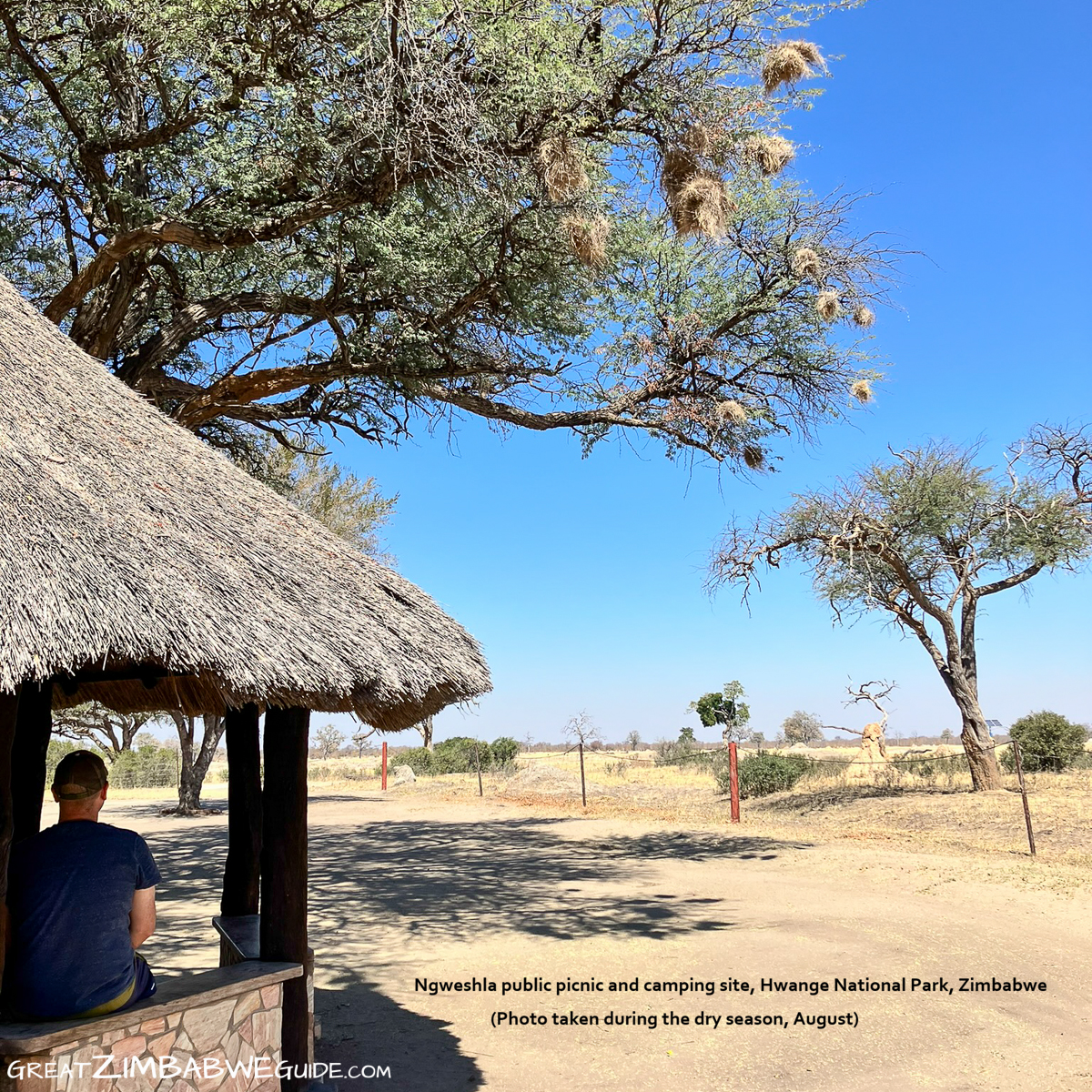
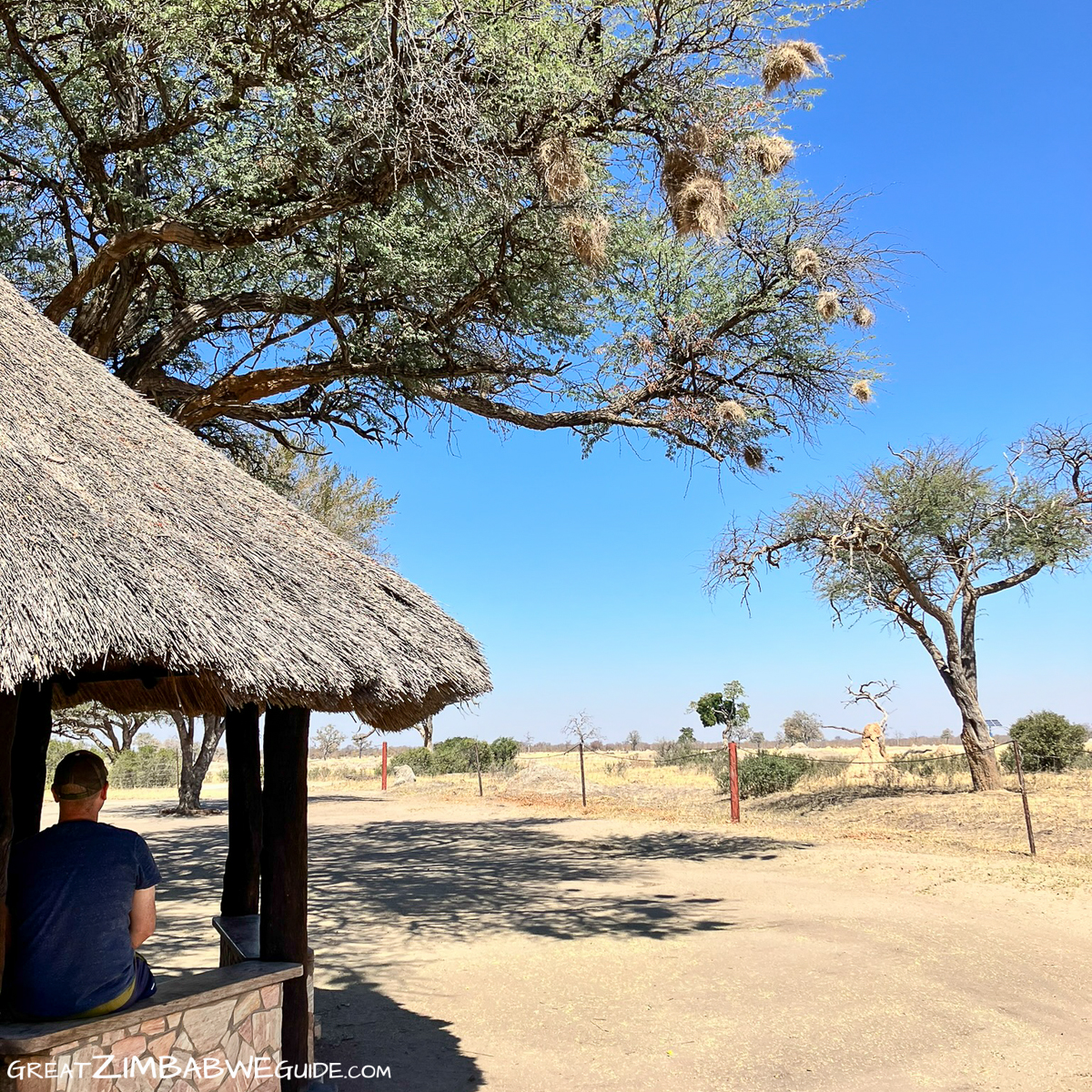
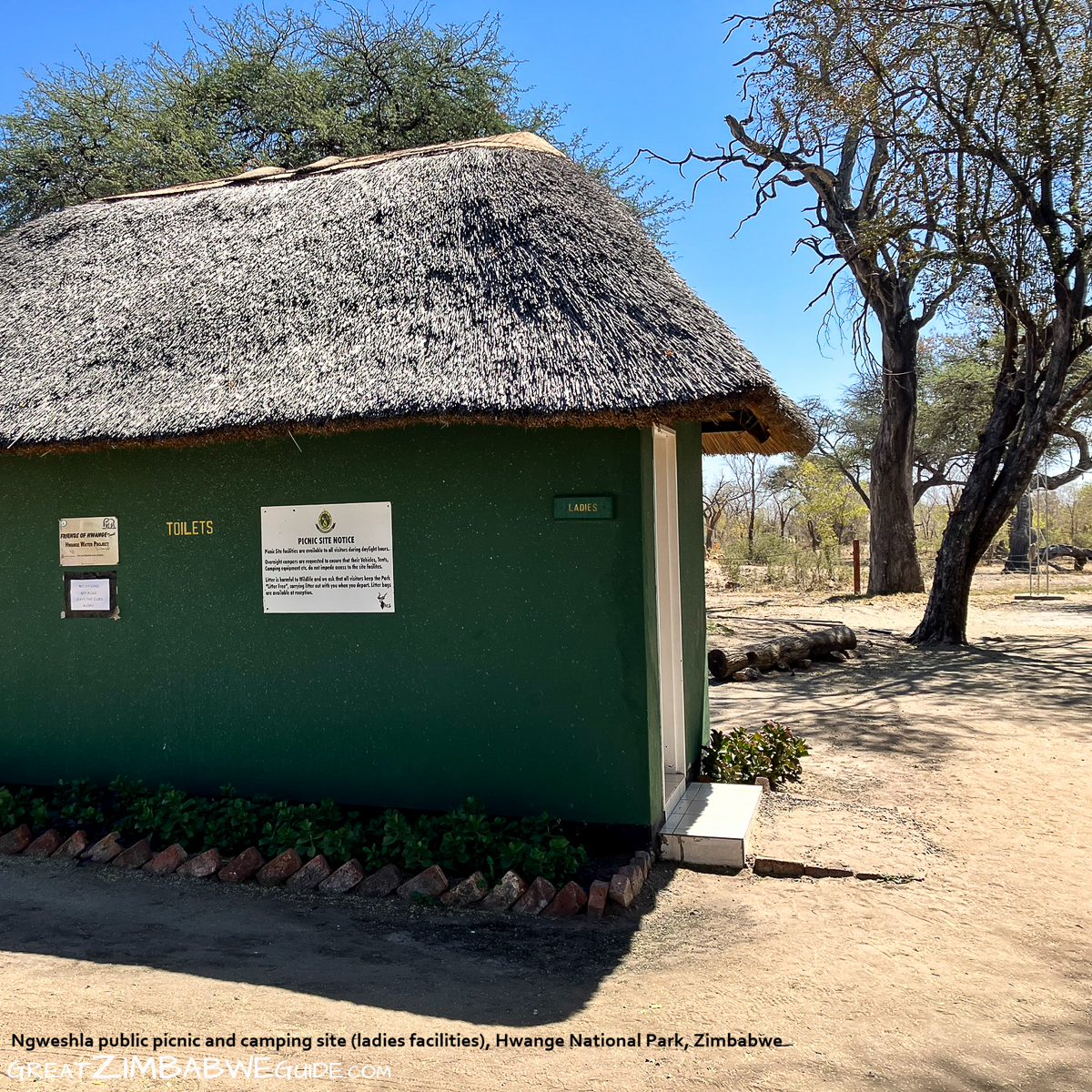
Ngweshla pan (or water hole) is said to have a high wildlife density, and it is the centre of the territory of Cecil the Lion, the now-well known lion that was shot by hunters. We saw giraffe, impala and zebra here, and enjoyed the shady picnic area to have our lunch. There were toilets here too, which were clean.
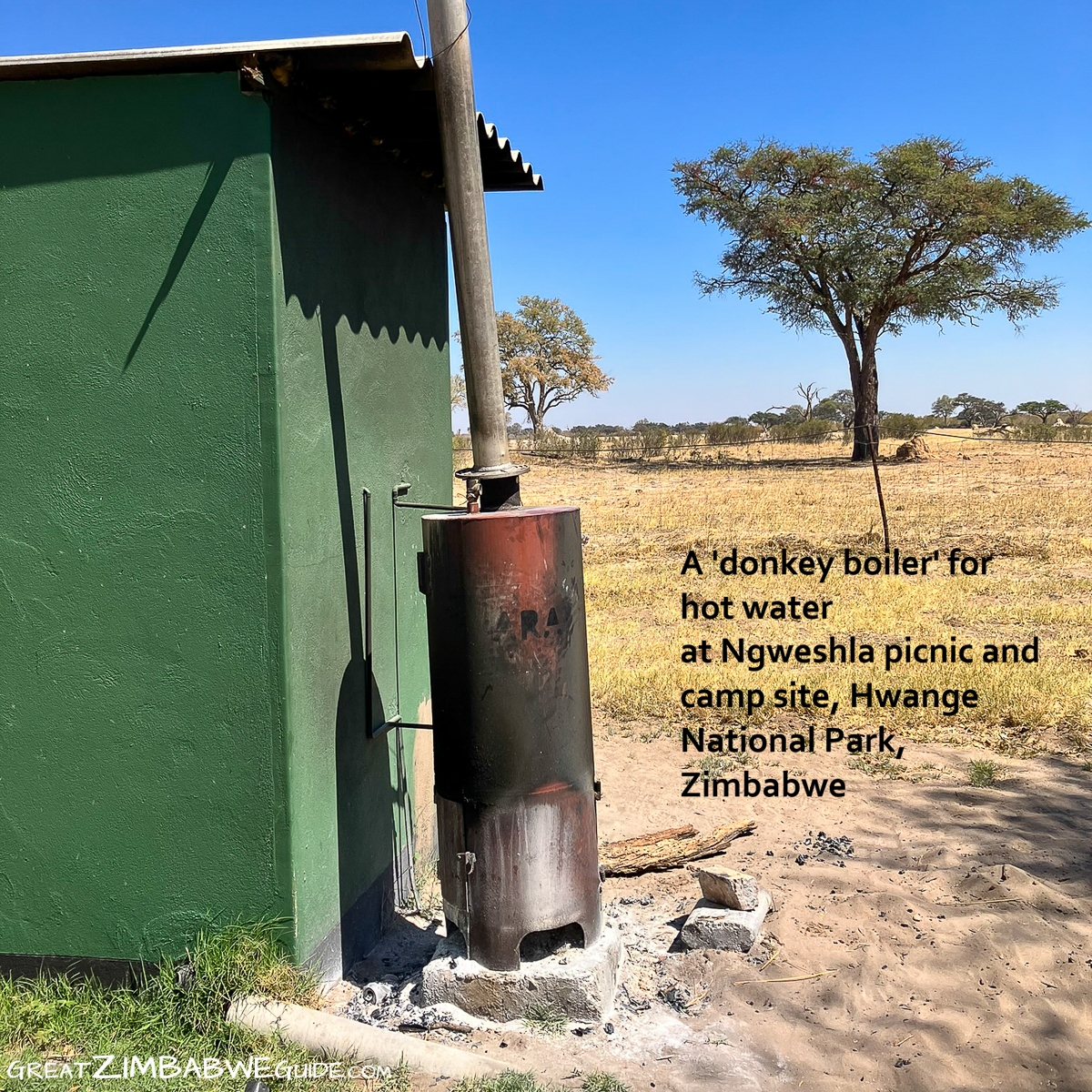
Although we weren’t staying here, it’s open to the public to stop in during a game drive. I’ve included photos of Ngweshla in case they’re useful for future campers. I had to take a photo of the ‘donkey boiler’ – so iconic of Zimbabwe’s older camp sites!
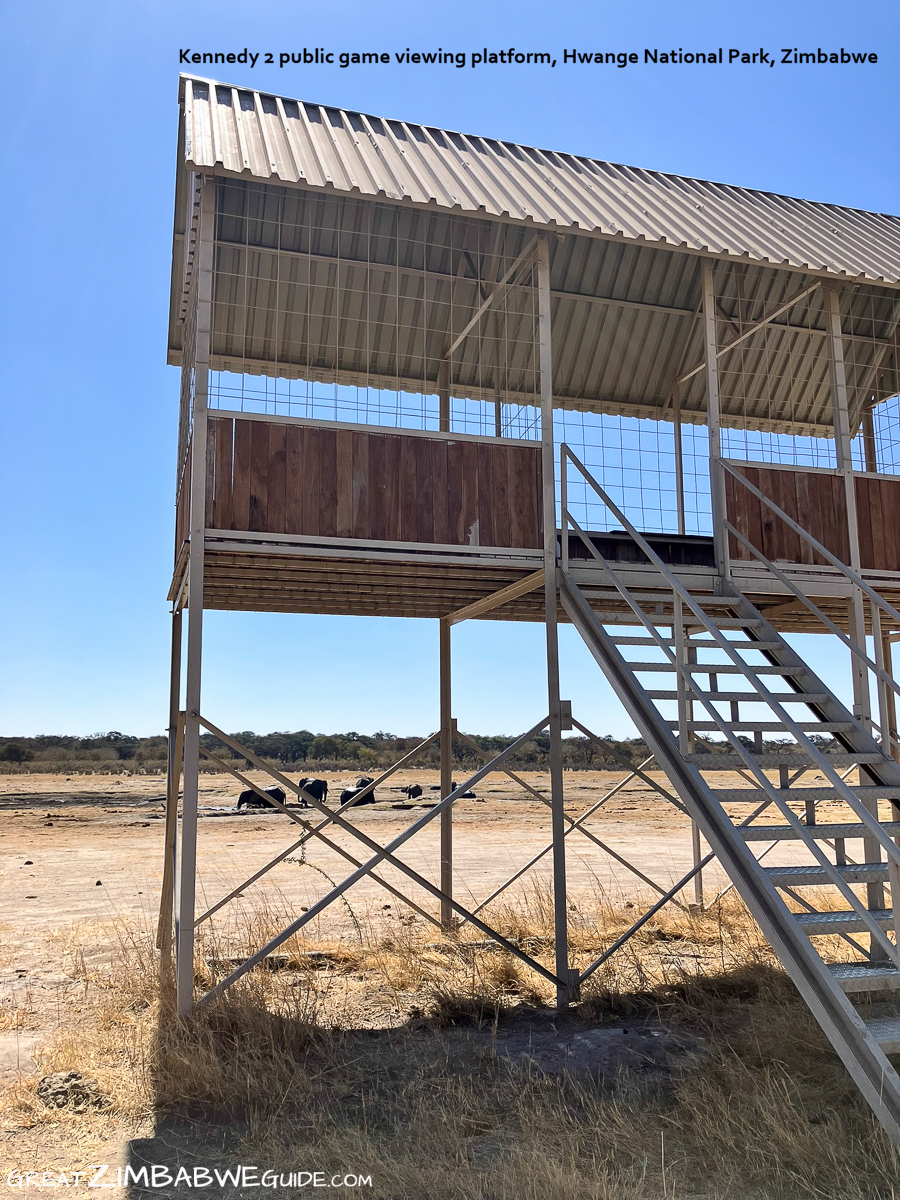
Kennedy 2 viewing platform is another great place to get out of the car for a view of the water hole.
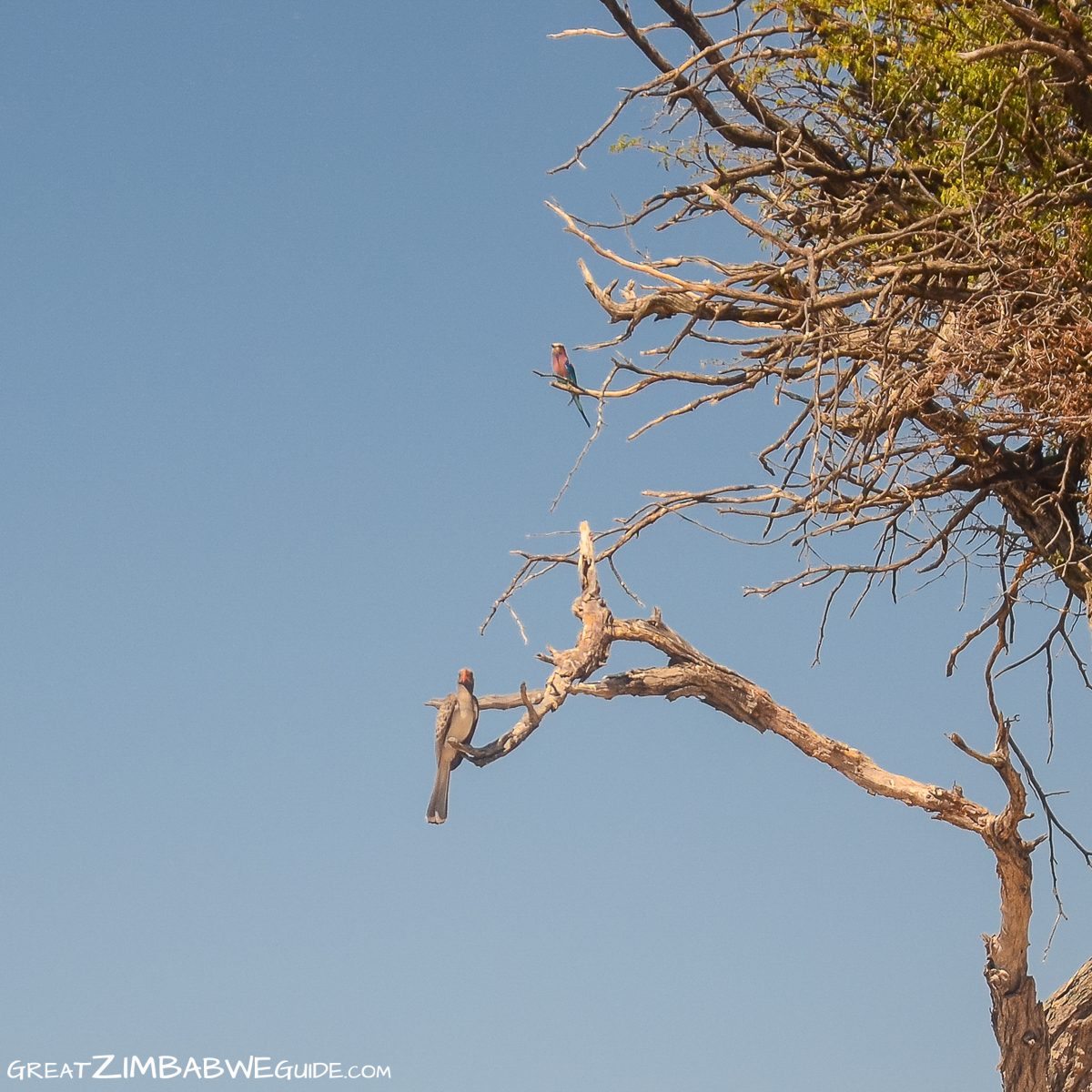
If you’ve never been to Hwange National Park, I hope this encourages you to give it a go. You can stay in Main Camp area and go on your own drives. I hope you see many animals! I’ll sign off with photos of some of the wildlife we saw.
All articles in this Cape Town Zim diary series
-
- 20-day Cape Town and Zimbabwe holiday itinerary: here’s how we did it
- Thinking of visiting Cape Town between June & August (Winter)? Read this first
- Seven days in the Mother City: No tour guides, just our family and a rental car in Cape Town
- Flying with Airlink in South Africa and Zimbabwe: My review
- Holiday diary of Cape Town & Zim: The Zimbabwe leg
- Journal in the sunshine city: Places we love in Harare, Zimbabwe
- Travel journal: The road from Harare to Bulawayo, and places we visited there
- The road to the bush: From Bulawayo to Hwange National Park
- Hwange National Park: Info about Main Camp and simple self-drive safari routes
- 5 things I loved about our lodge in Hwange National Park (and 5 things I didn’t)
- Visiting Hwange Safari Lodge
- Info on visiting the Painted Dog Conservation Centre, Hwange
- What do the urban streets of Zimbabwe look like?
- The Matobo edit: Our family’s self-catering stay in the National Park
- Planning your own adventure? Grab my Ultimate Trip Planning Kit to organise your holiday
Want to experience Hwange for yourself?
Whether you’re considering a self-drive safari, a lodge-based stay, or a combination of Hwange with Victoria Falls and other parts of Zimbabwe, I can help you work out what makes sense for your trip.
My bespoke Zimbabwe travel consultation service gives you independent, practical advice based on your own itinerary, interests, budget and travel style.
I’ll help you identify the best route, spot potential problems and make sure you’re allowing enough time to properly experience the places you want to visit.
Plus, I can connect you with a trusted agent to book it all for you.
Follow Great Zimbabwe Guide on social media so that you don’t miss anything: Facebook (@GreatZimbabweGuide), YouTube & Instagram(@GreatZimGuide).
Great Zimbabwe Guide gives travel tips, information and inspiration about Zimbabwe, Africa. We share stories of Zimbabwe’s talented people, world-class wilderness & wildlife safari experiences, all wrapped up in an unmatched climate.
Do you have a question about visiting Zimbabwe? Start with the Quick-reference list of travel advice.
Get our free Zimbabwe travel information via email! Sign up to our newsletter here.
If you would like to write an article for Great Zimbabwe Guide travel blog, just email greatzimguide@gmail.com.

Leave a Reply