 Free downloadable maps of Hwange National Park, Zimbabwe
These free downloadable maps of Hwange National Park, Zimbabwe are here to help you plan itineraries, safaris and routes in this exciting wildlife area of southern Africa.
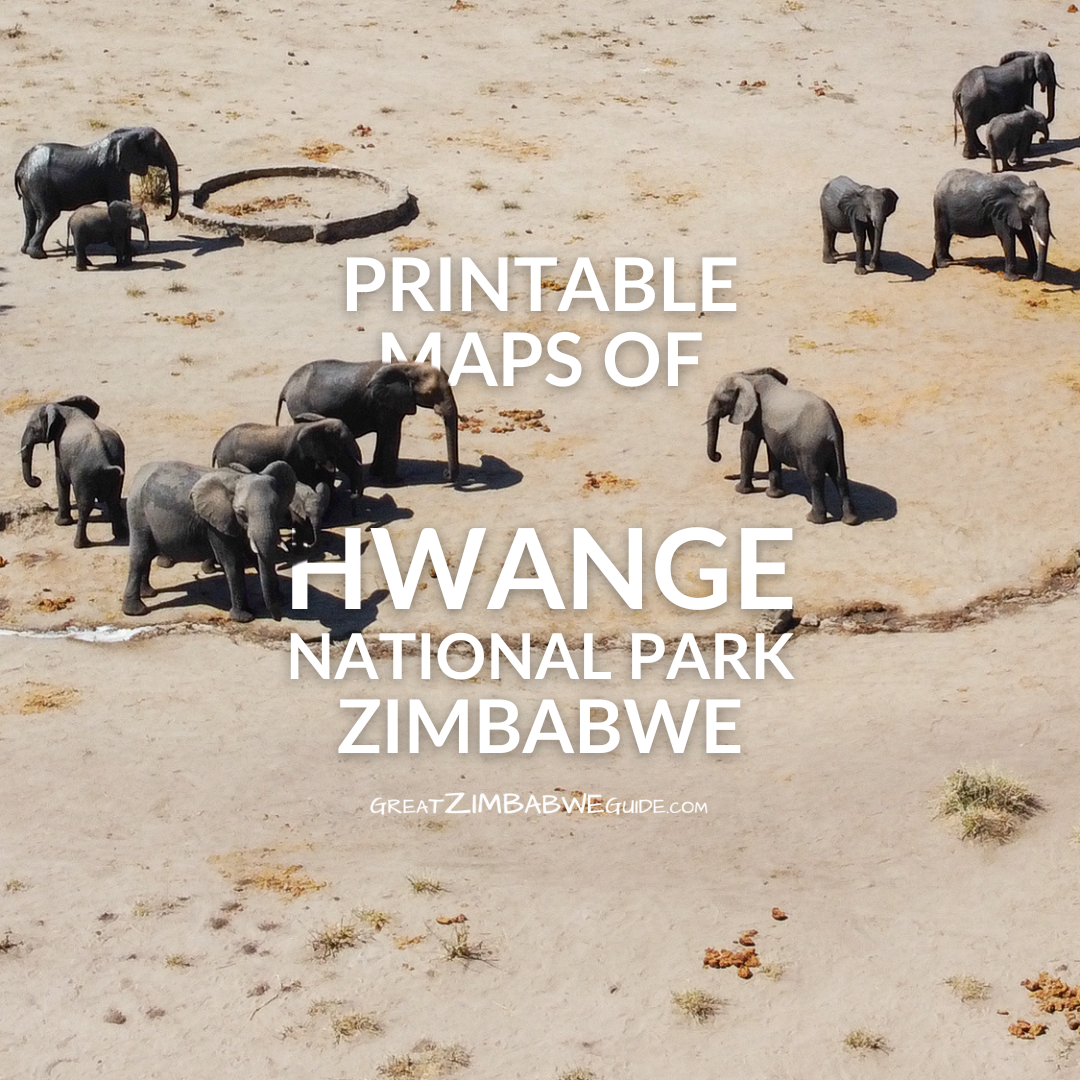
Hwange is the largest National Park in Zimbabwe, and the third largest in Africa. It is home to one of the largest elephant populations on earth, as well as many other species.
Most of the Park is unfenced, and animals move across transfrontier areas. ZimParks is the government agency responsible for managing the Park.
Visitors can drive, fly, or rail into the Park. Many private lodges offer a range of catered accommodation and safaris. There are also enclaves of exclusive concession land within the Park. ZimParks offers self-catering accommodation.
Map 1: The Wildlife and Environment Zimbabwe (WEZ) organisation has created a map of Hwange National Park. It can be seen on their website, but if you would like it in an easier-to print, A4 double page format, please see below. The copyright remains with WEZ.
Hwange National Park Zimbabwe WEZ map in A4 PDF printable format – free download link here
 Click here for the Hwange map in PDF format
Hwange National Park Zimbabwe WEZ map in A4 PNG format
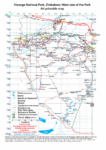 Click here for the Hwange map (West side) in A4 PNG format
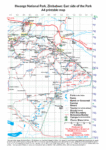 Click here for the Hwange map (East side) in A4 PNG format
Visitors can self-drive around Hwange National Park during daylight hours, or they can go on guided safaris with private safari lodges. With an area of 14,651km², approximately the same size as Northern Ireland, and a little bigger than Death Valley in California, USA. It is located in the northwest corner of Zimbabwe, about two hours south of the showstopping Victoria Falls. The large numbers of wildlife in Hwange survives only due to underground water being pumped into water holes throughout the park.
If you would like to donate to the preservation of this unique National Park, please visit the Friends of Hwange donation page.
Hwange NP is located approximately 283 km from Bulawayo and 172 km from Victoria Falls. The National Park should not be mistaken for Hwange Town.
Most self-drive visitors will need to make their way to the main gate of Hwange National Park, which is called Main Camp. There is a visitor reception here, and self-drive guests should pay the required entry fees at Main Camp. For visitors staying with private safari lodges, entry fees are usually handled by the lodge.
There’s an article all about Driving in Zimbabwe at this link.
Map 2: The below shows a map of just the north east secion of the park around Main Camp.
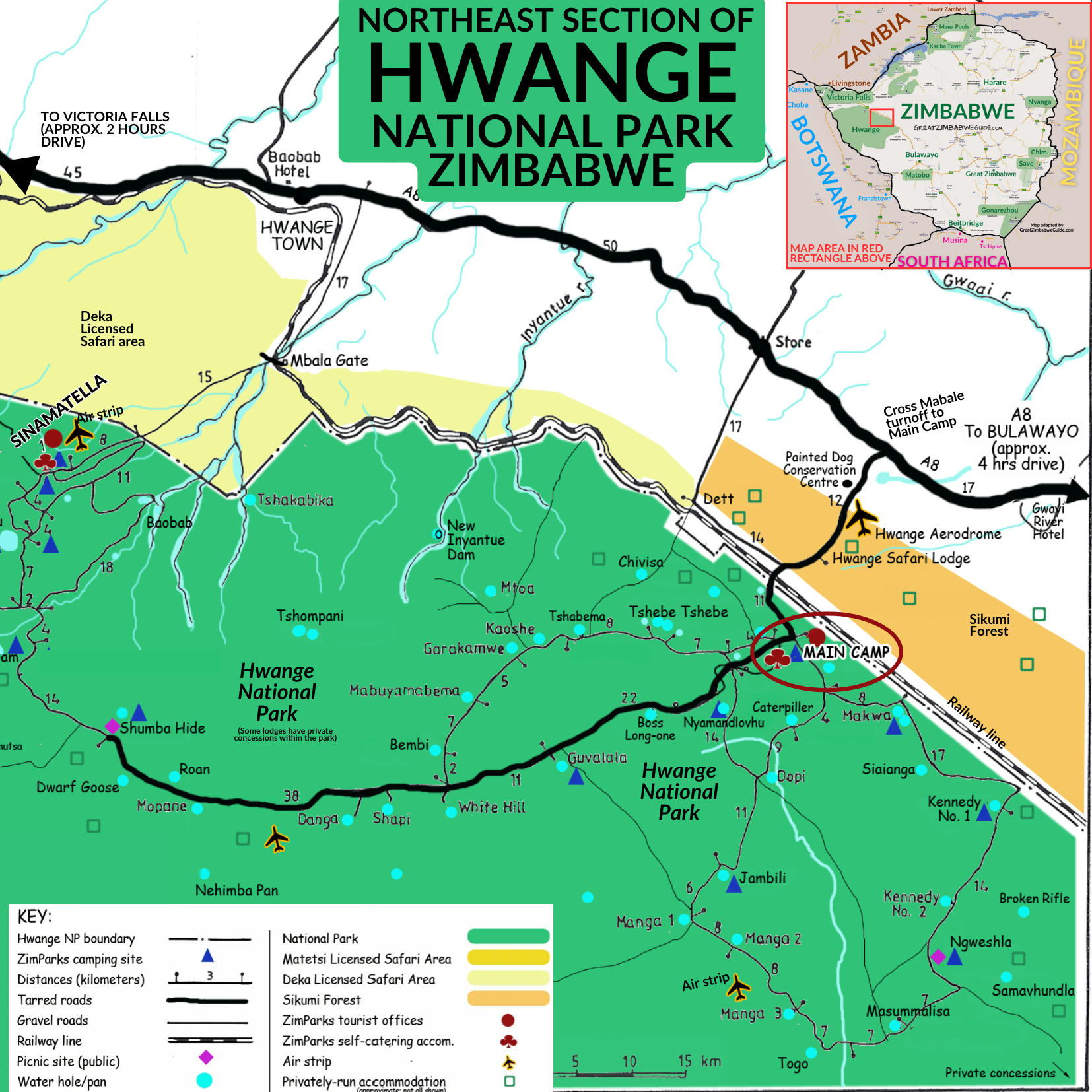
Map 3: You can also find a comprehensive full map of Hwange created by Ian Games, here. Or click on the icon below to go to the full-size map.

Map 4: Here’s a map of the movement of wildlife in the Kavango Zambezi Trans-frontier Conservation Area (KAZA TFCA) in southern Africa. Hwange is part of this much larger protected area.
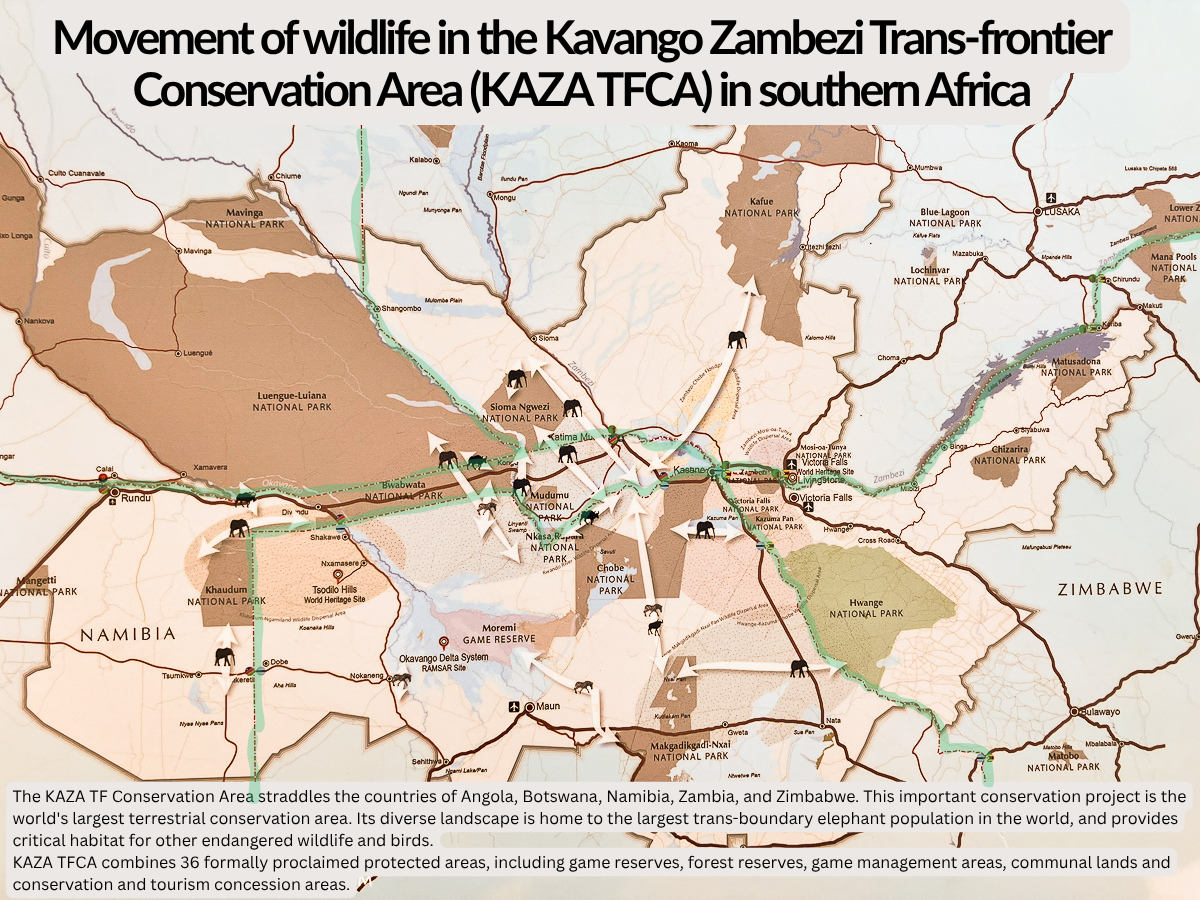
The KAZA TF Conservation Area straddles the countries of Angola, Botswana, Namibia, Zambia, and Zimbabwe. This important conservation project is the world’s largest terrestrial conservation area. Its diverse landscape is home to the largest trans-boundary elephant population in the world, and provides critical habitat for other endangered wildlife and birds.
KAZA TFCA combines 36 formally proclaimed protected areas, including game reserves, forest reserves, game management areas, communal lands and conservation and tourism concession areas.
Map 5: You can also use the Tracks4Africa website which has the fucntionality to zoom in and see their map of Hwange National Park.
For a paid map product, Tracks4Africa also offer various paper and digital formats of maps of Zimbawe here.
Rules for Hwange National Park
- For your safety, stay on the road and in your vehicle at all times.
- Please do not feed animals or birds.
- Camp at designated sites only.
- Do not use scooters or motorbikes in the Park.
- The carriage of weapons, explosives or poisons is prohibited.
- Please do not disturb animals by making unnecessary noise.
- Removal of any plant or animal samples is prohibited.
- Do not pollute water sources.
- Bringing pets in the Park is prohibited.
- Please do not damage or remove State property.
- Do not place advertising material within the Park.
- Flying aircraft at less than 150m above the ground is not permitted.
- For your convenience you are advised to claim your booked accommodation by 5:30pm on the day of arrival as it may after that time, be reallocated.
Brief history of Hwange National Park
In the early 19th Century this wilderness in the far north-west of Zimbabwe was set aside as a royal hunting reserve by the warrior king, Mzilikazi, a renegade Zulu and former lieutenant of Shaka, who founded the Matabele nation.
In 1929 the area was first proclaimed a national park, then it was enlarged in 1939 and then again in 1966.
In September 1928, Ted Davison a 22-year-old official employed at the time for Tsetse Fly control was offered the appointment as First Warden. He accepted readily. In the 33 years he was in charge of the reserve, he developed it to its full grandeur as a great national park. Wankie Game Reserve, as it was first called, was proclaimed as a national park on 27 January 1950. From that time on it was developed as a major conservation and tourist asset.
What to pack for Zimbabwe
I’ve dedicated a whole article to items you might need in Zimbabwe and southern Africa – see What to pack for a Zimbabwe holiday.
Or, buy the Ultimate Trip Planning Kit where you can download the packing checklist along with a whole bunch of customisable planning templates.
The Ultimate Trip Planning Kit: Digital Download
This kit is the essential digital bundle for anyone who wants to stop being overwhelmed by logistics and start getting excited about the adventure. It replaces messy notes and endless tabs with organised, proven templates.

Yes! I’m ready to download the Ultimate Trip Planning Kit for £3.99
Related articles


Great Zimbabwe Guide gives travel tips, information and inspiration about Zimbabwe, Africa. We share stories of Zimbabwe’s talented people, world-class wilderness & wildlife safari experiences, all wrapped up in an unmatched climate.
Do you have a question about visiting Zimbabwe? Start with the Quick-reference list of travel advice.
Follow Great Zimbabwe Guide on social media for even more Zimbabwe inspiration: Facebook (@GreatZimbabweGuide) & Instagram(@GreatZimGuide). To get free Zimbabwe travel information via email, sign up to our newsletter here.
If you would like to write an article for Great Zimbabwe Guide travel blog, just email greatzimguide@gmail.com.
Are you planning a Zimbabwe holiday but need specialist help? Just contact me and I’ll recommend a great travel advisor. Alternatively, I offer a consulting service whereby I can analyse your suggested itinerary and check for any problems.
Contact me
#hwange #southernafrica #africa #safari #gamereserve #map #blog #resources #tools #wankie #zimbabwe #elephants #printable #pdf #free