
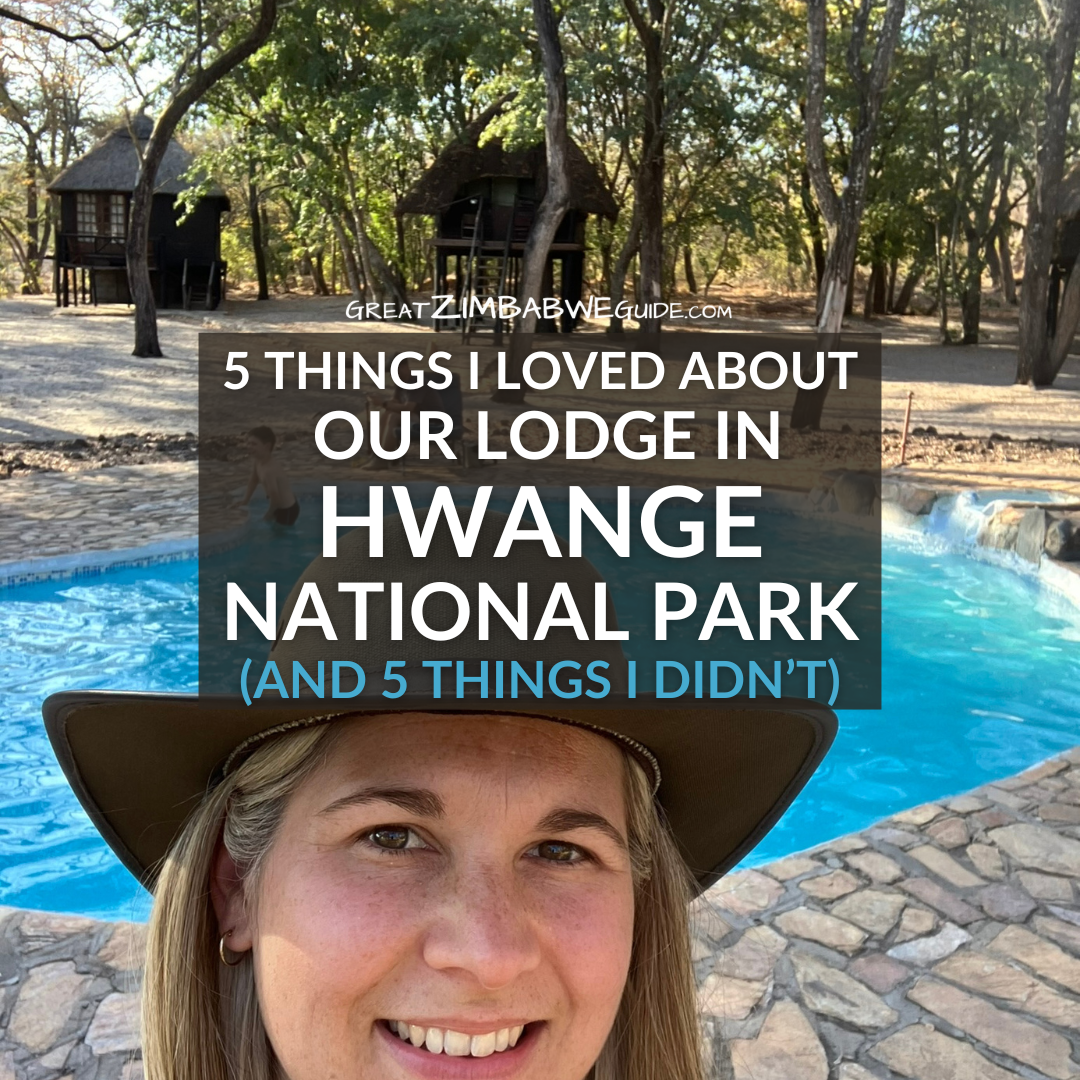
 5 things I loved about our lodge in Hwange National Park (and 5 things I didn’t)
During our self-drive holiday in Zimbabwe from the UK, we stayed in Hwange National Park for four nights. This article is all about our accommodation in Hwange: a quirky treehouse-style lodge overlooking a waterhole.
Hwange is Zimbabwe’s biggest national park, and the third biggest in Africa, roughly the size of greater Los Angeles. These 14,650 square kilometers are the territory of glorious, unfenced wildlife: elephant, lion, leopard, buffalo, giraffe, and much, much more. The vegetation ranges from forests of African teak, mopane and acacias; to vleis, marshes and grassland. Along with Mana Pools, Hwange is the big hitter of Zimbabwe’s National Parks. It’s iconic for having one of the largest elephant populations in Africa.
Written by Beth
I couldn’t wait to see how my kids’ understanding of the natural world would grow after being immersed in this true wilderness, away from their normal UK life. Our experience didn’t disappoint – they got to see African animals in their natural habitat, without truckloads of tourists, or sanitised accommodation, detracting from the main event.
After a 3.5-hour drive on a hot August day (see previous post about the journey), our car bumbled down a sandy track, parked under the shade of Acacia trees, and we were welcomed to our safari lodge. It was a budget-friendly option, located just outside the official National Park. Within a few hours, a family of 14 elephant had meandered to the waterhole in front of the camp. We felt instantly buoyed as we watched the baby elephants raise their trunks in curiousity, the dust rising like glitter under their padded feet.
If you’re new to the word ‘Hwange’, the h is silent and you pronounce the e … Wangé.
Things I loved about our accommodation in Hwange
Based on our visit in August 2024.
1. Wildlife on our doorstep
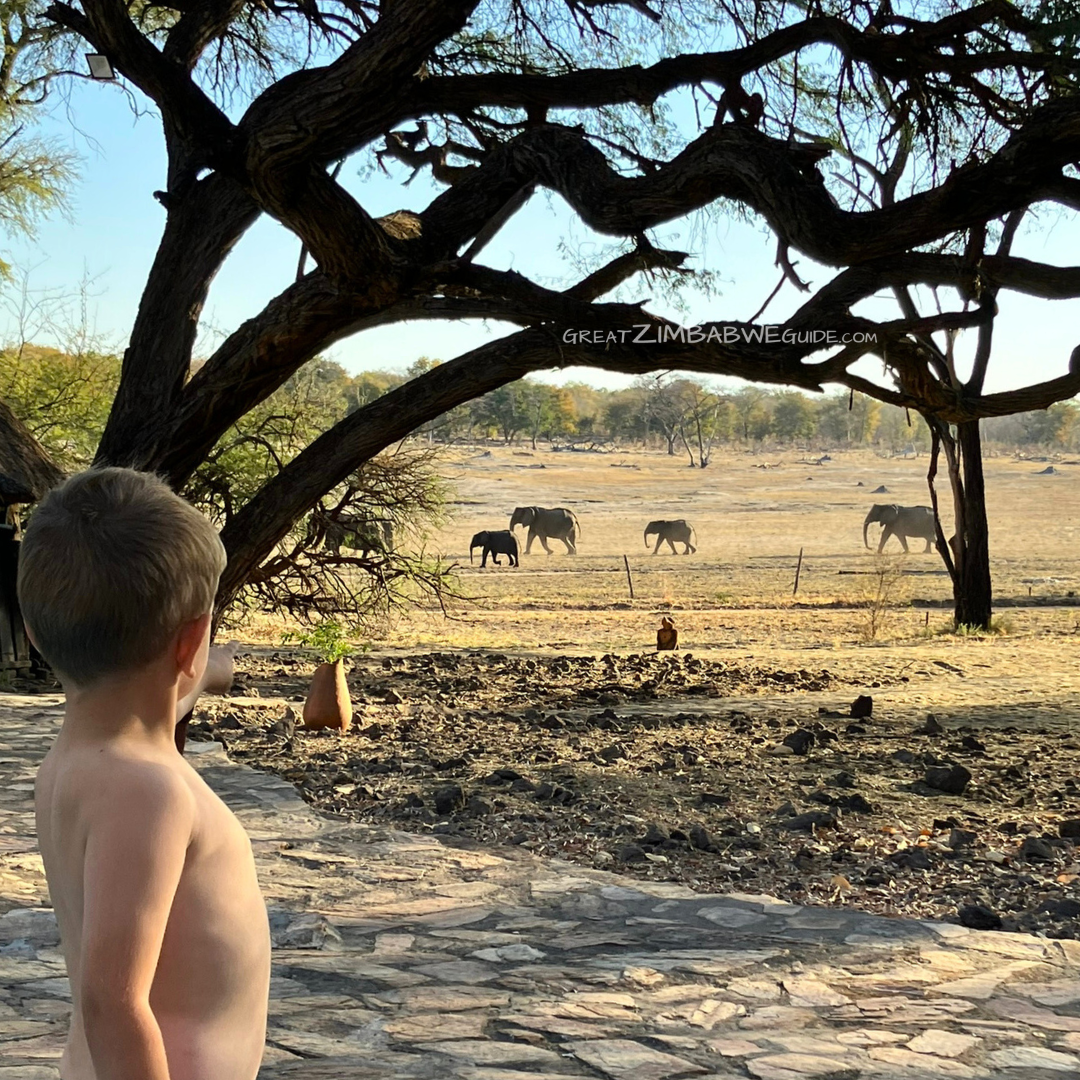
As I mentioned, our lodge was just outside the official border of Hwange National Park. But remember – this National Park is unfenced, as is the reserve belonging to our lodge, so the wildlife doesn’t know whether it’s in the reserve or not!
Our lodge had a waterhole with a pump that filled it with underground water (a borehole), so animals came from all over for a drink. In fact, our best wildlife sightings were from the comfort of our camp, not on a game drive. Each day we saw herds of elephant, kudu, impala, waterbuck and more.
The best surprise came on our last evening when we saw a herd of over 200 Cape buffalo walk, seemingly out of thin air, towards the waterhole. They drank for about 45 minutes, and then filed into the distance, their steps accentuated by the dust in the orange light of the sunset. We played a few board games, drank tea, and read books in the communal area – all to the sight and soundtrack of lowing and splashing from hundreds of bovine visitors, just a few metres away!
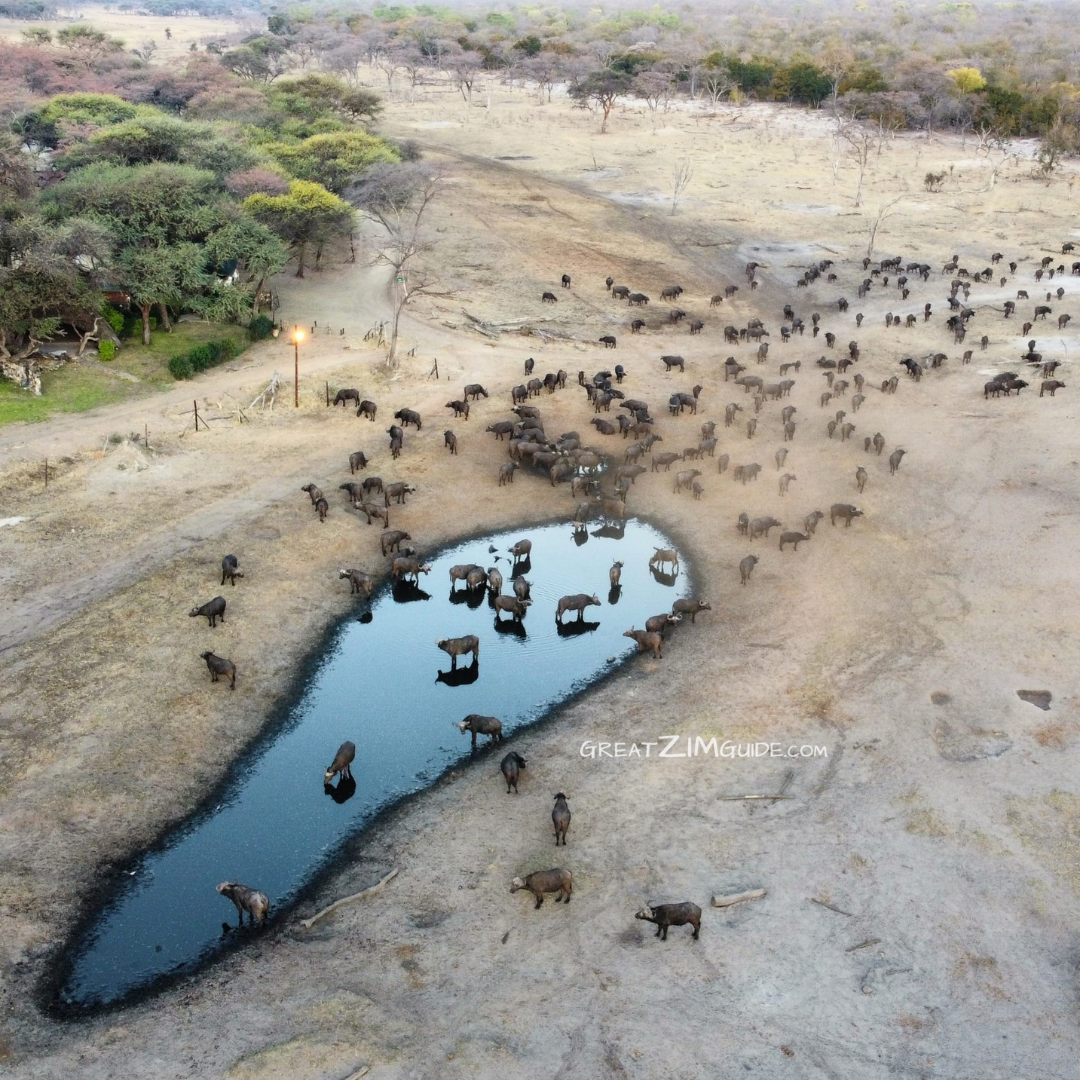
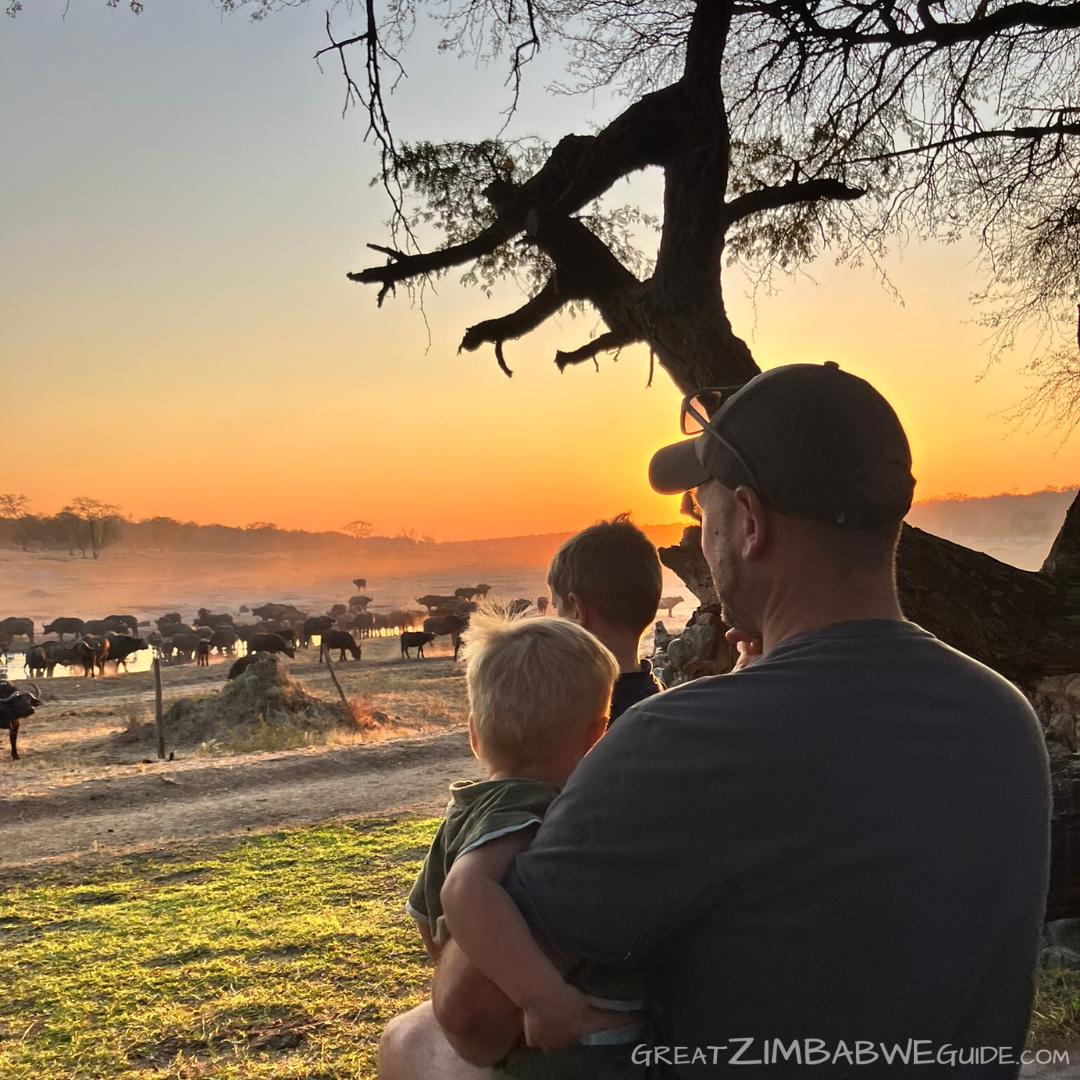 Top tip: Find a lodge with a veiw. If you’re going on a safari to see wildlife, you probably want to see animals as often as possible, not just when you’re on a game drive! Find a lodge overlooking a waterhole or river to increase your likelihood of seeing animals. Wildlife needs to drink often, especially in the dry months (June to October) – and elephants drink 20 to 50+ gallons (75 to 200+ litres) of water a day!
Top tip: Ask your lodge about fences. The question of fences is worth considering when looking into your accommodation. Some lodges have a fence around the accommodation area itself, to protect guests from larger wildlife. Some lodges also have a fance around their reserve, depending on where they’re situated. There are pros and cons to each of these – you just need to decide how much fencing you are happy to see on your holiday.
Our lodge was fenced around the accommodation, but in a very gentle way. As you can see from the photos, the fence didn’t disrupt our view very much, and it was still low enough to feel immersed in the environment. We were told the fence was electrified, but we could see that sections of it weren’t working. And this was fine with us. Even though our youngest child was just 2 at the time, we ensured he didn’t wander off by himself. The reserve occupied by our lodge wasn’t fenced and it was adjacent to the larger, unfenced Hwange National Park.
2. Quirky rooms
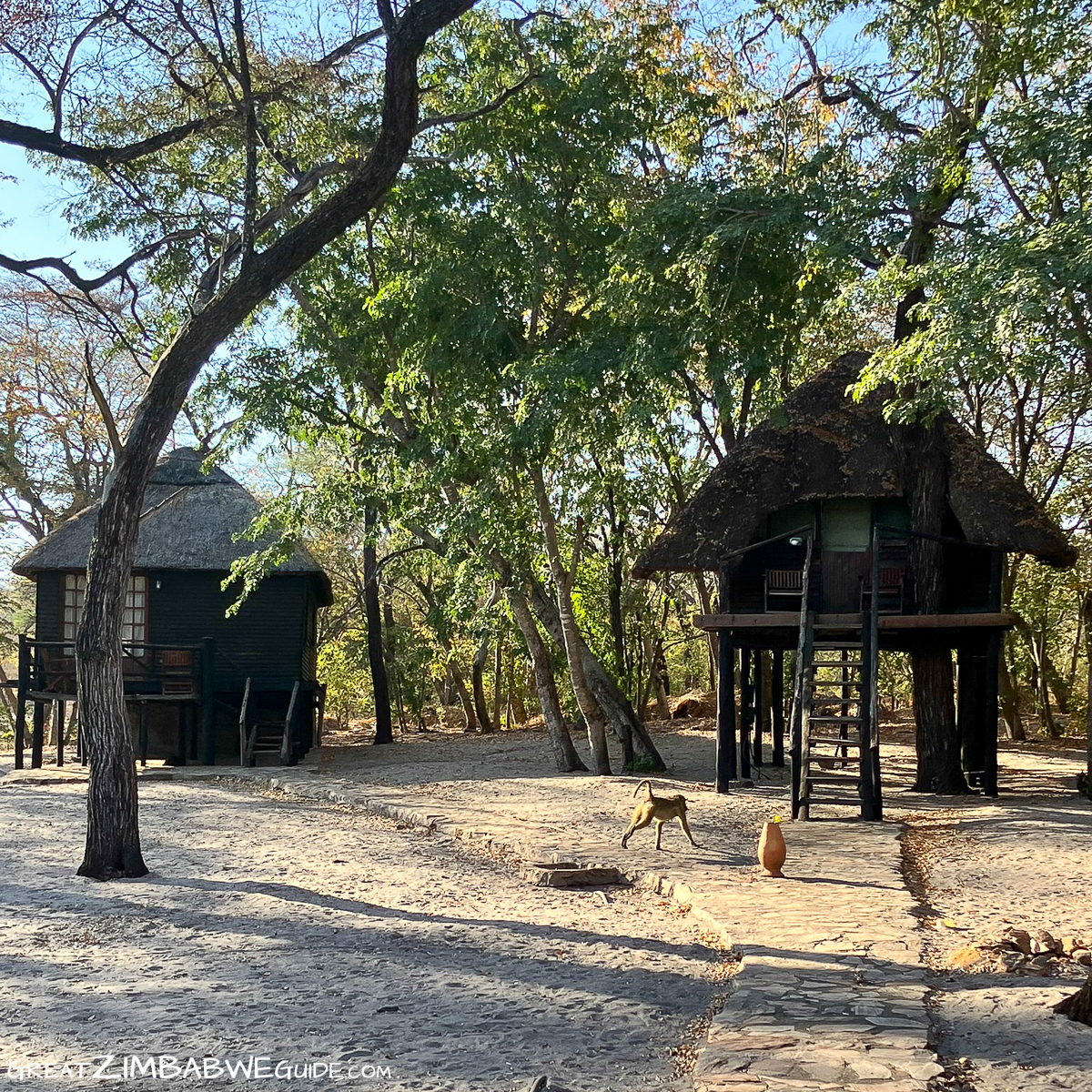
All the en-suite rooms were completely separate from each other, built on stilts to keep (some of) the animals out, and for a better view. Being up high means you’re closer to the greenery of the trees, and it felt fun in a Swiss Family Robinson way.
We were originally shown to one of the few rooms with beds at ground level – a double storey room. The staircase inside wasn’t suitable for our toddler, and we asked if there was anything else. We were given a group room instead, which was much better for our big family where us parents and kids could sleep in one big room, plus an ensuite bathroom. All the beds had mosquito nets, too.
There were no in-room TVs, aircon, coffee machines or fridges – and do you know what? Our kids didn’t ask us about TV once. The overhead fans cooled us down. We helped ourselves to coffee from the communal area. We used the shared fridge there, too. All the ‘extras’ that can appear important – they didn’t matter here. We had beds to sleep in, and a place to wash with warm water. We fell asleep to the sound of elephants rumbling in the distance, and woke up surrounded by birdsong. To us, it was pretty heavenly.
I loved that this didn’t feel like a European hotel. It suited the place we were in. Was there dust, geckos, and mosquitos? Yes, but not enough to feel oppressive. If you want to avoid those things completely, the African bush isn’t for you.
3. The swimming pool (did I mention the view?)
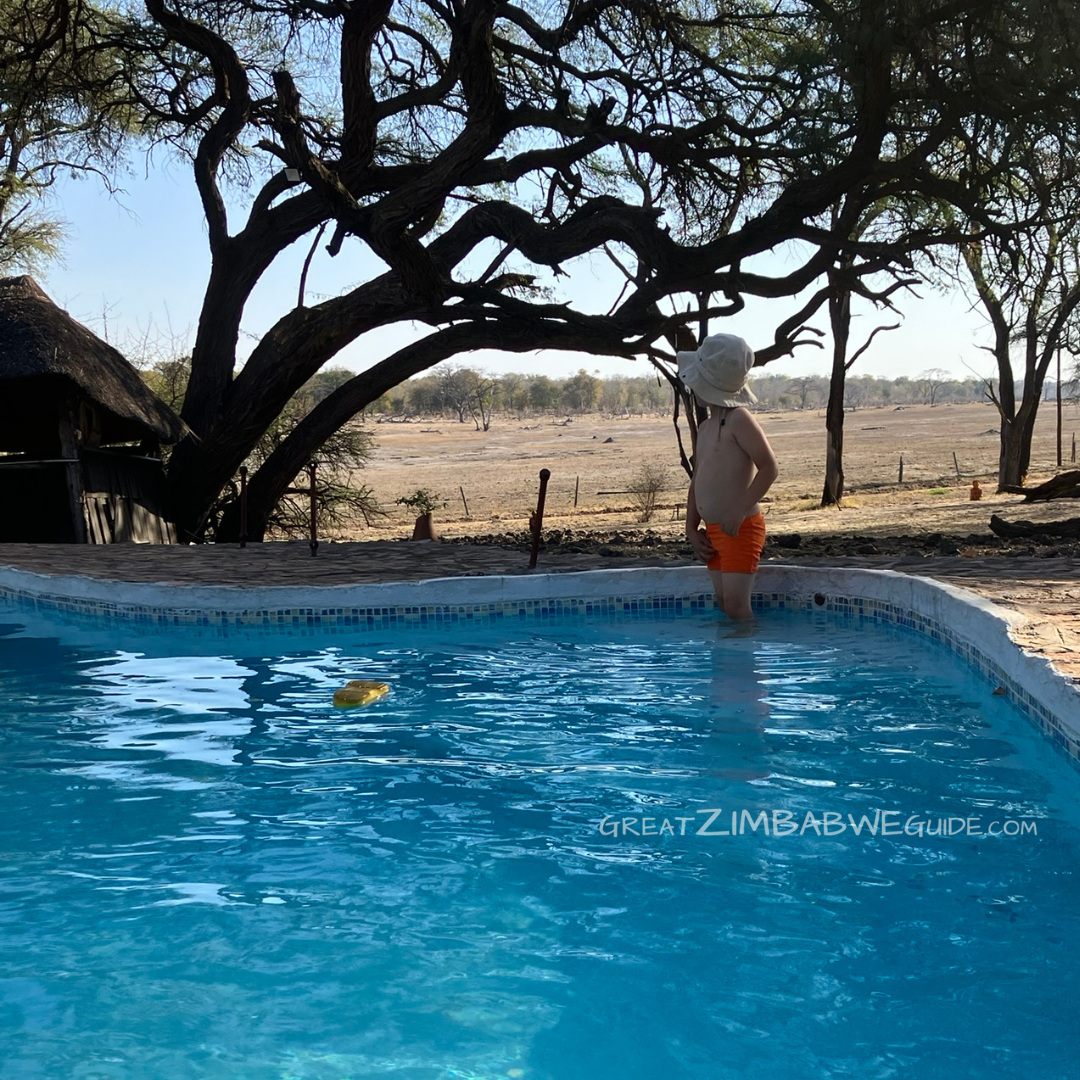 A swimming pool is a real plus when staying in Hwange – there’s nothing better for cooling off when you come back after a hot, dusty game drive. Even more so when you have kids.
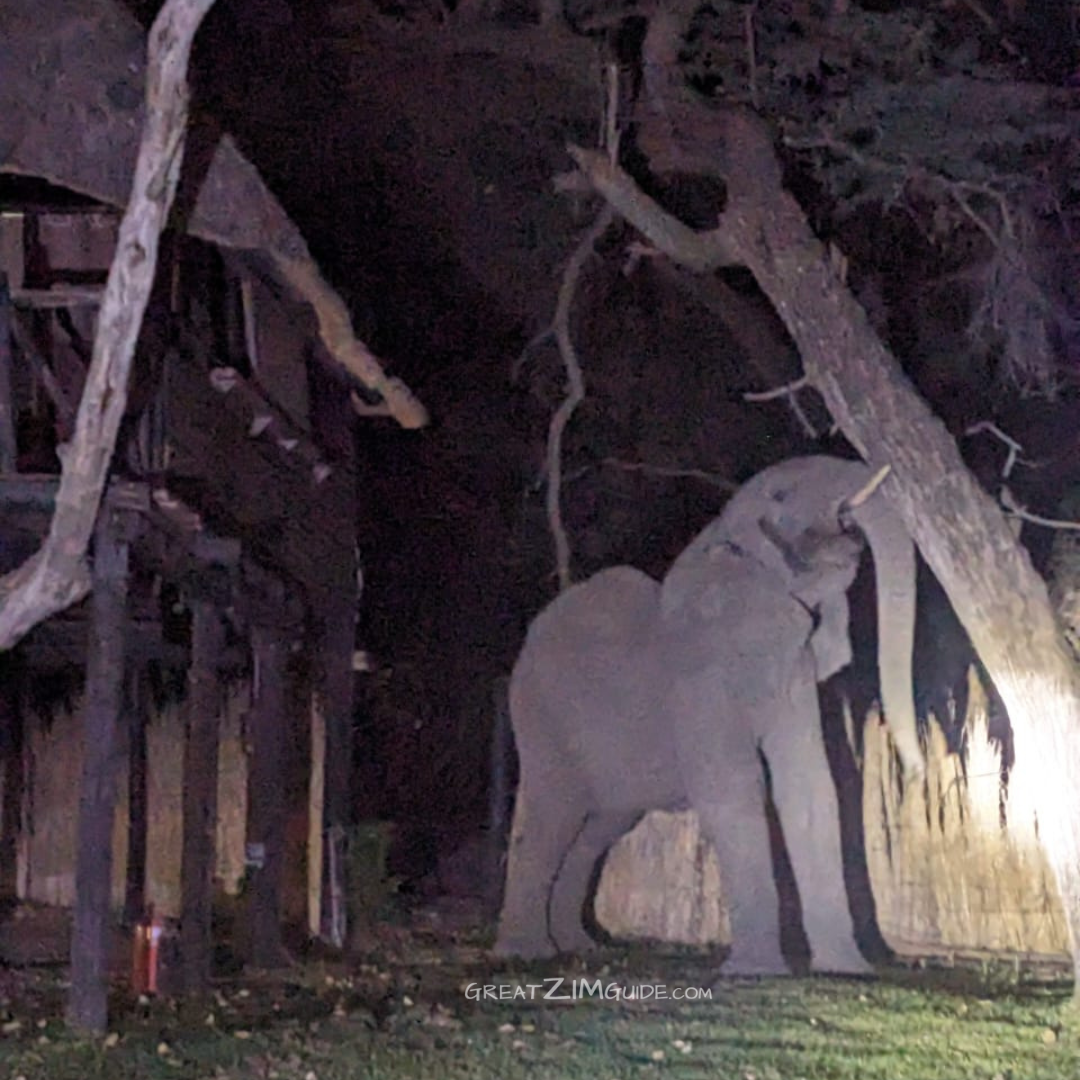
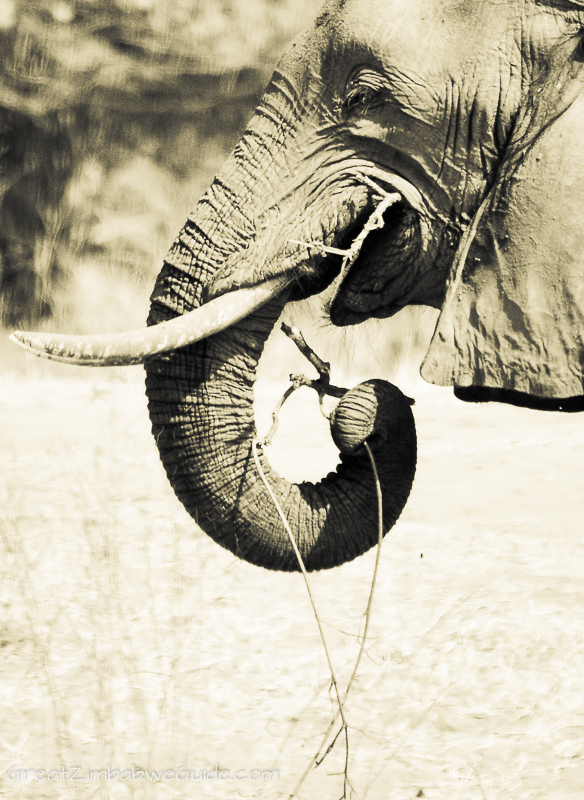
Want to know the funny thing about this pool? A local elephant loved it too. Almost every night, a lone elephant came into the lodge through a broken part of the fence, because it loved drinking the cool, clean water in the pool. It also loved eating the seed pods dropped by the trees here. There’s a staff member at the lodge whose job is to try and stop the elephant from causing damage to the lawn and other parts of the lodge. This is an almost impossible task. We loved this excitement, knowing we needed to be escorted to our rooms at night in case we ran into the elephant. But others might not share our joy. And it raises the real issue of the grey lines between human tourism and wildlife habitats. See the end of the article for a photo of the elephant!
4. Privacy of a smaller lodge
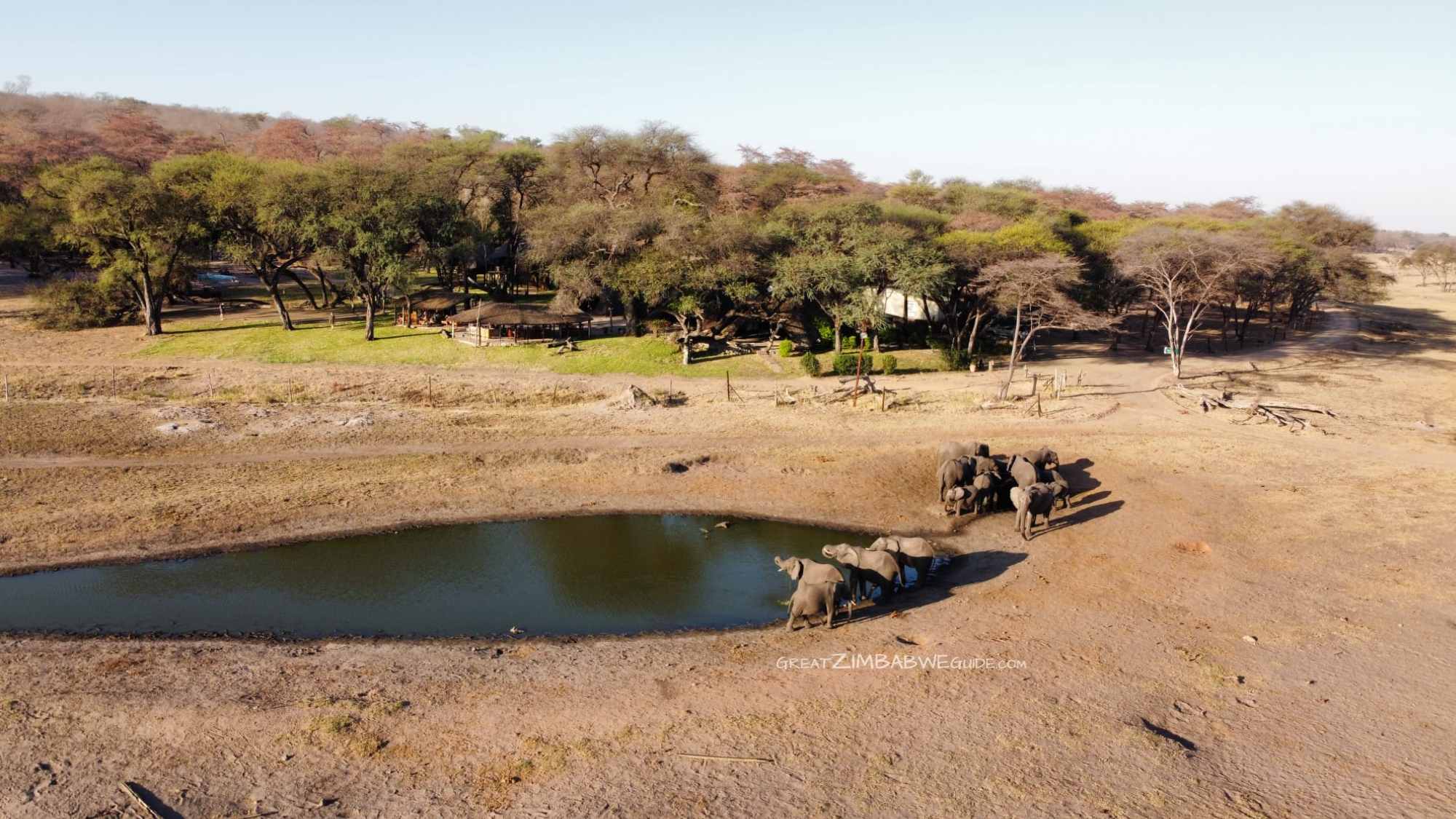 When we’re in the bush, we’re there to appreciate nature. We want to listen to the sounds that nature has to offer. If there are too many people around, they drown out the cape turtle dove, the cicadas, the yap of zebras in the distance. We don’t want to see lots of other vehicles on a game drive. We don’t want loud music at night.
So we try to choose accommodation that’s as small as possible, in an area that’s not overrun with other tourists. Our lodge ticked all of these boxes.
We were with our extended family, so we took up 4 rooms between our group. There were just a few other rooms occupied in the lodge, and the people we met were experienced travellers – some were on a longer self-drive trip to Botswana, some were locals, visiting from Bulawayo for a few days. Dinners felt relaxed and intimate. Everyone was respectful of each other and, as always, we had to ask them what animals they had spotted at the end of each day.
5. Not having to cook or clean
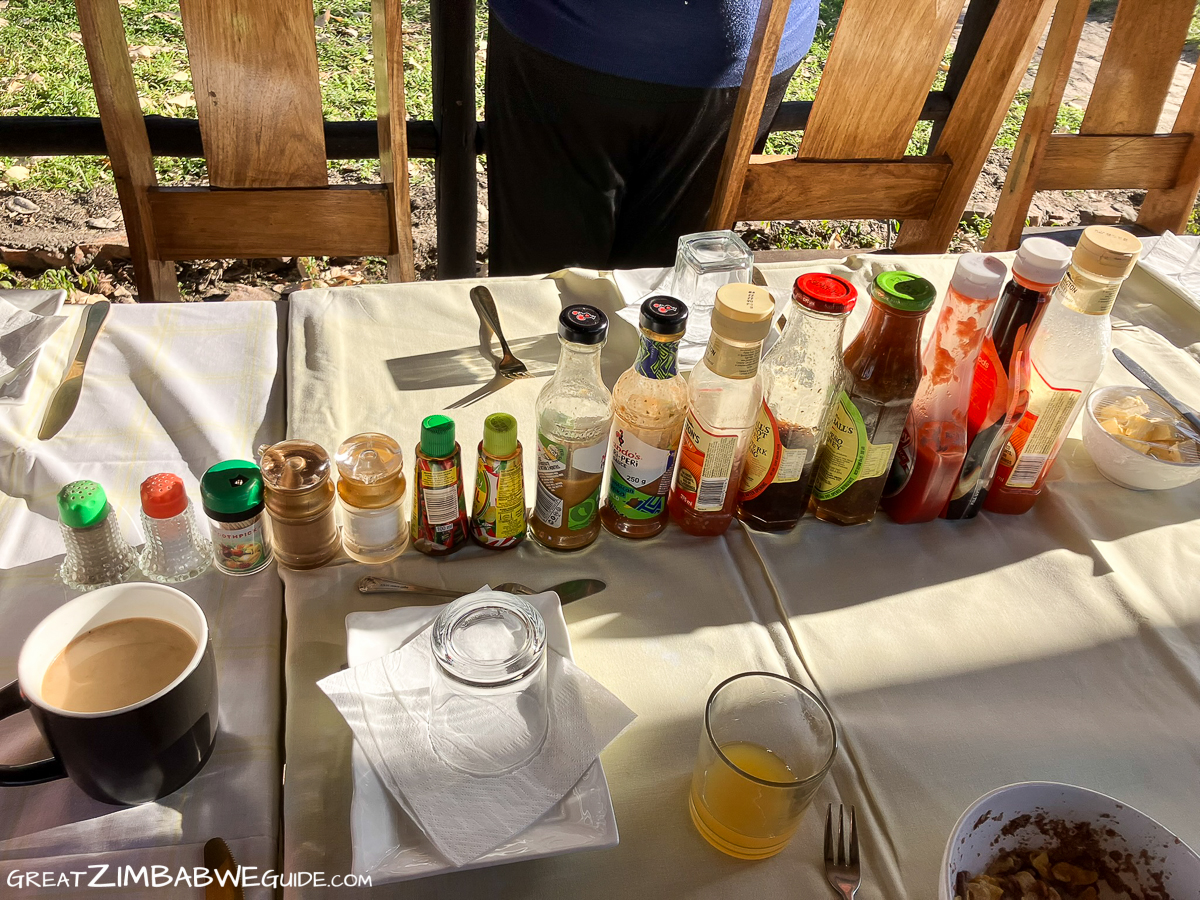
Our lodge offers a dinner, bed and breakfast basis. That means that we woke up to a full cooked breakfast each morning, plus cereals, tea and coffee. Staff even asked us what time we’d like to have breakfast, so that we could time it around morning game drives. Dinner was a three-course, plated offering each night (set meals), with soups, Western-style dishes, and cooked desserts. Tea and coffee is available throughout the day.
When you think of the difficulty in sourcing all these ingredients, in the bush, hours away from other cities, I was extremely grateful for the chef. You can’t grow vegetables easily here, because the elephants will dig them up.
For lunches and drinks, we had opted to sort ourselves out. Guests can choose whether to have lunch supplied by the lodge, or to bring their own. We bought supplies in Bulawayo, and we stored them in the shared fridges in the communal area of the lodge. We had bread rolls, cold meats, fruit, salads and so on. Plus snacks to take with us on game drives! I’d advise you to bring some picnic crockery and cutlery for this.
This mixture of catered and self-catered fare suited us well as self-drivers. It’s a big step up from camping or full self-catering – plus, no need to wash up after each meal!
Top tip: You may need to adjust your milk expectations. Some lodges, especially in very warm areas, find that fresh milk goes sour too quickly, so they use long-life milk. To me, this is a small price to pay for the joy of being in the bush.
Our rooms, too, were cleaned regularly, which made the holiday feel that much more restful. Thank you to all the staff, if you’re reading this!
Things I didn’t love about our accommodation in Hwange
I’ll be balanced and include some of the negatives about the lodge in this article, because I know y’all appreciate the honesty.
However, I’ll keep it brief, because the positives far outweighed the negatives for us.
1. We couldn’t self-drive freely around the lodge
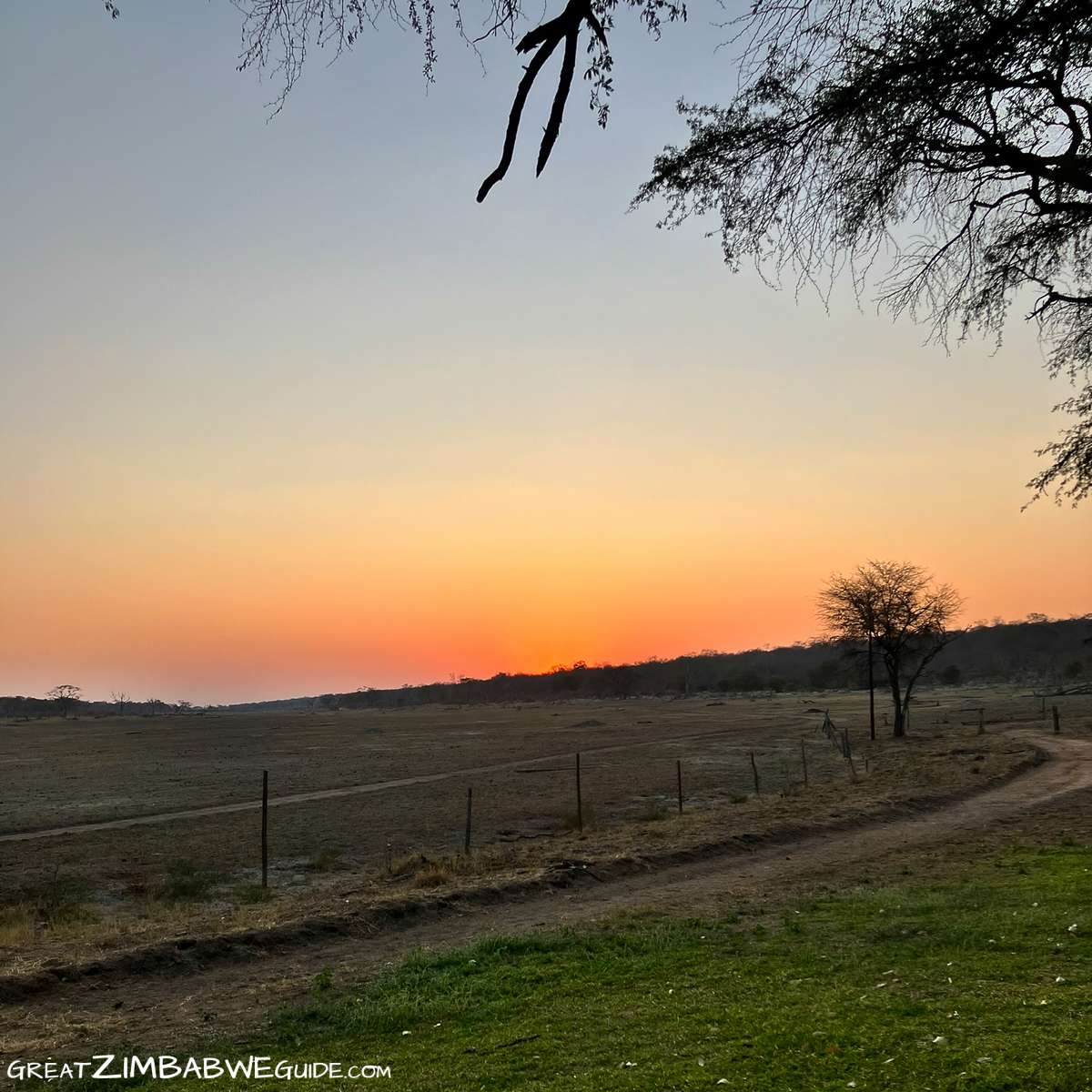 Our lodge was a private one, set in its own reserve – there are rules about who can drive in that land. Usually only licensed guides employed by the lodge can drive there.
If we wanted to go on a self-guided game drive, we had to drive into the official National Park (around 20 minutes’ drive) to do this. The National Park is larger than the reserve, so there’s more variety in what to see.
For guided experiences, we could have purchased an add-on experience to go on a guided drive of the lodge’s land in one of the lodge’s open sided vehicles. Or go on guided game drives into the National Park in one of their vehicles. They also offered guided walks.
It’s not a big deal, just something to bear in mind.
We wanted to make the most of the vast expanse of the official National Park, at a time of day and duration that suited our young kids, so we chose to do self-drive game drives into the National Park each day. This meant we had to pay Parks fees for entry. More on that in the next post.
2. We didn’t have a choice of dinner options
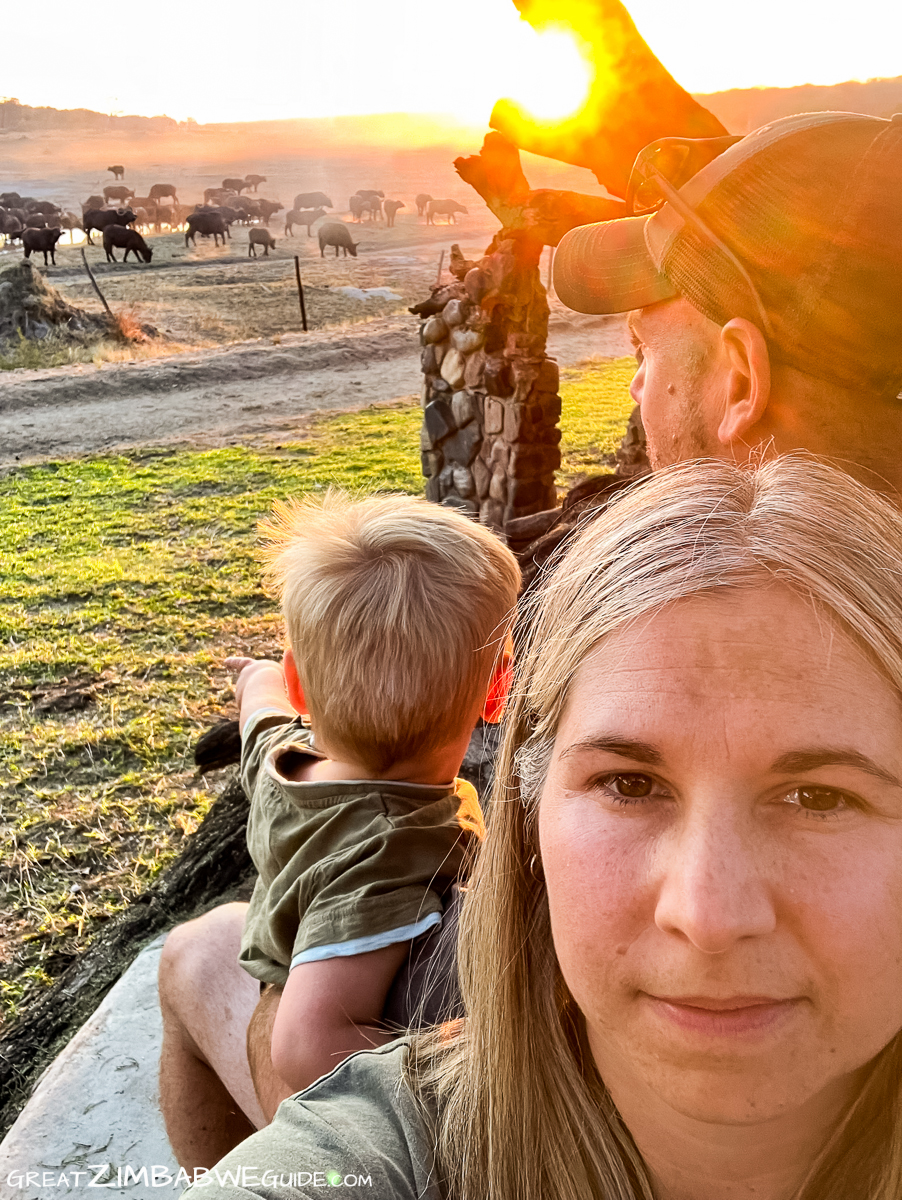 I was mostly happy with the 3-course plated dinners provided at the lodge. They were traditional Western, hearty meals. We had a serious nut allergy in our group, and the chef took this on board. If someone was a vegetarian, I’m sure this would be catered for. At the start of the trip, we were asked to give our dietary requirements.
However, I can see that some guests might have issues here. For example, let’s say that dinner is a pea soup starter, followed by pork chops, potato and vegetables for main course, and apple pie with custard for dessert. Some people would choose not to eat parts of this meal, and others might want to eat more than one plated portion. It worked for our family, because sometimes our kids wouldn’t eat some of it, giving it to the more hungry members of the group. Not everyone would know about the lack of choice when they book this lodge, so it’s just something to be aware of. Again, I was just grateful that I was able to have a break from cooking.
3. Baboons in camp
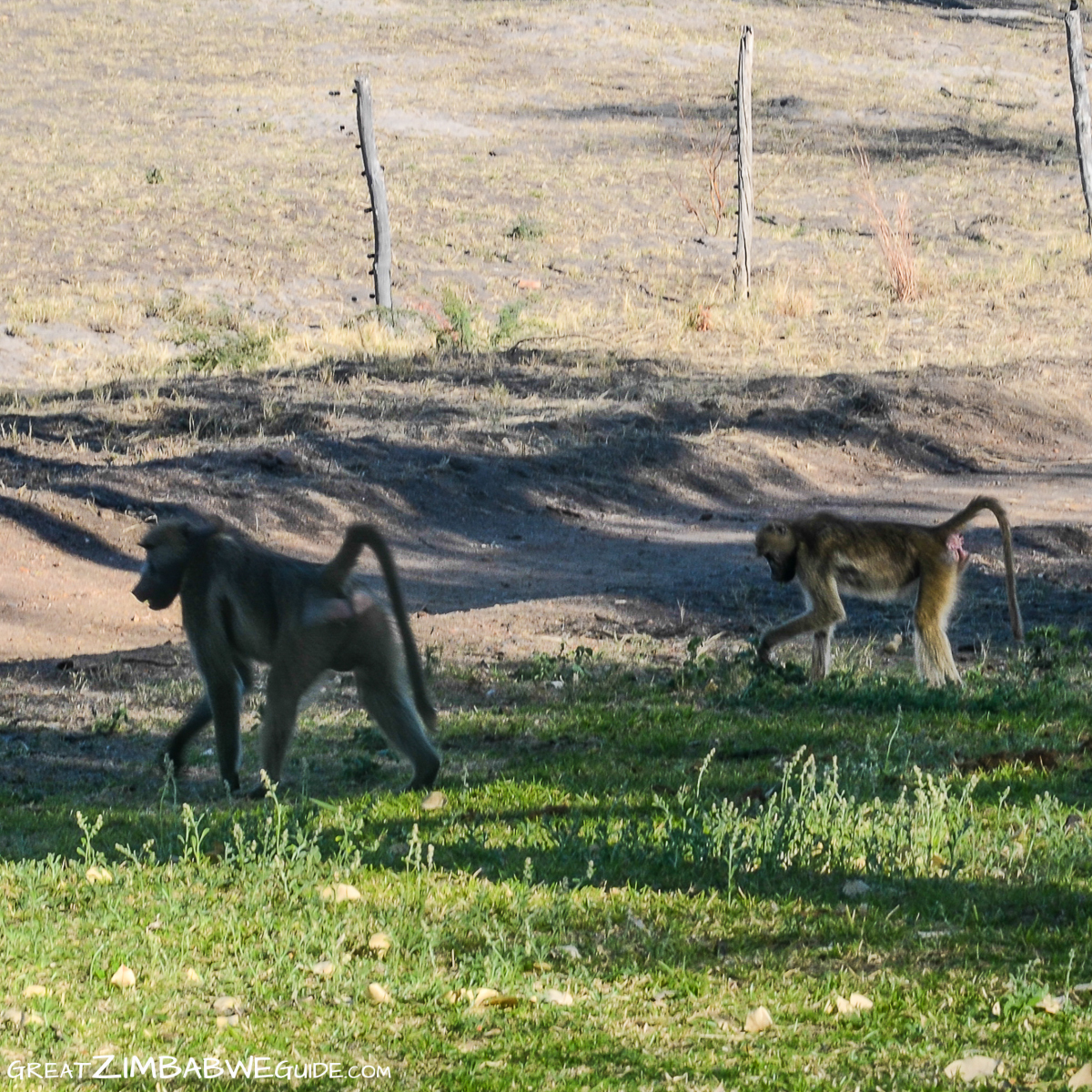 Let’s not beat around the bush (get it?), we’re in the animals’ territory here. And we are humans. This means there’s going to be some give and take. You can’t always keep monkeys and baboons out with a fence, unless you go zoo spec.
A group of baboons were very much at home in the grounds of our lodge, and they would spend their days sifting through the grass for food, grooming each other, and lazily sleeping in the trees. For the most part, they merely added to the experience.
But we had to be pro-active. Doors to rooms had to be latched at all times, and windows closed, to prevent baboons climbing in. The food in the communal area was carefully stored behind a gate. We could not, under any circumstances, feed the baboons, because it would only make them come back for more. If kids were walking around the grounds, I’d want an adult with them, just in case. But this would be the case in any new accommodation I visited, anyway.
The primate problem is common to anywhere there’s easy food for them, but following the few rules above, it can be managed.
4. In need of TLC
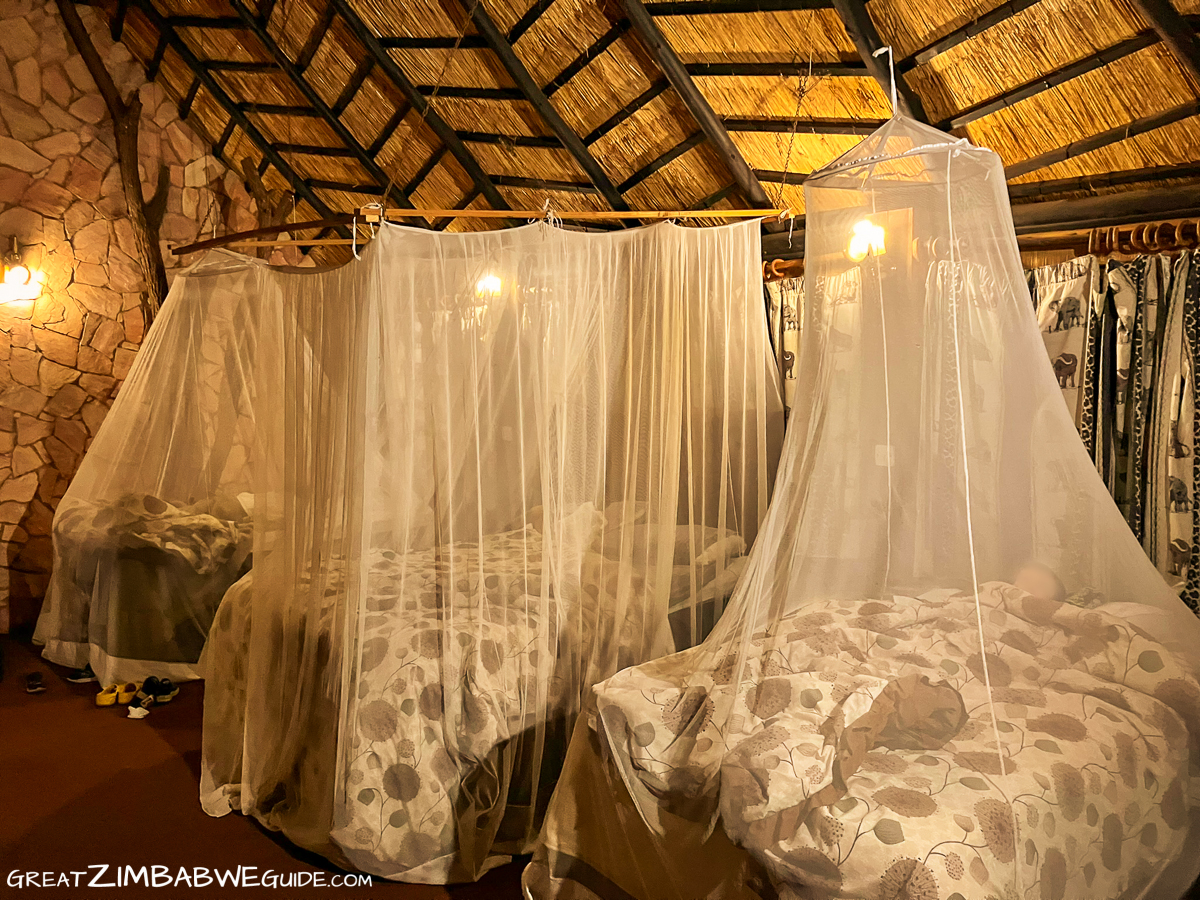 I’ve mentioned that the lodge was built in the 1970s – and in some areas, it felt like things hadn’t been touched since then. Inside the rooms, the soft furnishings were beige and brown, in a hotch-potch mix of patterns. I’d love to see more greens and less patterns, or a designer to accentuate the natural wood and stone in the construction. The wooden staircases and patios look like they’re in need of some TLC, as do the electical fittings and concrete work.
Does this stuff really matter? Not really. Did it still look better than sanitised white tiled floors and overexaggerated ruffled curtains? Absolutely.
5. Acacia trees have thorns
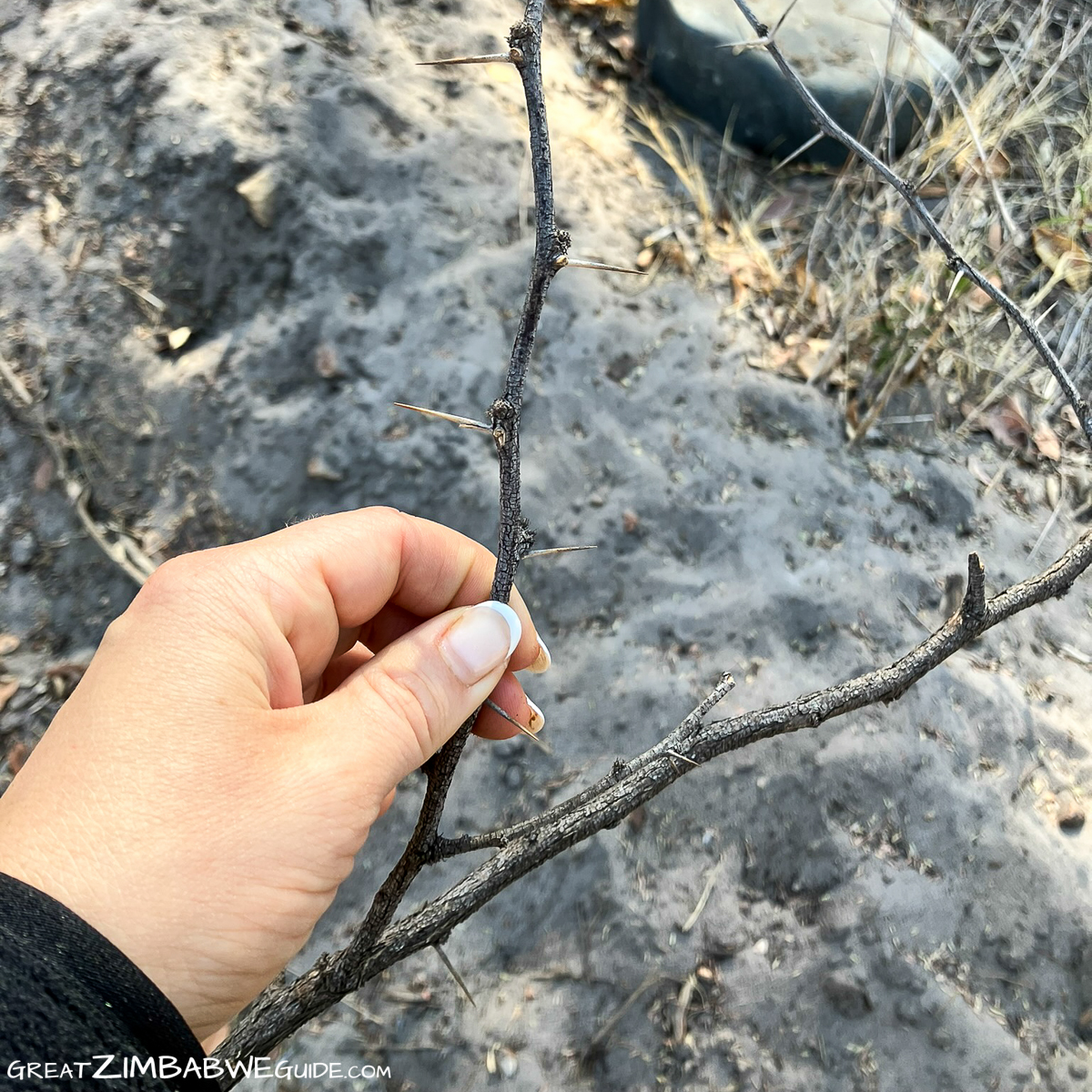 Acacia trees have that gorgeous typically African silhouette, the type that I draw whenever I’m doodling a savannah scene. However, their branches are full of white, strong, thorns, over an inch long. When baboons or elephants pull those branches down (which is often), you have to watch your step.
We told our kids that they were not allowed to walk anywhere without their crocs on. Thankfully, they followed these instructions – and the shoes still bear the marks of the pain that could have been inflicted on bare feet.
I wore flip flops in camp, and this was enough to absorb the few thorns I stood on.
What’s most important to you when you’re booking accommodation in the bush?
If you’re still reading, thank you – the name of our accommodation was The Tree Lodge at Sikumi. We booked and paid for it directly with them.
I’ve kept the name of the lodge until last, because it’s not your typical, international, bells-and-whistles, tourist-friendly safari camp. However, it suited us just right, especially in terms of budget, and the freedom to be able to take our kids on safari without being segregated to a different area of the lodge.
I’ve got an Insagram Stories highlight all about Hwange, which you can see here.
Look out for the next post in this series, about our self-drive wildlife sightings in Hwange National Park.
Or read the previous post: The road from Bulawayo to Hwange National Park.
Other articles in this Cape Town Zim diary series
- Our favourite places in Harare
- Read the overview of our Zimbabwe-only part of the trip here
- Read the big in-depth article about our independent 20-day Cape Town and Zimbabwe holiday here
- I recorded videos of the real-life streets of Bulawayo as we drove through them – see them on YouTube here
- You might like to see my packing checklist for southern Africa
- You can download my purpose-built planning tool that I use for my own trips. Plus you get to see the real-life costs and calendar for my 20-day Cape Town and Zimbabwe itinerary.
Follow Great Zimbabwe Guide on social media so that you don’t miss anything: Facebook (@GreatZimbabweGuide), YouTube & Instagram(@GreatZimGuide).
Great Zimbabwe Guide gives travel tips, information and inspiration about Zimbabwe, Africa. We share stories of Zimbabwe’s talented people, world-class wilderness & wildlife safari experiences, all wrapped up in an unmatched climate.
Do you have a question about visiting Zimbabwe? Start with the Quick-reference list of travel advice.
Get our free Zimbabwe travel information via email! Sign up to our newsletter here.
If you would like to write an article for Great Zimbabwe Guide travel blog, just email greatzimguide@gmail.com.
Are you planning a Zimbabwe holiday but need specialist help? Just contact me and I’ll recommend a great travel advisor.
#zimbabwe #traveldiary #traveljournal #selfdrive #accommodation


Leave a Reply