

20-day Cape Town and Zimbabwe holiday itinerary |
(7-days in Cape Town + 14 days in Zimbabwe) |
Here it is: the real-life low-down on our family holiday to Cape Town and Zimbabwe. We did this trip in August 2024, booked everything ourselves from the UK, and hired/borrowed vehicles in South Africa and Zimbabwe. It covers why we chose these locations, how we booked them, and our top tips.
I’m not selling your a tour itinerary here; I’m just telling you what we did independently for our own family, in the hopes that it helps you plan your own adventure.
Written by Beth
Why these two locations for this trip?
My husband and I love Cape Town because we spent our university years there. We hadn’t been back since 2007 though, so we were apprehensive to see if it had changed. (Spoiler: it was still as beautiful as we remembered.) We were born and raised in Zimbabwe, so it’s ‘home’ for us in many ways. Zimbabwe was therefore a must – especially as we wanted to show our kids (again) the magic of wildlife in their natural habitat.

I hope this article gives an in-depth view of our Cape Town and Zimbabwe holiday, so that you can plan and book your own dream trip. I’ll be writing detailed articles about each of the places too. To ensure you don’t miss anything, pause reading now and follow Great Zimbabwe Guide on Facebook and Instagram if you don’t already.
Sections in this guide
(Click to jump to the headings)
-
- Map: 20-day Cape Town and Zimbabwe holiday itinerary
- Why we chose a Cape Town and Zimbabwe holiday combo
- How we booked our Cape Town and Zimbabwe holiday
- What time of year did we visit Cape Town and Zimbabwe?
- 20-day Cape Town and Zimbabwe itinerary overview
- Itinerary day-by-day breakdown
- Transport details
- Medical and travel insurance
- Costs
- What to pack
For even more insight, you can purchase a breakdown of the costs, a customisable planner and more in our Ultimate Trip Planning Kit.
If you’re only interested in Cape Town, jump to the article Seven days in the Mother City. If you’re interested in Zimbabwe only, see The Zimbabwe leg.
Map: 20-day Cape Town and Zimbabwe holiday itinerary

There’s a detailed map of the Zimbabwe locations in the Zimbabwe day-by-day section below.
Why we chose a Cape Town and Zimbabwe holiday combo
Aside from the personal reasons I’ve mentioned, I think that the combination of Cape Town and Zimbabwe brings a beautiful blend of beach, African bush, touristy sights, cities, culture, and authenticity to the holiday. In Cape Town, there’s the pinch-me beaches, THAT mountain, shopping, and well-kept attractions. Then you fly to Zimbabwe and you feel like you’re looking behind the curtains: the wildlife and city experiences feel more raw; more intimate.
Practically speaking, we knew we wanted to go to Zimbabwe for its more authentic experiences, but we also knew we couldn’t fly there directly from the UK. I’ve written a whole article about international flight connections to Zimbabwe. We HAD to break up our flights somewhere.
I also knew that a number of airlines fly directly to Cape Town from the UK, and they often fly overnight, which is a plus when you’ve got young kids. Added to that, there are direct flights between Cape Town and Zimbabwe. This all contributed to our Cape Town-Zimbabwe combo.
We spent one week exploring the city of Cape Town and its surrounds, and two weeks travelling around Zimbabwe’s cities and National Parks. We didn’t want to feel rushed, especially as travelling between locations can be exhausting, so we allowed enough time to breathe between each leg. This way, we were able to fully enjoy and absorb the nuances of the different places we visited.

How we booked our Cape Town and Zimbabwe holiday
We’re familiar with travelling to and around Africa, so we booked our entire holiday independently. We booked our flights directly on the airline websites (more in Transport details below). We booked and paid for our accommodation in advance with each individual lodge or villa website. Same goes for car hire. I used a Google Sheets spreadsheet to keep track of the bookings.
It all worked smoothly when we got to Africa, and I had printed a list of the booking reference numbers, email addresses and WhatsApp numbers of each provider (from my spreadsheet), so that I could get in touch with the right person if should anything go wrong. My templates are all available for purchase in the Ultimate Trip Planning Kit.
If you’d prefer to have outside help putting all the pieces of your holiday together, I’d recommend an owner-run local travel agency in Zimbabwe. Just Contact me if you’d like me to recommend a specific company for you to use.
What time of year did we visit Cape Town and Zimbabwe?
We have children, so were restricted by school holidays plus work commitments. The combination of the two meant we could only travel during one month: August.
As you know, August is the end of the winter season in southern Africa, and might not be everyone’s first pick to be spending thousands of Mula on a family vacation. However, we were just glad we got to go at all.

Cape Town in August can be drizzly and cold on some days (and Table Mountain access was closed), but we still had a blast. A big plus was that we avoided the crowds at this time of year. If you’re going to Cape Town in August, read my tips on Visiting Cape Town between June and August to understand the pros and cons.
Zimbabwe was fantastic in August: no rain, clear blue skies, and not too hot during the day. Night times were chilly, but we snuggled under our blankets and revelled in the certainty that the sun would shine the next day.
If you’re going to Zimbabwe, August is a great time of year to go for game viewing. More info is in the Weather in Zimbabwe article.
20-day Cape Town and Zimbabwe itinerary overview
- Days 1 to 7: Cape Town for six nights
- Days 8 to 20: Zimbabwe
- Day 8 to 9: Harare
- Days 10 to 11: Bulawayo
- Days 12 to 15: Hwange National Park
- Days 16 to 17: Matobo National Park (or Victoria Falls if you haven’t been there)
- Days 18 to 20: Harare and flight home
Planning your own adventure? Grab my Ultimate Trip Planning Kit to organise your holiday with ease!
Itinerary day-by-day breakdown
Days 1 to 7: Cape Town for six nights
Day 1: Fly to Cape Town
- Flight: Evening. Overnight flight from the UK. Our British Airways flight departed London 22:25. I would have preferred to depart a couple of hours earlier due to the kids bed times, but it was still fine. I’ll write a review of this flight and post it here later. You technically don’t have to count this day in your itinerary, but I have, so onwards we go.
- We didn’t need visas to enter South Africa.
Day 2: Cape Town Arrival and Camps Bay
- Our overnight flight from London arrived at 11:00. It took us about 1.5 hours for us to get through passport control and locate luggage before we were able to collect our hire care.
- Transport: We hired a car. Collecting our hire car from the airport was a dream: the staff were so friendly and efficient. A hundred times better than any car hire experience we’ve had in Europe! We had brought our own car seats for the kids in our hold luggage allowance. Uber is also a good way to get around Cape Town.
- Top tip: If you’re self-driving in Cape Town, download a Google Maps offline section of the area, including Simonstown, to your phone before your holiday.
- Accommodation: We chose to stay in a self-catering serviced apartment Camps Bay: some of the best sea views in Cape Town, with beaches, restaurants and shops on our doorstep.

- Do: Take the rest of the day to settle in, and head to one of the restaurants nearby. We loved Mozambik because it was family-friendly, affordable, and we’re addicted to Mozambique-style prawns and the Afro-Porto fusion dishes.
Day 3: Two Oceans Aquarium and V&A Waterfront

- Morning: Visit the Two Oceans Aquarium to be there for opening at 9.30. We didn’t book online, we just turned up (but we went in low season). We drove and parked there near the aquarium, which is very close to the V&A Waterfront. We spent 2-3 hours in the Aquarium. Don’t forget to visit the seals outside, near Bootlegger Coffee.
- Something to note: Many attractions have lower prices for South African or African citizens, and higher prices for overseas visitors. This is similar in Zimbabwe, too.
- Lunch and afternoon: From the aquarium, walk through The Watershed (browsing the vibrant market-style shops) to the main area of The Victoria and Alfred Waterfront.
- Explore! We had meals at Santa Ana Spur (kid-friendly, including a soft play) and Life Grand Cafe (more upmarket, near the water’s edge). Check out the website for the V&A first, because there are live events, museums, boat trips to Robben Island and so much more. There are enormous yellow picture frames around Cape Town’s most famous sights, and you’ll find two of them here at the Waterfront. If you can’t make it to Robben Island, there’s a statue of Nelson Mandela at the Waterfront for visitors to acknowledge the great man.
Day 4: Cape Town Adderley Street and Table Mountain/Signal Hill

- Morning: Visit Bo-Kaap (Cape Malay Quarter). Walk around this colourful district, taking in the Bo-Kaap Museum, Rose Street, Wale Street, Marco’s African Place, and more. Just Google ‘Bo-Kaap Guide’ for more tips.
- Afternoon and early evening: Either go up Table Mountain or Signal Hill. Check the Table Mountain website beforehand, because the cable car doesn’t operate in bad weather – in this case, visit Signal Hill, like we did (website). It’s great to be there to watch the sunset, but this is very popular. From Signal Hill, you have a view of Table Mountain on on side (pictured), and can watch the sunset over the Atlantic Ocean. Both Table Mountain and Signal Hill can get very busy. If hiking up there, ensure you’re hiking during daylight/twilight only, that you’re not hiking on your own, and that you don’t take valuables with you. There’s no entry fee for Signal Hill, which is helpful on the budget.
Day 5: Kalk Bay, Simonstown and Cape Point

- Morning: Venture further out along the Cape Peninsula and out of the city today. Go to Foxy Beach / Boulders Beach Visitor Centre to see the African penguin colony. Top tip: Go early in the day! It was very busy with tour buses when we were there, so I can only imagine the crowds during peak months. We entered at the reception at Boulder Beach on Bellevue Road. Here’s a link to a map of the area. Link here to the entry fees website. Worth the entry fee to see penguins in the wild, though! There are also shark experiences in this area if that’s your thing.
- There are a couple of restaurants in Seaforth Beach if you need food at this point – the small cafe at Boulders Visitor Centre was too crowded for us. Another recommendation is Salty Sea Dog in Simonstown for fish & chips.
- Afternoon: Go to Cape Point for a hike, allowing 2-4 hours to explore the most southern point of the Cape Peninsula.
- If you have kids, ours loved the Scratch Patch in Simonstown (there’s also one at the Waterfront).
- Evening: Kalk Bay is one of our favourite places in Cape Town and we always HAVE to have a meal and a mojito at Cape To Cuba when we’re there. Harbour House restaurant is also a local icon.
- There’s so much to see along the coast from Kalk Bay to Cape Point that you could spend another few days in this area if you had the time.
- Top tip: Do try to drive along the Chapman’s Peak road to get to the areas above: it’s one of the best sea views in the world. The road was closed when we were there in August, so Google it beforehand to check that it’s open; you don’t want to get lost in that area.
Day 6: Kirstenbosch Botanical Gardens and Constantia Wine Tasting

- Morning: On the slopes of Table Mountain, Kirstenbosch Gardens are a calming tonic to the previous day’s galivanting around the peninsula (website). You don’t need to book ahead. The Rycroft Gate is a good base to start here as it is close to the famous Boomslang Walk. Two restaurants on site and the Summer Sunset Concerts are worth including in your visit if you can.
- Afternoon and evening: Wine-tasting is a must in Cape Town, so visit the nearby Beau Constantia or Constantia Glen. Booking ahead a few days in advance is recommended. Enjoy dinner at one of the on-site restaurants.
Day 7: Table View walk

- Morning: For your last full day in Cape Town, take a step back and admire that big ol’ mountain competing with sandy beach views. Hopefully the clouds will comply, too. Head to Eden on the Bay, explore the boutiques if you wish, then walk down to the beach and take a photo at the yellow frame. Watch the kitesurfers on Big Bay beach, enjoy the restaurants, and ponder at the view of Robben Island.
- Walk or drive south (towards the mountain) past Blue Peter Hotel, On the Rocks Restaurant, Blouberg beachfront to Dolphin Beach, stopping for beverages and food at your leisure. Either get an Uber, bus, or walk back to your starting point. More details here.
- Afternoon: Packing, and dinner near your accommodation.
Want to get into the nitty gritties? I’ve recreated all the planning trackers I used to map out this adventure in an Ultimate Trip Planning Kit. You can download, customise and print them for yourself.
Zimbabwe

Days 8 and 9: Harare for two nights
Time to go to Zimbabwe! Remember, this is a new country, so you may need a visa – we did. Read the article on Visas for Zimbabwe for full details. Most visitors will need to get an e-visa before arrival, which is fairly simple.
Day 8: Harare Arrival

- Transport (flight): The flight from Cape Town to Harare with Airlink departs at 10:30 and arrives at 13:40. My review of the flight and airports is in this blog post here but it was very easy. Airlink even serve snacks and drinks on the flight without needing to pay extra.
- Transport (in Zimbabwe): If you’re used to driving in Africa, I’d recommend hiring a 4×4 vehicle in Zimbabwe (try: Zimbabwe Car Hire, 360 degree car hire, Fartrans DriveLink, Open Doors Harare, and Impala Car Rental). Also see the article Driving in Zimbabwe.
- If you don’t want to drive, contact your accommodation to book a shuttle/private driver for you. I’ve also written articles on Shuttle transport in Zimbabwe and Internal flights in Zimbabwe which may be helpful.
- Accommodation: My suggestions in Harare include: York Lodge, Sunbird Guest House, Willow Lodge, Guinea Fowl’s Rest, Art Lodges, and Mount Pleasant B&B. For self-catering, there’s always AirBnB. I’d recommend staying in the North/Eastern suburbs rather than the city centre (map of Harare suburbs is here).
- We were able to stay with family in a suburb in north-east Harare, and we borrowed a 4×4 vehicle for our time in Zimbabwe. We’d brought our own car seats for the kids as hold luggage, as mentioned.
- For detailed info on Harare, see the Harare Travel Guide. Also see the Money in Zimbabwe section of our FAQs article.
Do:
- Morning: Flight with Airlink from Cape Town to Harare (3 hrs). Settle into new accommodation.
- Late afternoon: Enjoy an easy hike up the rock-hill of Domboshava (a national monument for its cultural importance) and watch that big orange sun going down in all its African-framed glory. Very small entry fee, no need to book ahead. Read about one of my visits to Domboshawa here.
- Try out Khaya Nyama Wombles restaurant for dinner – you may need to book ahead.
Day 9: Harare’s wildlife, food and culture

- Morning: Go for an early walk around Mukuvisi Woodlands, where giraffe, zebra and wildebeest will be your unfenced companions. Then head to Avondale Flea Market, located in the multi-storey car park behind Avondale Shopping centre. Nearby lunch spots include Gava’s, Café Nush, St Elmo’s Pizzeria, and The Bottom Drawer.
- Afternoon: If you’d like to see the capital city’s bustling centre, do a Free Harare Walking Tour (don’t take valuables with you, but enjoy the history and architecture). Also see my Top 10 places to visit within Harare.
- Otherwise, have a wildlife encounter at Wild is Life, or a more affordable option at Twala Trust Rescue Centre. You can read a throwback post about my visit to Twala here.
- Evening: We had dinner at Mozambik Restaurant Chisipite – yes, part of the same franchise as the one we went to in Cape Town. It was interesting to compare the prices – food is more expensive in Zimbabwe than South Africa because you’re paying in US Dollars rather than Rand. However, it was well worth it. Southern African cuisine meets Portuguese fusion here, including sadza (delicious), and the Harare Chisipite venue was MUCH more spacious than the one in Camps Bay.
My travel journal about our time in Harare is here: Journal in the sunshine city: Places we loved in Harare
Days 10 and 11: Bulawayo for two nights
This trip spends four nights in this region of Zimbabwe: two nights in Bulawayo City on Days 10/11 on the way to Hwange NP, and two nights in Matobo NP (near Bulawayo) on Days 16/17 on the way back to Harare.
Day 10: Bulawayo Arrival

- Transport: We self-drove from Harare to Bulawayo, but you can fly with Fastjet or Air Zimbabwe. We started driving at around 7:00 and arrived in Bulawayo around 13:00, which included stopping for a short break in Kwe Kwe (In Kwe Kwe, you could stop at King Solomon’s Golden Mile Hotel for refreshments; An Eye for the Wild Sanctuary for a longer stop; also Kadoma Hotel). I’ll write a separate post about the road journey.
- Accommodation: We stayed in a B&B in a south-eastern suburb of Bulawayo, which had family rooms and a pool. Suggestions for Bulawayo accommodation include: Banff Lodge, Travellers’ Guest House, The Bulawayo Club, and Hornung Park Lodge.
Do:
- Morning: Transfer to Bulawayo (6-hr drive).
- Lunchtime: When we arrived in Bulawayo we went straight to Zonkizizwe Shopping Centre and had lunch at Rooster’s Pub, revelling in the cool shade of a wide-reaching fever tree. The menu ranged from Escargot to Kudu Burger, along with mainstream beef burgers, salads and seafood. See the Bulawayo Travel Guide to find out more about Zimbabwe’s City of Kings, or Skies.
- Afternoon: Have a stroll around Hillside Dams Conservancy and have a bite to eat at the on-site café. Here’s a post on one of my visits to Hillside Dams.
Day 11: Bulawayo Museums

- Morning: Visit the Bulawayo Railway Museum of Zimbabwe for a hands-on view of historic locomotives – this is even interesting for non-train afficionados (website)!
- Next, head for the Bulawayo Natural History Museum of Zimbabwe, where you can stand next to the second largest mounted elephant in the world (website). Don’t know the difference between a warthog and a waterbuck? Here, you can get a head start on familiarising yourself with some of the wildlife you might see on safari. The fascinating museum is also home to one of the few Coelacanth specimens in the world, and an archaeological/historical display of Zimbabwe’s African kings.
- Afternoon: Contact Paul Hubbard for a tour of Makokoba, Bulawayo’s oldest high density township, or do his Prospectors’ Pub Crawl of the city’s charming waterholes of yesteryear.
My travel journal about our time in Bulawayo is here: The road to Bulawayo, and places we visited there.
Days 12 to 15: Hwange National Park for four nights
Day 12: Hwange NP Arrival

Safari time!
- Transport: We self-drove from Bulawayo to Hwange, and the journey took us 3.5 hours (full post about the road condition is here). This stretch of road was cratered and ripped, requiring careful driving – the government needs to fix this intercity road. Word on the street (pun intended) is that they are in the process of improving it, but I’m not holding my breath.
- If you don’t fancy self-driving, you can ask your Hwange accommodation to organise a road shuttle service for you. There is also a list of shuttle companies on my Coach/bus/shuttle transport in Zimbabwe article. Charter flights to Hwange are also available.
- Accommodation: We stayed in a charming, treehouse-style lodge with a swimming pool and front-row seats to a waterhole. Our lodge was situated in the Sikumi Forest area, just outside Hwange National Park itself. There are many accommodation options in Hwange, with the ZimParks self-catering lodges at the most affordable (but less equipped) end of the spectrum, and safari specialists such as The Hide, African Bush Camps and Wilderness Safaris at the better-equipped end, providing your meals and game drives for you.
Do:
- Morning: Transfer from Bulawayo to Hwange NP (3.5-hr drive).
- Top tip: You will need to pay National Parks fees to ZimParks for each day of your stay. Rates can be found on the ZimParks website here.
- Spend the afternoon settling into your new habitat, taking in the tantalising sounds and smells. Maybe have a dip in the pool followed an obligatory sundowner while starting a safari journal.
Every safari is different, so I can’t fully dictate an itinerary to you for this section, but I can tell you what we did, below, to give you a taste.
Day 13: Hwange NP game viewing

Do: Wildlife spotting, eating and resting are the order of the day when on safari.
- Morning: You can choose to do a game drive as an ‘activity’ supplied by your lodge or accommodation, where you go in one of their open-sided vehicles with one of their guides as your captain. The advantage of this is that the guides know the National Park well, and often have a good inkling of where the wildlife might be. But remember, this isn’t a zoo; just enjoy being in this natural habitat and don’t get too caught up about ticking animals off a check list.
- Organised game drives usually happen in the early morning and the late afternoon: it’s cooler at these times and you’ll see more animals. Meals and chill time at the lodge are timed around game drives.
- If you’re happy to self-drive around the National Park in your own hired vehicle (as we were) you can choose your own times to go out, as long as it’s during daylight.
- Our accommodation was situated in the Sikumi Forest, so we drove into the National Park through the gate at Main Camp (paying the Parks entry fees) after a leisurely breakfast. Make sure to get a printed map from Main Camp reception, as Google Maps won’t help you here. We took a circular route towards White Hill, stopping at the pans (water holes) along the way to get close to the wildlife, and enjoying our packed lunch along the way. Full article with a map of our driving route to come.
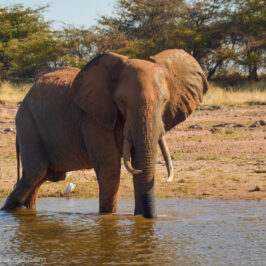
- We saw baboon, ground hornbill, elephant, impala, jackals, a lion with an elephant carcass, giraffe, crocodile and more.
- Afternoon and evening: Lunch back at your accommodation, followed by a nap or pool time. Dinner at your lodge, spotting the nocturnal animals that have come out to forage and hunt.
Day 14: Hwange NP game viewing (more!)

Do: Repeat the satisfying routine of wildlife spotting, eating and resting. The best way to spend a day!
- Morning: We’d heard from other guests that there were lions near Ngweshla Picnic Site, so we self-drove along the circular route in the east of the Park in the morning. We missed the lions, but saw wildebeest, warthog, elephant, ostrich, dik dik, sable, zebra, waterbuck, secretary bird and more.
- Afternoon and evening: We returned to the lodge for a rest – and a big herd of elephant, complete with tail-wagging babies, visited the water hole right in front of us. The sight of them filing past the lodge made for an otherworldly backdrop to a normal holiday swimming pool scene!
Day 15: Hwange NP outings

- Morning: For something different to the normal safari routine, we visited the Painted Dog Conservation Centre in the late morning (well worth seeing these endangered wild carnivores close up – take a hat)
- Afternoon: Hwange Safari Lodge for lunch and afternoon drinks in their outdoor area. They have a water hole in front of their property.
- Evening: Back at our lodge for sundowners, we had the best treat for our last night on safari: a herd of over 200 buffalo emerged, seemingly out of the dust itself, and came to the water hole to drink.
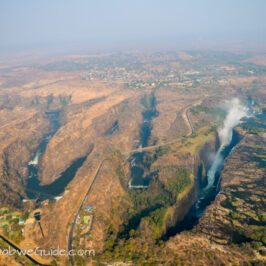
Side note: If you haven’t been to Victoria Falls: Definitely go there for 2 or 3 nights. You could do it as an additional stop, or do it instead of going to Matobo NP. Your lodge should be able to arrange transfers on request if needed. Otherwise it’s a (relatively short) couple of hours’ drive north-west from Hwange. It’s great to stay on the Zimbabwe side of Victoria Falls; it has more viewing points of the waterfall than Zambia. Read the Victoria Falls Travel Guide for details.
Days 16 and 17: Matobo National Park (Matopos) for two nights
Day 16: Matobo NP Arrival

- Transport: We self-drove from Hwange to Matobo National Park, near Bulawayo, and the journey took us 3 hours on the same road as before (slightly shorter duration than in the other direction, for some reason). Shuttle and other options are in the Hwange section above.
- Accommodation: We stayed in a self-catering tented camp in Matobo NP. We bought food supplies from the supermarket at Zonkizizwe Shopping Centre in Bulawayo town. Suggestions for accommodation include: The Farmhouse Matopos, Big Cave, Rowallan Camp, Matobo Hills Lodge and also look at the National Parks (Zimparks) accommodation in Matobo if on a budget.
- Top tip: You will need to pay National Parks fees to ZimParks for each day of your stay. Rates can be found on the ZimParks website here.
Do:
- Morning: Drive from Hwange to Matobo NP (3.5 hrs). Settle into your accommodation.
- Afternoon: Take an easy hike up World’s View, refreshments on hand, to absorb the rock-framed sunset. Here’s a throwback post on my visit to World’s View in Matobo.
Day 17: Matobo NP hiking

- Morning: Explore the ancient rock paintings, natural granite sculptures and small wildlife of Matobo on foot. You can do this as a self-guided activity (get info & maps from the ZimParks reception gate), or ask your lodge if they offer a walking tour.
- Afternoon: Go rhino spotting in one of the world’s last strongholds for wild black and white rhinos. You can try your luck at doing this with your own vehicle (don’t go offroad), but your chances are better with an expert.
- Matobo tour/activity operators (if not booked through your lodge) include Bushmen Travel Company and Black Rhino Safaris.
- Evening: We cooked meat and veggies on the braai (barbeque) in our self-catering lodge, enjoying the rocky cathedral around us and watching monkeys vying for our food from the trees above.
Days 18 to 20: Home stretch in Harare
Day 18: Harare farewells

- Morning: We drove the five hours back from Matobo (Bulawayo) to Harare, and stayed a night in the same accommodation as at the start.
- Afternoon: Don’t forget a few final meals at your favourite Harare restaurants to say farewell to Zimbabwe! We had some divine milkshakes and lunch at Three Monkeys Honeydew, and for dinner we were pretty predictable and went back to Mozambik Chisipite restaurant. Other restaurants include Khaya Nyama Wombles.
Day 19: Fly home

- Flights: Our flight to the UK departed Harare at 13:30. It was a British Airways flight via Johannesburg. The Harare to Johannesburg leg was with their South African partner, Airlink. My review of the Airlink flights and airports is in this blog post here.
- A few easy hours in Johannesburg airport, then it was time to board an A380, arriving in London at 05:50 the following morning.
- Morning: Packing
- Afternoon: Long-haul flight Harare-Johannesburg-London
Day 20: Arrive back in the UK
Flight arrives back in UK.
That’s the end of the itinerary!
Do: Look back at all your holiday photos and start planning your next trip (just kidding … kind of).
Summary
I hope this itinerary answered questions you might have about a southern African holiday. You can tailor your advanture as you wish, changing up the accommodation, duration, and transfers to suit your own preferences. We booked it and planned it all independently (using my Trip Planning Kit), but you can always contact a local travel specialist to help you if you’re feeling overwhelmed. Contact me if you’d like a recommendation.
Transport

- Flights:
- London-Cape Town and Harare-London: We booked independently with British Airways.
- Cape Town-Harare: We booked independently with Airlink.
- Cape Town: We hired a car to self-drive around Cape Town. Uber is also a good way to travel in Cape Town.
- Zimbabwe: We were able to borrow a car in Zimbabwe, but otherwise we would have hired a 4×4 from Harare (try: Zimbabwe Car Hire, 360 degree car hire, Fartrans DriveLink, Open Doors Harare, and Impala Car Rental). Also see the article Driving in Zimbabwe.If you don’t want to drive, contact your accommodation to book a shuttle/private driver for you. I’ve also written articles on Shuttle transport in Zimbabwe and Internal flights in Zimbabwe which may be helpful.
Medical and travel insurance
We took out travel insurance from the UK – BUT we also purchased a private emergency medical response service for Zimbabwe.
The reason for this: In a medical emergency, the time between the incident and getting suitable emergency medical care is critical. Medical aid /Travel insurance schemes usually require members to go through certain checks and processes before they approve a medical response or transport, which can often take valuable time. This can prove especially difficult in remote areas, or national parks such as Hwange. We wanted peace of mind knowing we could contact the quickest and best medical service to help us in an emergency. Two such providers in Zimbabwe are HAC Medical, and Ace Air & Ambulance. They both have short term tourist packages. Ensure your print their emergency numbers and keep them with you.
Costs and payment
Many attractions, restaurants and supermarkets accept international credit and debit cards. In Zimbabwe, the number of businesses accepting cards decrease outside of the main cities and towns.
We booked and paid for flights, transfers, accommodation and certain activities in advance from our home country. This means that certain costs were already covered and we didn’t have to worry about payment issues in situ. We took some cash with us to cover about 50% of our spending in the country.
I kept a spreadsheet of costs of flights, accommodation, insurance, and so on. It’s in my Ultimate Trip Planning Kit.
If you’d like a sneak peek of what the actual costs for this 20-day itinerary might look like you can buy it for just £3.99 in my Ultimate Trip Planning Kit.
What to pack
I’ve dedicated a whole article to items you might need in Zimbabwe and southern Africa – see What to pack for a Zimbabwe holiday.
Or, buy the Ultimate Trip Planning Kit where you can download the packing checklist along with a whole bunch of customisable planning templates.
The Ultimate Trip Planning Kit: Digital Download
This kit is the essential digital bundle for anyone who wants to stop being overwhelmed by logistics and start getting excited about the adventure. It replaces messy notes and endless tabs with organised, proven templates.
 This is what you get …
- Booking & budget tracker (in Excel format; simply upload to Drive to use in Google Sheets): A customisable template for you to track your trip budget and providers
- Itinerary planner (in Excel format; simply upload to Drive to use in Google Sheets: A customisable template for you to plan your trip dates
- Sample costs & providers (in PDF format): An example of costs for our 20-day Cape Town & Zimbabwe itinerary
- Sample itinerary (in PDF format: An example of the calendar for our 20-day Cape Town & Zimbabwe itinerary
- Ultimate packing checklist for southern Africa (in PDF format): Printable or viewable on your phone, this is the definitive packing list
And, if you prefer to plan your trip with good old pen & paper, you also get …
- Booking & budget tracker (in A4 PDF format): A printable template for you to track your trip budget and providers
- Itinerary planner (in A4 PDF format): A printable template for you to plan your trip dates
Yes! I’m ready to download the Ultimate Trip Planning Kit for £3.99
Great Zimbabwe Guide gives travel tips, information and inspiration about Zimbabwe, Africa. We share stories of Zimbabwe’s talented people, world-class wilderness & wildlife safari experiences, all wrapped up in an unmatched climate.
Do you have a question about visiting Zimbabwe? Start with the Quick-reference list of travel advice.
Follow Great Zimbabwe Guide on social media for even more Zimbabwe inspiration: Facebook (@GreatZimbabweGuide) & Instagram(@GreatZimGuide). To get free Zimbabwe travel information via email, sign up to our newsletter here.
If you would like to write an article for Great Zimbabwe Guide travel blog, just email greatzimguide@gmail.com.

Leave a Reply