
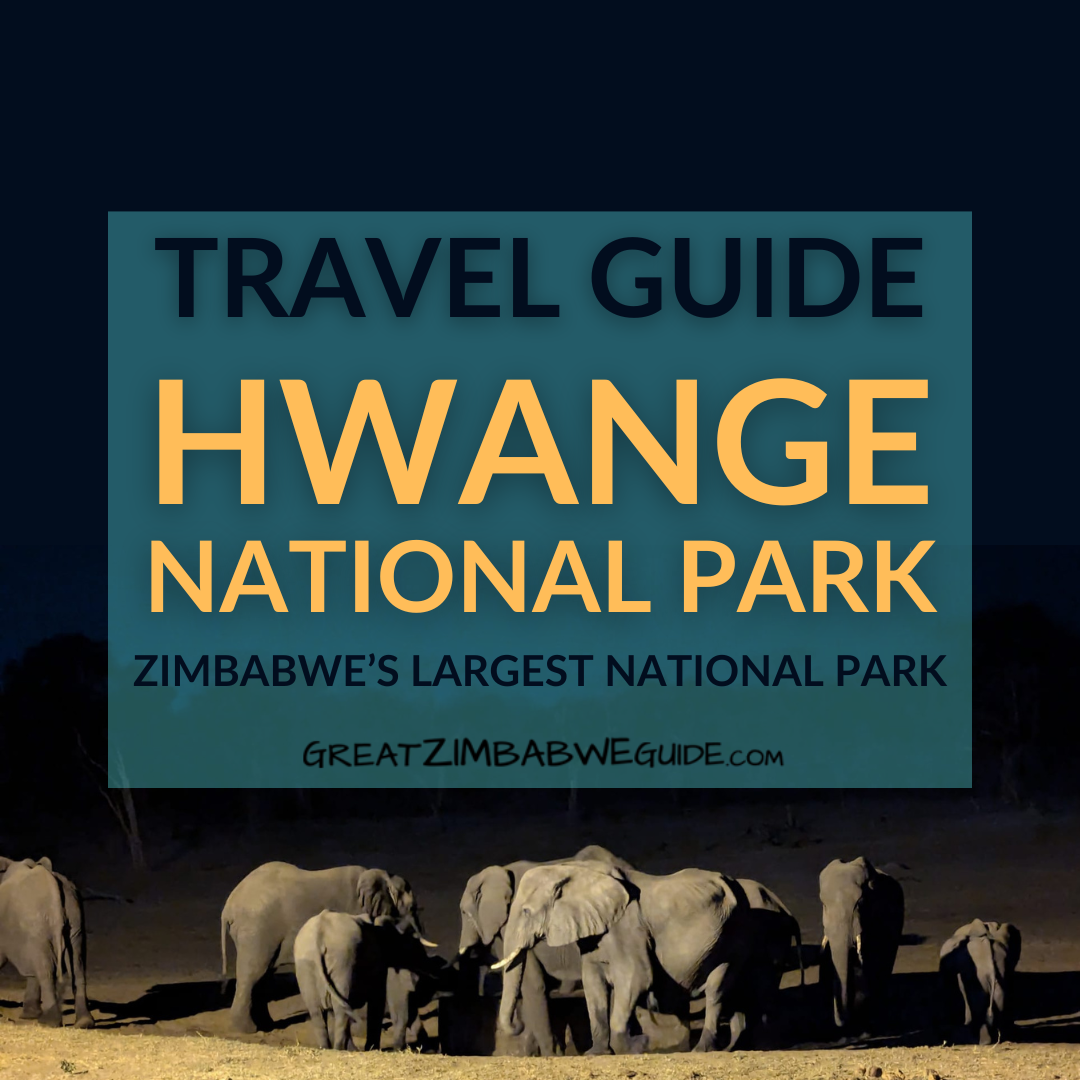
 Hwange National Park travel guide 2026
This article about Hwange National Park includes details about the location of the park, how to visit, rules for visitors, activities, best time to visit, maps, health, a brief history of the Park, and a list of accommodation.
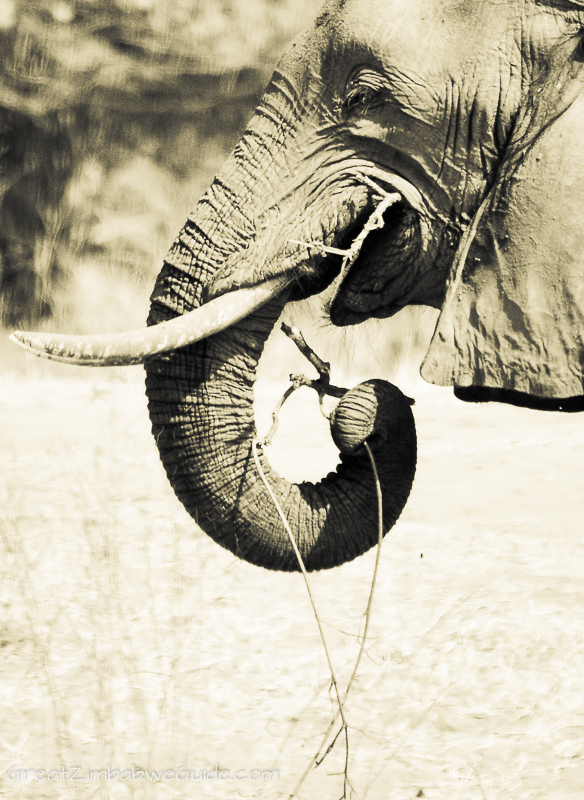
Hwange (pronounced ‘Wan-gé’) is the largest National Park in Zimbabwe, and the third largest in Africa. It is home to one of the largest elephant populations on earth, and nearly 100 other mammal species including leopard, cheetah, and wild dog (also called African hunting dog or painted wolf). With over 400 bird species, and a strong population of raptors, it is designated an Important Bird Area.
As such, Hwange is a world-class safari area in its own right, as well as an excellent add-on to visiting Victoria Falls, Whether you’re wanting a wilderness self-driving adventure, or a no-fuss fly-in retreat, Hwange is a nature-lover’s dream.
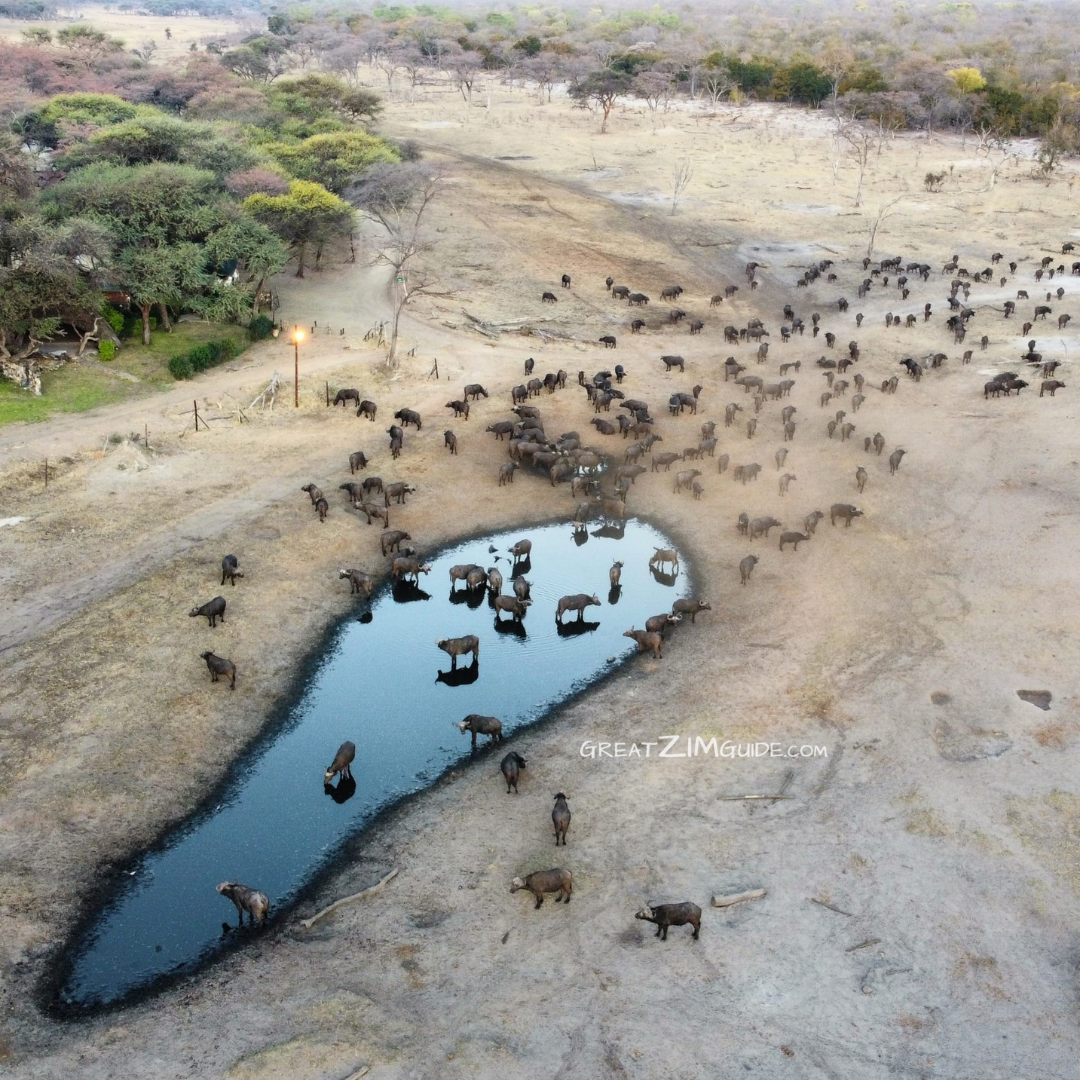
Most of the Park is unfenced, and animals move across transfrontier areas. It is hardly ever congested, as fewer people visit this park than, say Kruger in South Africa. Traffic jams are very rare in Zimbabwe National Parks!
Hwange has an area of 14,651km², approximately the same size as Northern Ireland, and a little bigger than Death Valley in California, USA.
With landscapes ranging from the Kalahari Desert at the southern edge, to granite hills, and forests containing mopane and teak in the north, it offers a varied scenery and habitats for wildlife.
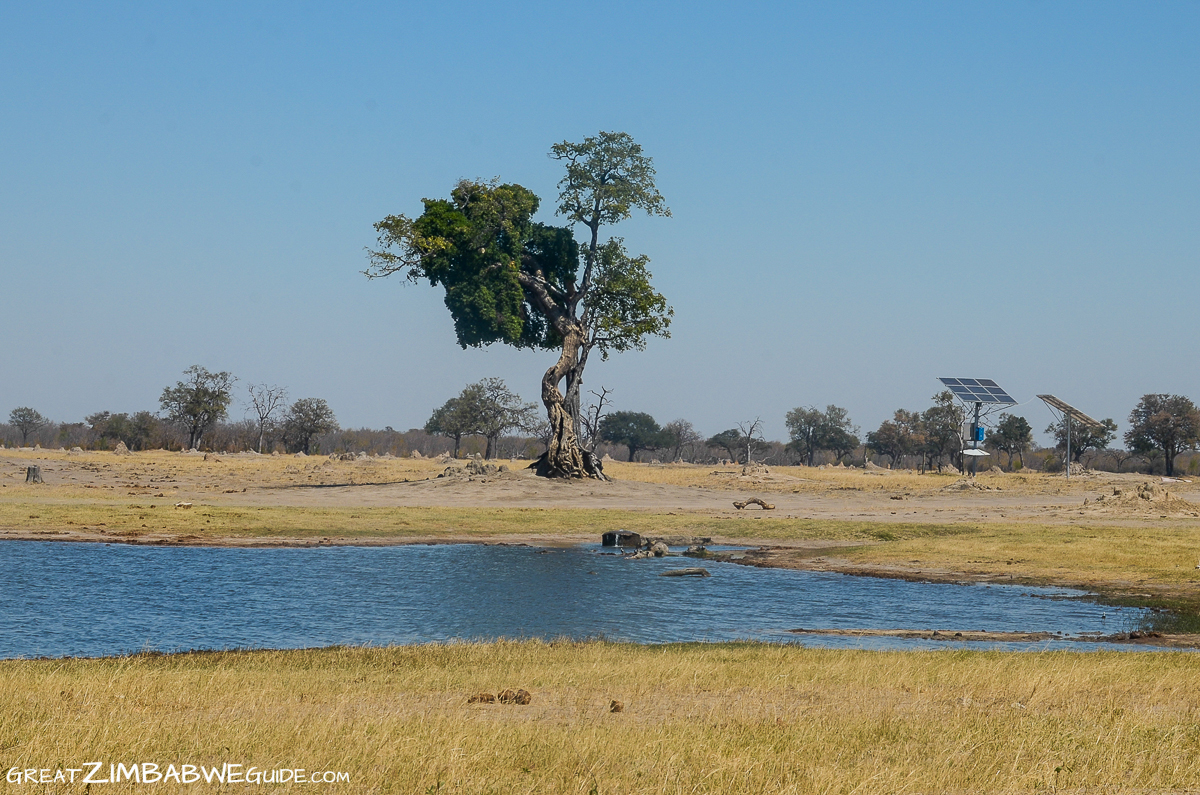
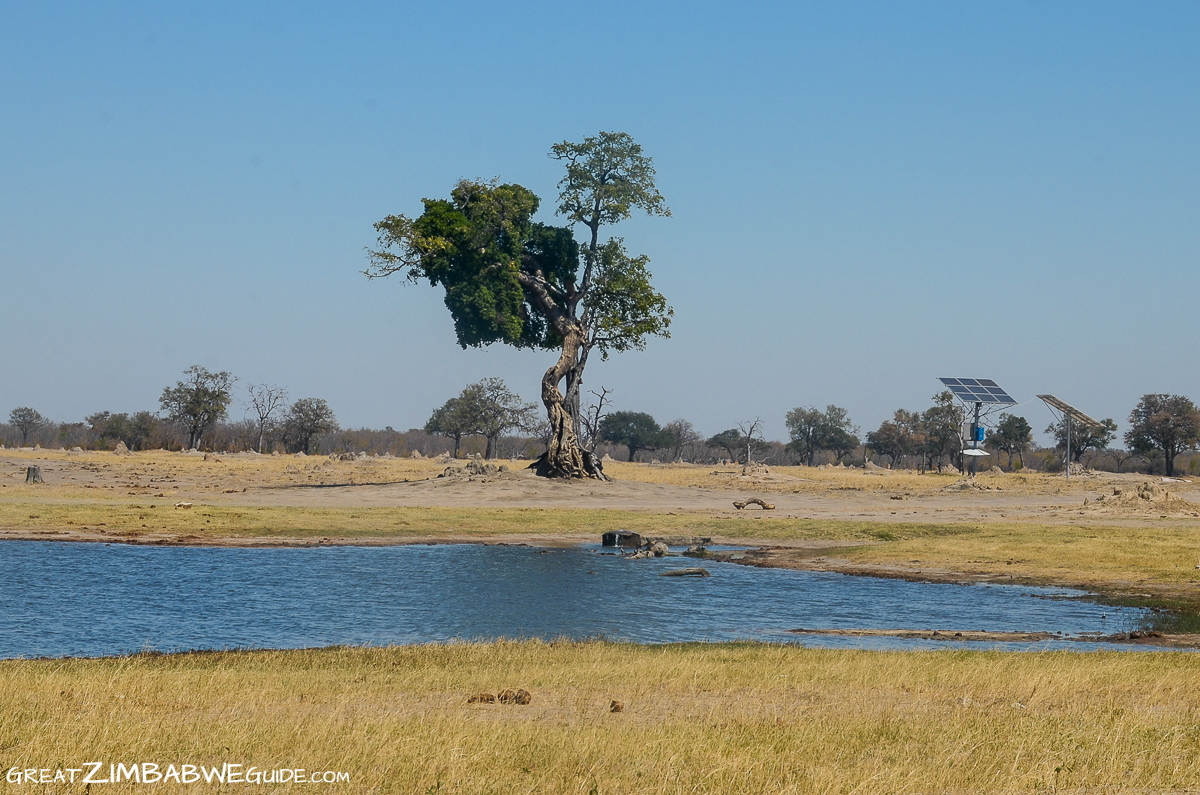
The large herds of wildlife in Hwange survive only due to underground water being pumped into 60 water holes throughout the park: an African conservation success story.
Fun fact: The “Presidential Herd” of elephants is found in Hwange National Park. It is estimated to be one of the biggest elephant herds in Africa, with 40,000 individuals. It’s not unusual to see up to 100 elephants at once during the dry season.
You can find the Big Five in Hwange (elephant, lion, leopard, Cape buffalo and rhino). However, the rhino were reintroduced to the park in 2022 and are in a specially protected area (Imvelo Ngamo Wildlife Sanctuary). Booking is required here.
Contents of this article
- Location of Hwange National Park
- Transport to Hwange National Park
- Entrance fees to Hwange National Park
- Activities in Hwange National Park
- Best time to visit Hwange National Park
- Brief history of conservation in Hwange National Park
- Maps of Hwange National Park
- Areas within Hwange National Park (in brief)
- Health tips for Hwange National Park
- Eating and drinking in Hwange National Park
- Culture and archaeology in Hwange National Park
- Accommodation and safari lodges in Hwange National Park
- ZimParks accommodation
- Private accommodation and safari lodges
- What to pack for Hwange National Park
- Interesting facts about Hwange National Park
- Books to read
- Rules for visitors to Hwange National Park
Location of Hwange National Park
 Hwange NP is located in the northwest corner of Zimbabwe approximately 283 km from Bulawayo and 172 km from Victoria Falls town. It is number 7 in the above map.
Top tip: The National Park should not be mistaken for Hwange Town, which is a mining location nearby.
Hwange National Park is in the province of Matabeleland, and the predominant language is Ndebele. English is widely spoken, and in tourist accommodation, people are fluent in English. Many other langagues such as Shona, ChiNambya and Dombe are also spoken.
There’s an article dedicated to various maps of Hwange, including free printable A4 maps, at this link.
The Park is split into three management units – Main Camp (10,765 km2), Sinamatella (1,328 km2) and Robins (2,679 km2). Each area has its own ZimParks HQ. A station is being developed at Makona in the south and this may eventually end up as a fourth management unit (source).
Transport to Hwange National Park
Options to get to Hwange:
- Self drive to Main Camp: Approx. 283 km from Bulawayo, or 172 km from Victoria Falls town on the A8 road. Turn off the A8 at Cross Mabale, signposted Main Camp. From the turnoff, it’s 23km along a tarred road to Main Camp reception.
- Read my article about the road conditions from Bulawayo to Hwange. We usually self drive to Hwange.
- You can also enter Hwange via Sinamatella (turn off A8 at Hwange Town), Robins (turn off A8 at the sign for Pandamatenga; 4×4 required) or Mtoa ZimParks Offices.
- A 4×4 vehicle is recommended, esepcially between December and March.
- The roads have potholed areas, and extra care is needed when driving.
- See this article on Driving in Zimbabwe for more
- There’s an article dedicated to various maps of Hwange, including free printable A4 maps, at this link.
- Road transfer from Victoria Falls, Bulawayo, or Harare: ask your accommodation or tour operator for their shuttle options.
- Air: The air strips in Hwange National Park are for chartered flights, mainly servicing the private camps. Ask your accommodation or tour operator for flight information.
- Rail: the services from Victoria Falls or Bulawayo are not recommended at present, due to unreliable schedules. However, you could get a transfer to Dete and then take the Elephant Express tourist rail transfer to Ngamo, if staying at Bomani or Camelthorn Lodges (high season only).
- Bus: For the intrepid, there’s the Extracity bus or Lin’s Luxury Coaches. Some lodges can pick you up from the bus dropoff points.
Getting around within the Park:
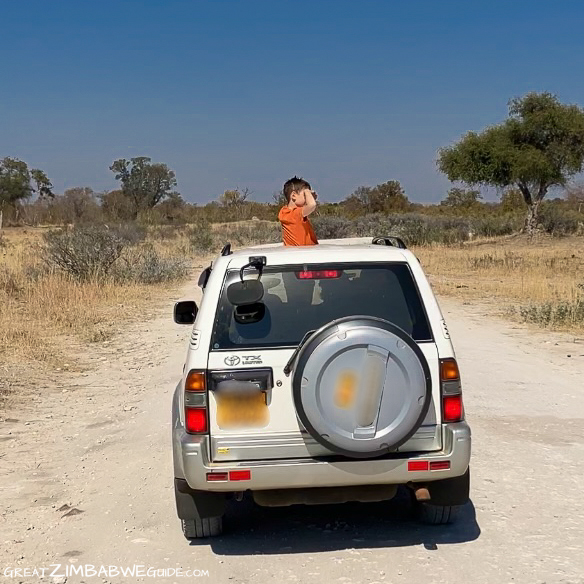
- Visitors can self-drive around Hwange National Park during daylight hours. Plan your route ahead so that you aren’t stuck in the middle of nowhere when it gets dark. The loop roads around Main Camp are a good start. Here’s an article called Hwange National Park: Info about Main Camp and simple self-drive safari routes.
- Or you can go on guided safaris with private safari lodges in their custom vehicles. Zimbabwe is renowned for having some of the most rigourously trained guides in Africa, so Hwange is a great place to go on a guided safari.
- The roads in the park are a mixture of tarred roads and gravel tracks. In my opinion, the more natural structure of the roads is a huge drawcard of Hwange, making for a more authentic safari experience than, say, Kruger National Park.
- There’s also the Elephant Express tourist train within the park (booking recommended). It travels 70 km between the Dete and Ngamo sidings, taking 2 hours.
Entrance fees to Hwange National Park
ZimParks (also called ZPWMA) is the government agency responsible for managing the Park.
- Most self-drive visitors will use the gate called Main Camp when entering Hwange National Park, and pay entry fees at the reception there. There are also Zimparks receptions at Sinamatella and Robins. The newer Mtoa gate is also manned by ZimParks officials.
- For visitors staying with private safari lodges, entry fees can be payable via the lodge – enquire with your accommodation regarding this.
- There are different levels of pricing depending on whether you’re a Zimbabwean resident, southern African resident, or international visitor. Likewise the fees change depending on whether you’re staying overnight within the Park borders, or just visiting for the day from outside the Park borders. In my opinion, it’s fair that locals should not be priced out of enjoying the beauty of their own country.
- In June 2026, the daily fee for an international visitor staying overnight within Hwange National Park is US$12.
- See the FAQ section about Zimbabwe’s currency for more info on cash, etc.

Activities in Hwange National Park
- Game drives are the main activity here: this is safari country. Game drives offer the chance to see the wildlife in their natural habitat. The best time of day to see animals are at dawn and at dusk, so these are the key windows for game drives.
- Visitors can self-drive around Hwange National Park during daylight hours, or you can go on guided safaris with private safari lodges.
- Here’s an article called Hwange National Park: Info about Main Camp and simple self-drive safari routes.
- Other types of safari: Apart from daytime self-driving to various water holes, which is available to all self-drivers, there are many other types of safari.
- Specialisms include horse safaris, walking safaris, night drives, sound safaris, photographic safaris, mobility safaris, etc. There are also bush spas and yoga retreats. These are usually hosted by staying at specific private lodges or with individual guides.
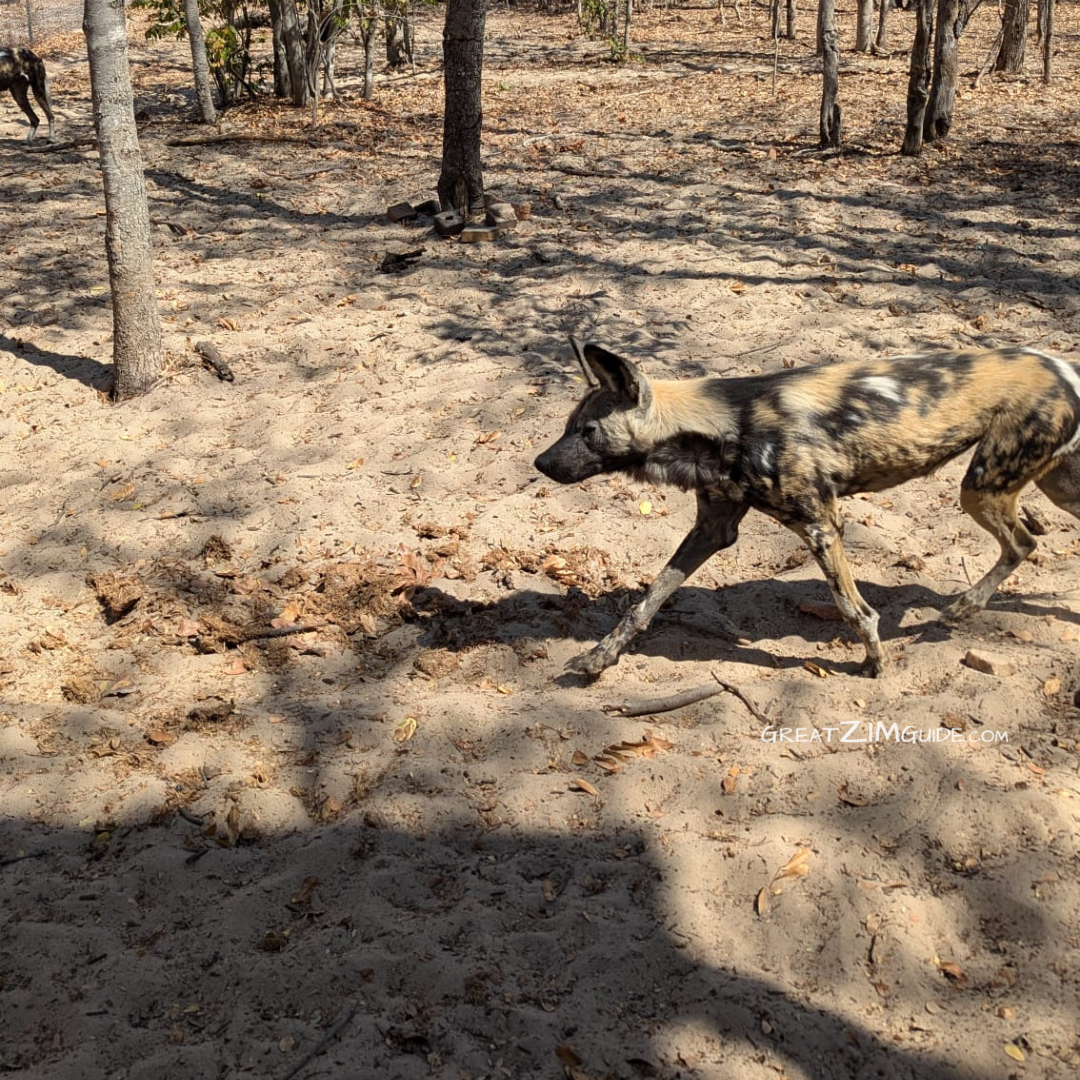
- Don’t miss the Painted Dog Conservation Centre: This rehabilitation centre treats sick and injured painted dogs (also called African hunting dogs or painted wolves) with the hope that they will be able to return to the wild once they are fully healed. It is open to visitors daily. It is located just outside the Park border near Main Camp, and it has a gift shop.
- Bumbusi National Monument (sometimes spelled Bumboosie), with its dry-stone walls in the same vein as Great Zimbabwe, and cave engravings, are located in the Sinamatella area (info).
- Mtoa Ruins are accessible from Main Camp. Mtoa Ruins from 1450-1700 AD are made up of two enclosures surrounded by the rocky remains of circular huts on raised platforms.
- Cultural visits to local communities are also possible with specialised lodges and guides.
- There’s also the Elephant Express tourist train within the park (booking recommended). It travels 70 km between the Dete and Ngamo sidings, taking 2 hours.
Best time to visit Hwange National Park
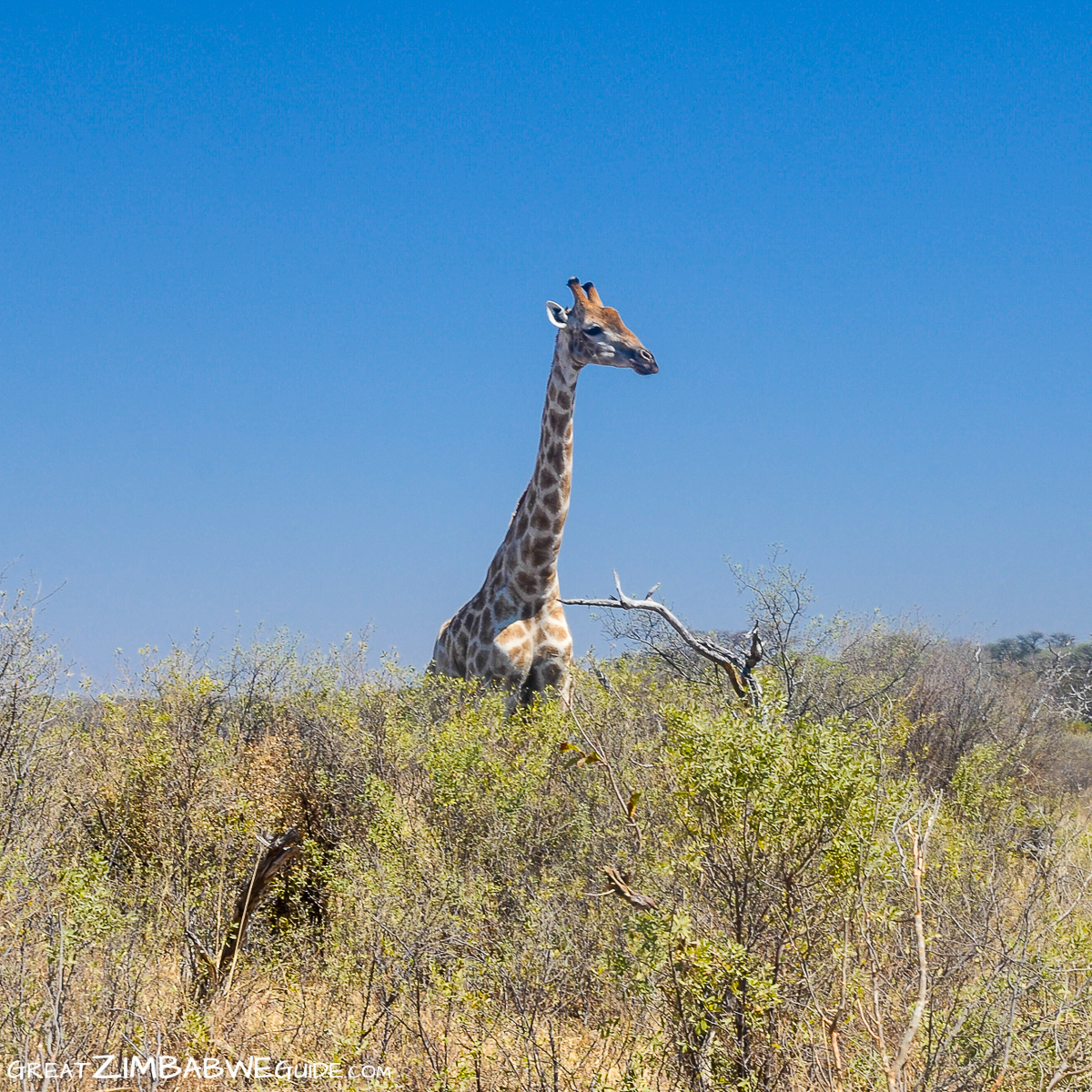
- The best time for wildlife viewing is August to November, during the country’s dry season. Animals move to the water holes in order to drink, so it’s easier to spot them. Daytime temperatures are around 26°C/79°F, and the humidity is low, around 50%, so even in the heat of the day it does not feel oppressive. It is cool at night with average temperatures of around 7°C/40°F.
- Note: October can be too hot for some visitors. Daytime temperatures can reach over 40°C/104°F.
- May to July are also good, because rainfall is usually low. Daytime temperatures are around 26°C/79°F, and the humidity is low, around 50%, so even in the heat of the day it does not feel oppressive. It is colder at night during these months, with average temperatures of around 7°C/40°F.
- Top tip: April to October are the best months to avoid malaria in Hwange. The risk of getting this disease is very low during this time.
- December to February are usually rainy, so it is much more difficult to spot wildlife. However, the bush is green and verdant, which makes for a wholly different experience. Daytime temperatures average 29°C/84°F, while night and early mornings average 18°C/64°F.
- March and April are lovely ‘shoulder’ months, with mild temperatures and little rainfall.
- See the Weather in Zimbabwe page for more about Zimbabwe’s seasons.
Brief history of conservation in Hwange National Park
- In the early 19th Century this wilderness in the far north-west of Zimbabwe was set aside as a royal hunting reserve by the warrior king, Mzilikazi, a renegade Zulu and former lieutenant of Shaka, who founded the Matabele nation.
- In 1929 the area was first proclaimed a national park, then it was enlarged in 1939 and then again in 1966.
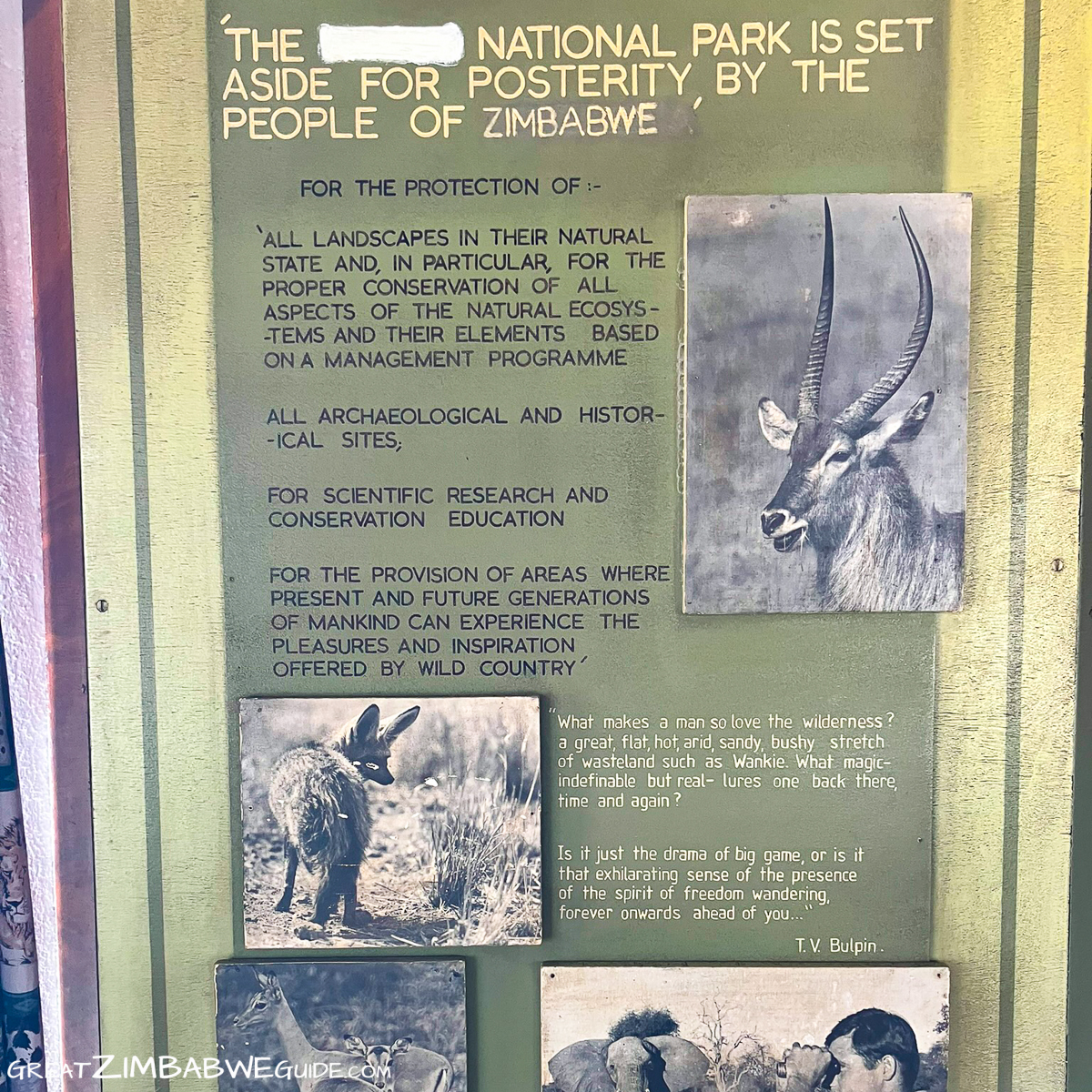
- In September 1928, Ted Davison a 22-year-old official employed at the time for Tsetse Fly control was offered the appointment as First Warden. He accepted readily. In the 33 years he was in charge of the reserve, he developed it to its full grandeur as a great national park. Wankie Game Reserve, as it was first called, was proclaimed as a national park on 27 January 1950. From that time on it was developed as a major conservation and tourist asset.
- In 2011, Hwange became part of the Kavango Zambezi Trans-frontier Conservation Area (KAZA TFCA) in southern Africa. It is still a National Park in its own right, however.
- The KAZA TF Conservation Area straddles the countries of Angola, Botswana, Namibia, Zambia, and Zimbabwe. This important conservation project is the world’s largest terrestrial conservation area. Its diverse landscape is home to the largest trans-boundary elephant population in the world, and provides critical habitat for other endangered wildlife and birds.
- KAZA TFCA combines 36 formally proclaimed protected areas, including game reserves, forest reserves, game management areas, communal lands and conservation and tourism concession areas.
- By 2014, nearly 60 artificial water sources had been established within the park to support wildlife during the dry season. These water holes are responsible for the spectacular dry-season game viewing that has drawn tourists to the area for the past six decades. Even though they are not natural features, they are recognized as one of the park’s exceptional resources. However, because these water sources require artificial upkeep, they remain vulnerable to political and economic pressures.
- The area is also part of the Hwange-Sanyati Biological Corridor (HSBC) conservation project.
- By 1949 there were 2,771 visitors and this had grown to over 25,000 by 1965. Tourism peaked in 1997 with probably as many as 140,000 entries. At that time, apart from Makololo and Linkwasha, there were no private sector camps inside the national park. Most visitors were accommodated outside the park in a plethora of camps on different land categories – safari areas, forestry estate and private land. Many of them used these areas for their activities along with visits to the park. Since 2010 tourist entries have been increasing at about 20% per annum, after reaching a very low point in 2008. There are nine tourism concessions inside the park, one of them being a leased ZPWMA facility. All others are owner built and occupied. Most of the park, especially in the south is not
used by tourists with all activities occurring in the north and east. Main Camp is the hub of the tourism industry receiving around 80% of visitors, followed by Sinamatella with around 15% and Robins with around 5% (source). - In some designated areas outside the border of the National Park, safari hunting is a controversial income-generating activity. Within the Park, wildlife is protected. However, on the borders, baiting carnivore species for safari hunting is an on-going practice. Most lions and leopards are shot on the park boundary, and 32% of lions shot on the eastern boundary have been shot on one small enclave (25km2), indicating that these animals have been attracted to the properties by the use of bait. Cecil the Lion was one of the most well-known lions of Hwange, killed by a private safari hunter.
Maps of Hwange National Park
Below is a map of the northeast section of Hwange around Main Camp, which is the hub of the park, with the most water pans and lookout points.
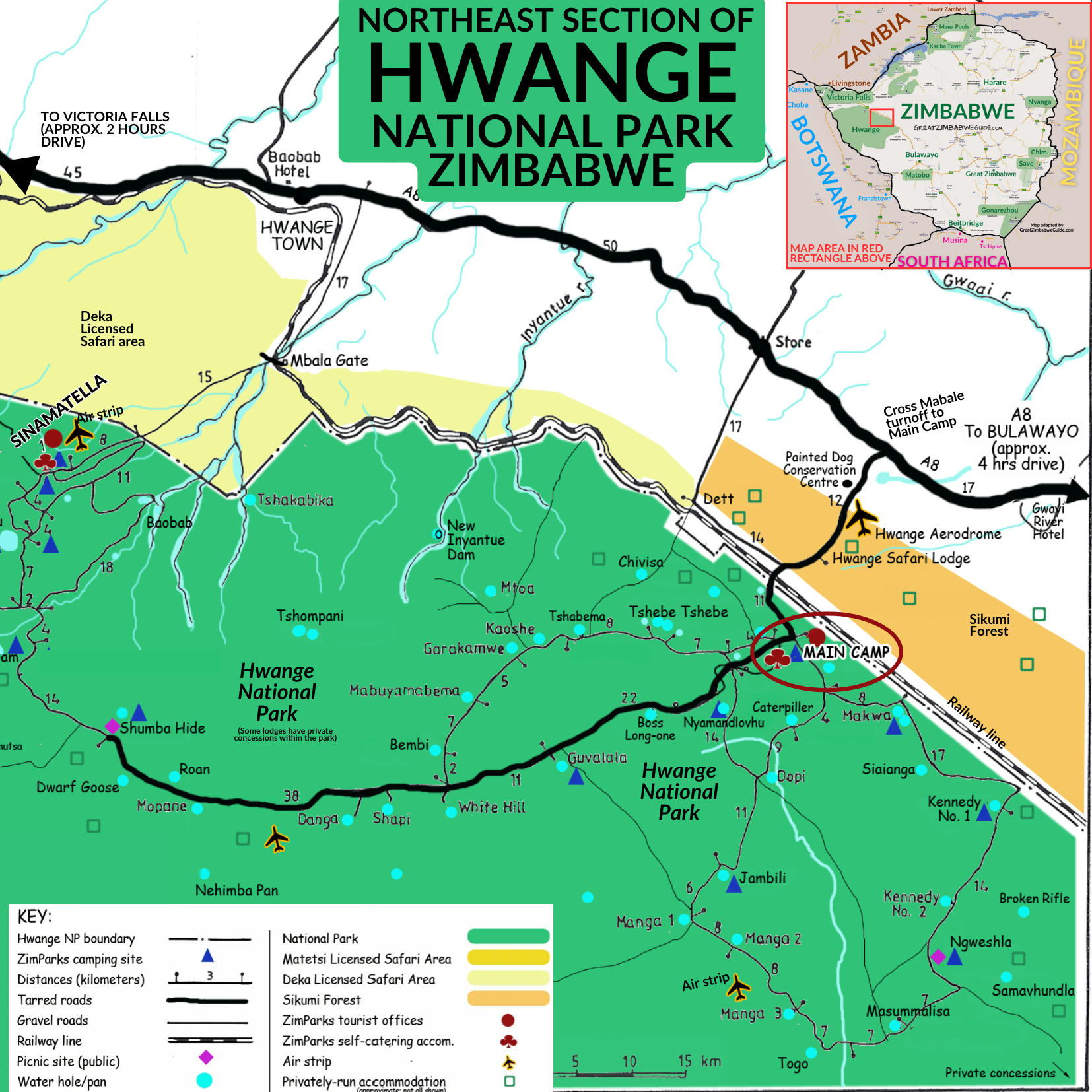
There’s an article showing more maps of Hwange, including free printable A4 maps, at this link.
Areas within Hwange National Park (in brief)
- Main Camp area: This is the hub of the Park, with the greatest concentration of wildlife and water holes. From the main A8 road, turn off at Cross Mabale, signed Main Camp. There’s a reception with information signs describing history and animals of the Park, plus a basic restaurant. There are a number of loop roads, public picnic sites and viewing platforms for visitors to choose from. Kennedy and Ngweshla picnic sites are favourites for wildlife watching. Mtoa Ruins from 1450-1700 AD are made up of two enclosures surrounded by the rocky remains of circular huts on raised platforms.
- Here’s an article called Hwange National Park: Info about Main Camp and simple self-drive safari routes.
- Sinamatella area: Approx. 125 km from Main Camp. From the A8 road, at Hwange town, turn off to Sinamatella, follow a laterite road for 45 km. Visitors can enjoy beautiful views of the Deka riverbed (and perhaps elephants here) from the ridge. Mandavu Dam has a viewing hide to watch animals drink. Bumbusi National Monument, with its dry-stone walls in the same vein as Great Zimbabwe, and cave engravings, are located in this area (info). Self-drive vehicles from Main Camp are not allowed to travel between the two camps after 2pm.
- Robins area: Approx.156 kilometres from Main Camp. Turn off the A8 road at the sign to Pandamatenga. After the A8 road, it becomes laterite road and requires 4×4. A great base if you want to explore the northwest of the Park. Known for its lion population. Deteema Dam picnic site is a great spot for game watching. Croc Pool nearby has good game, crododile and hippo. Self-drive vehicles from Main Camp are not allowed to travel between the two camps after 12:00.
Health tips for Hwange National Park
- Malaria
- Top tip: April to October are the best months to avoid malaria in Hwange. The risk of getting this disease is very low during these months, because mosquitos do not breed in the dry season.
- During September to May, visitors should take malaria prophylaxis and wear mosquito repellent.
- Please read my article Health information for visitors to Zimbabwe for more guidance on medical considerations. Always travel with Medical Aid.
- If self-driving, do not drive close to elephants, or drive off the marked tracks, to ensure you don’t get trampled/attacked as they defend themselves.
- Self-drivers will need to bring in their own drinking water.
Accommodation and safari lodges in Hwange National Park
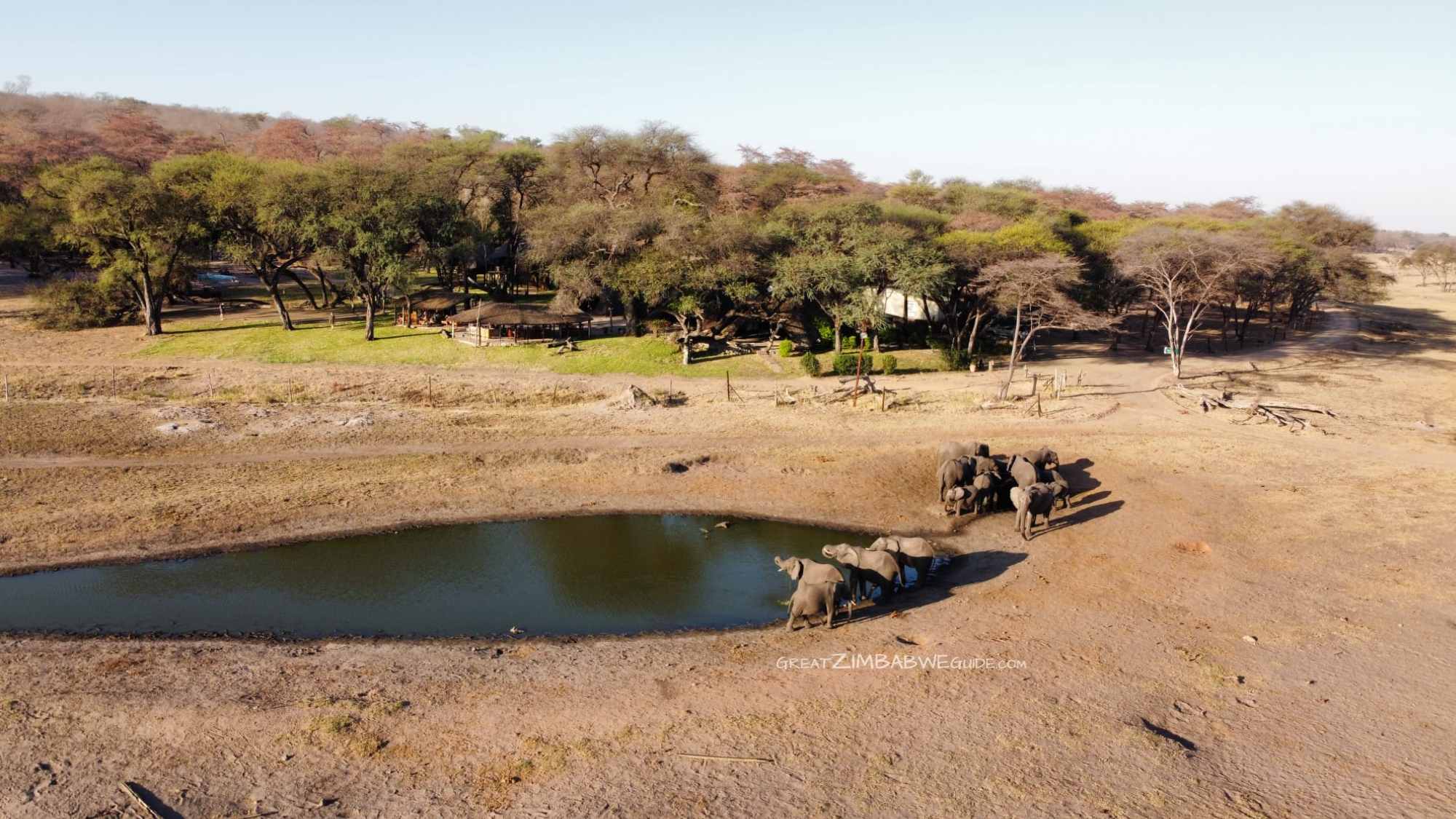 I have split this accommodation section into ZimParks and private accommodation.
Note that all visitors need to pay ZimParks daily entry fees. This can be paid at Main Camp, Sinamatella or Robins reception or via your private accommodation if they communicate this.
Some lodges have Wi-fi, some prefer to stay off grid and simply enjoy the African bush. Cell signal is patchy around the park. Many lodges use radio communication, so can stay in touch in the case of an emergency.
Booking ahead is highly recommended, especially for private lodges.
1. ZimParks accommodation in Hwange
ZimParks (ZPWMA, the government agency) offers basic self-catering accommodation and self-drive camp sites.
The information on the ZimParks website sometimes has technical difficulties, so if you’re looking for prices, try search “Zimparks rates Hwange”. For bookings, contact them via email using the address on their website. If you’re in Harare, you can book at the ZimParks office there. If you have your own camping gear and vehicle, it is possible to ‘chance it’ and arrive without booking, which may give you lower, ‘walk-in’ rates.
- Picnic sites for camping (max 6 people): Shumba, Ngweshla, Masuma, Deteema, Kennedy 1, Mandavu, Jambile.
- Platforms for camping (max 6 people): Guvalala & Makwa platforms.
- Self-catering chalets/cottages: 9 at Main Camp consisting of 1 or 2 bedrooms. 2 at Sinamatella consisting of 1 and 2 bedrooms.
- Camping/caravaning also available at Main Camp and Sinamatella (although there are mixed current reviews about Sinamatella).
- Top tip: You need to check in by 5:30pm on the day of arrival otherwise your booking may be reallocated.
- There’s an old photo of the Main Camp accommodation further down the page.
2. Private accommodation and safari lodges in Hwange
Private accommodation ranges in price and facilities: from basic self-drive camping, mid-range semi-catered, to all-inclusive luxury safari lodges.
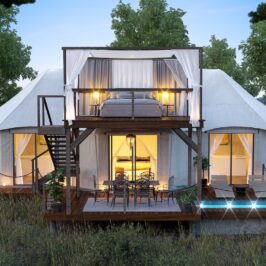
Some of these are located in private concessions within Hwange National Park, whilst some are just outside the National Park, still frequented by wildlife, in a private area. Sometimes accommodations describe themselves as a ‘Camp’ but these can be luxury permanent tents, not necessarily the rough-n-ready campsite that comes to mind! Hunting safari accommodation is not listed here.
- Bomani Tented Lodge
- Hideaways Bumbusi Wilderness Camp
- Camelthorn Lodge
- Camp Hwange
- Daka Plains Camp
- Davison’s Camp
- Deteema Springs Camp
- Elephant’s Eye
- Ganda Lodge (just outside NP border)
- Gwango Heritage Resort (just outside NP border)
- The Hide
- Hwange Safari Lodge (just outside NP border) (see my photos here)
- Ivory Lodge (just outside NP border)
- Jozibanini Camp (sometimes spelled Josibanini)
- Kapula Camp
- Kashawe
- Khulu Bush Camp
- Linkwasha Camp
- Little Makalolo, Makalolo
- Miombo Safari Lodge (just outside NP border)
- Nantwich Lodge
- Nehimba Lodge
- Robins Camp
- Sable Sands (just outside NP border)
- Sikumi Tree Lodge (just outside NP border) (see my photos here)
- Somalisa Camp, Somalisa Acacia, Somalisa Expeditions
- Verney’s Camp
Many of the private lodges actively contribute towards conservation of the wildlife, as well as healthcare and education for the people living around the Park. When looking into accommodation options, take a look at the community initiatives run by the lodge.
Read my article 5 things I loved about our lodge in Hwange (and 5 things I didn’t) for ideas of what you might need to think about when choosing your accommodation.
Eating and drinking in Hwange National Park
- If you’re staying at a catered lodge, you’ll most likely have all your food and drink provided by them. The standard is high, and you’ll be well looked after.
- If you’re self-catering, you should stock up on supplies at one of the large supermarkets in Victoria Falls or Bulawayo. This applies to fuel, too.
- In the National Park, there’s a restaurant called The Waterbuck’s Head at Main Camp reception which is open to all. When we visited in 2024, we paid $1.50 for a coke but sadly it was warm and they had no ice, which is what we were really after.
- Hwange Safari Lodge, just outside of the Park border, is also open to all and has a more extensive menu, good service, as well as a view of a water hole. It’s a great place for self-drivers to stop (if time allows) for brunch before entering the Park gates.
- Self-drivers will need to bring in their own drinking water.

Culture and archaeology in Hwange National Park
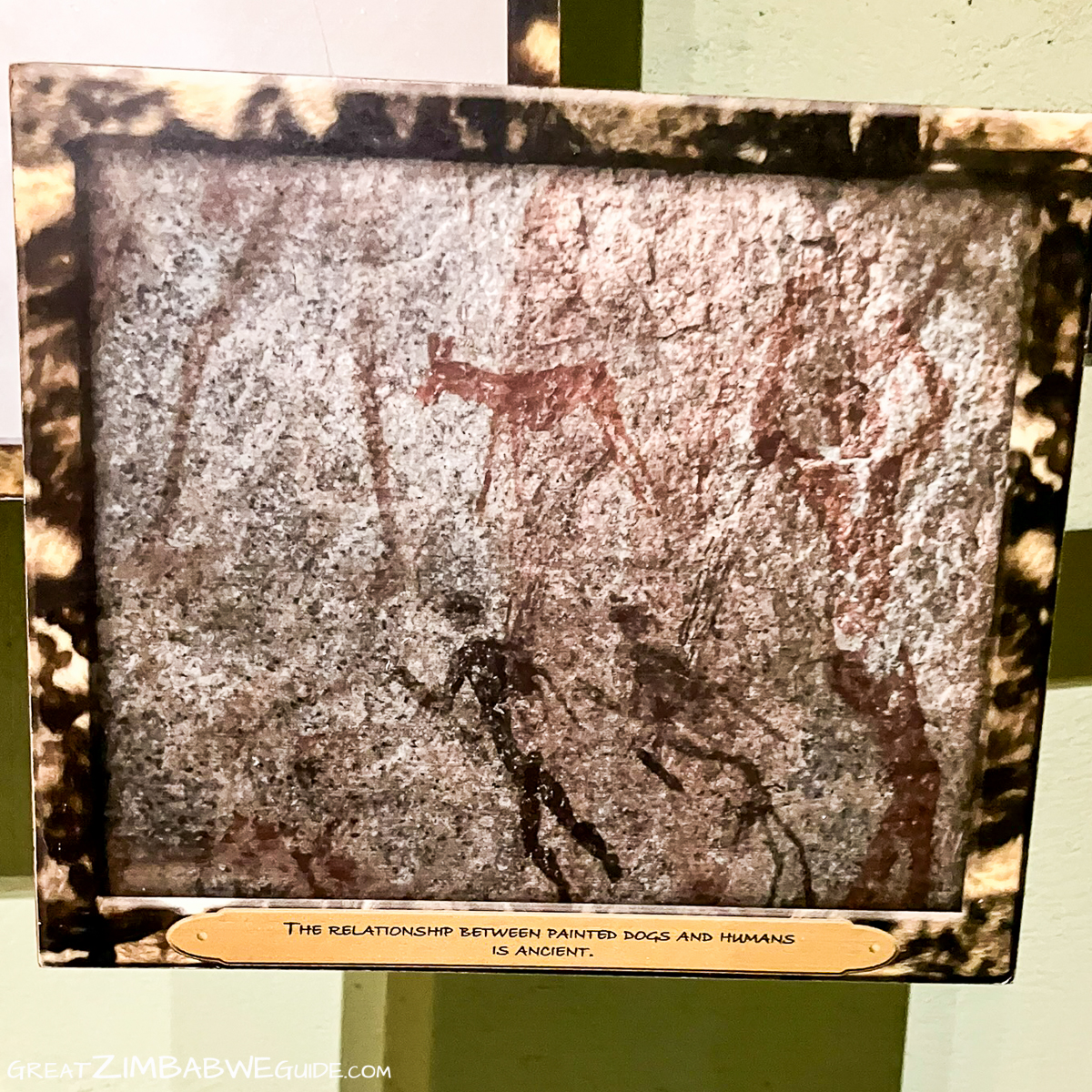 Hwange National Park has a long history, and therefore a rich repository of archaeological data, with at least 100 identified sites spanning the Stone Age, Iron Age, and historical eras.
The park features two primary stone-walling sites, located at Mtoa and Bumbusi (Bumboosi) from the 1400s to 1750s. These are open to visitors.
Because some of these areas also function as ceremonial spaces, some locations hold substantial cultural worth for the local people.
Guided archaeological tours of Hwange are available with specialist providers – simply do a search online.
What to pack for Hwange National Park
- I’ve dedicated a whole article to items you might need in Zimbabwe and southern Africa – see What to pack for a Zimbabwe holiday.
- As Hwange is a safari area, don’t take clothes that you don’t want to get dusty. Designer white clothing is not advised, especially not expensive white socks!
- Stick to neutral-coloured clothing (no bright colours or black)
- Don’t forget a wide-brimmed hat and sunscreen.
- A fleece jacket is great for the unexpectedly cold mornings.
- Perhaps a handheld old-fashioned fan to swat away the odd bug.
- Take a refillable water bottle for game drives, but check with your accommodation whether the water is drinkable first. Self-drivers will need to bring in their own drinking water.
You can also buy the Ultimate Trip Planning Kit where you can download the packing checklist along with a whole bunch of customisable planning templates.
Interesting facts about Hwange National Park
- The park features shallow pans and natural sodium- and lime-flavored salt licks that draw wildlife from the neighboring Kalahari wilderness. Considered one of the natural wonders of Southern Africa, most of these pans span 20 to 30 meters in diameter and collect up to a meter of water following the rains.
- Intriguingly, these depressions are forged entirely by termites and larger wildlife. Termites bring essential minerals like lime to the surface while constructing their mounds. These rich mineral deposits attract wild animals—particularly elephants—who crave the salt. As animals eat away at the mounds to access the nutrients, they create hollows in the earth that trap rainwater. These craters continually expand over time as animals drink the water, consume the mineral-rich soil, and carry the mud away on their hides.
- It is the only protected area in Zimbabwe where gemsbok and brown hyena occur (in small numbers).
- The annual Hwange Game Census is organised and run by Wildlife and Environment Zimbabwe (WEZ). It is the longest continuously running game census in Southern Africa.
Books to read
- The Elephants and Me: Pursuing a Dream in Troubled Zimbabwe by Sharon Pincott
- A true story filled with both joy and foreboding, this portrait of Zimbabwe and its wildlife comes from an Australian woman who went as a tourist to Africa and then decided to leave her old life and live permanently in tumultuous Zimbabwe to work with elephants on land bordering Hwange National Park.
- Elephant Dawn: The Inspirational Story of Thirteen Years Living With Elephants in the African Wilderness by Sharon Pincott
- In 2001, Sharon Pincott traded her privileged life as a high-flying corporate executive to start a new one with the Presidential Elephants of Zimbabwe. She was unpaid, untrained, self-funded and arrived with the starry-eyed idealism of most foreigners during early encounters with Africa. For thirteen years – the worst in Zimbabwe’s volatile history – this intrepid Australian woman lived in the Hwange bush fighting for the lives of these elephants, forming an extraordinary and life-changing bond with them.
- Bradt Zimbabwe Travel Guide 2025: With a Foreword by Sir Ranulph Fiennes by Paul Murray
- Remembering African Wild Dogs: 6 (Remembering Wildlife) by Margot Raggett
- Letters From Wankie by Patricia Friedberg
- Wankie” is a unique true story based on the collection of some 500 air letters the author, British-born Patricia Friedberg, wrote home to England in the mid-1950s, during the first two years of her marriage to her South African physician husband. Together the newlyweds moved to the remote mining town of Wankie (now Hwange) in the far northwest corner of Southern Rhodesia (now Zimbabwe) where he was employed as a colliery doctor. More than 50 years later, after her mother passed away, Patricia found among her mother’s papers the bundle of air letters neatly tied and safely stored.
The above book links are affiliate links.
Rules for visitors to Hwange National Park
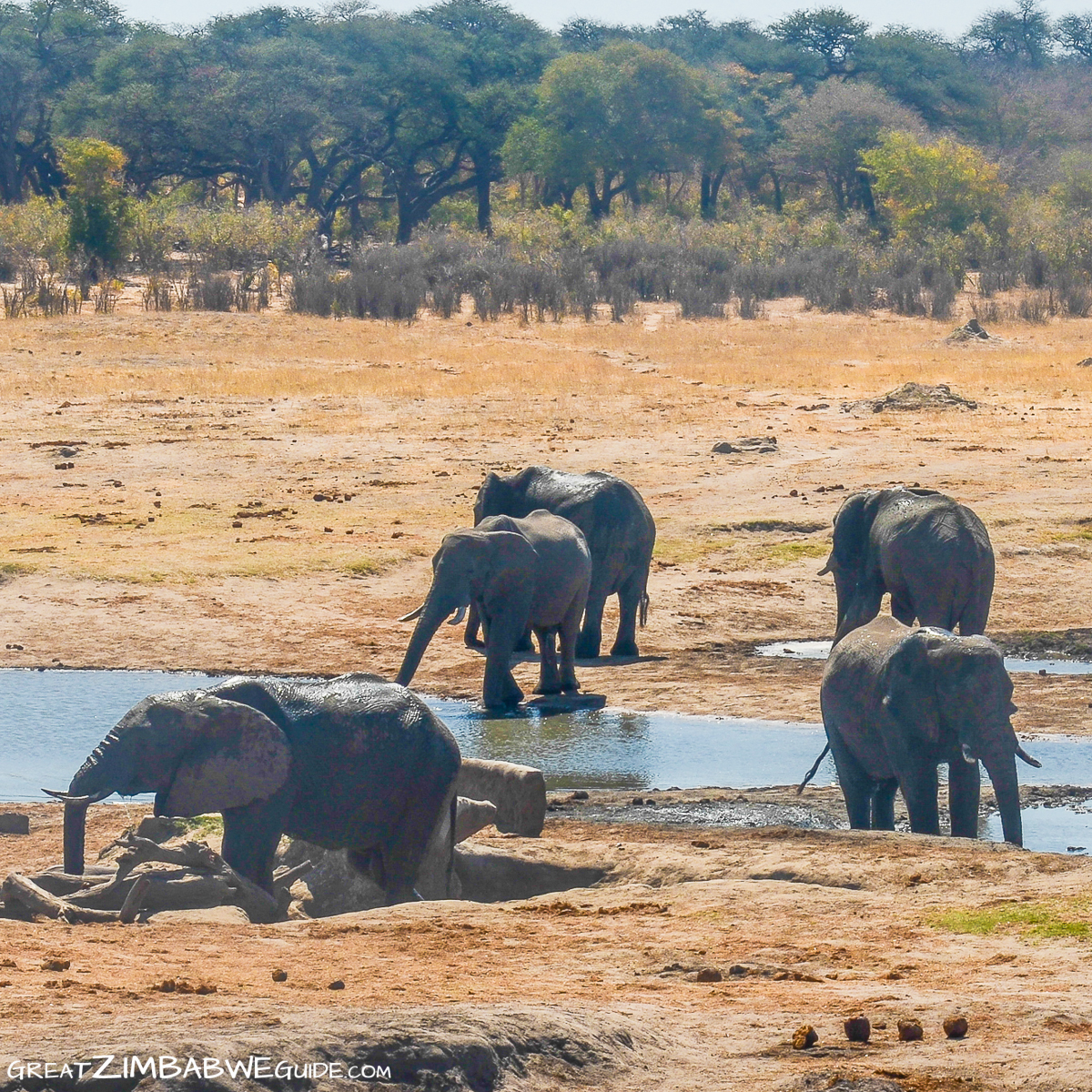
- For your safety, stay on the road and in your vehicle at all times, unless with a professional guide.
- Please do not feed animals or birds.
- Camp at designated sites only.
- Do not use scooters or motorbikes in the Park.
- The carriage of weapons, explosives or poisons is prohibited.
- Please do not disturb animals by making unnecessary noise.
- Removal of any plant or animal samples is prohibited.
- Do not pollute water sources.
- Bringing pets in the Park is prohibited.
- Please do not damage or remove State property.
- Do not place advertising material within the Park.
- Flying aircraft at less than 150m above the ground is not permitted without a permit.
- Do not leave any litter in the park. Carry out what you bring in.
The rules of the Park are to ensure that the animals are not disturbed by us humans. This should be your primary concern when here. Remember that wild animals are unpredictable and dangerous when threatened.
If you would like to donate to the preservation of this unique National Park, please visit the Friends of Hwange donation page.
The Ultimate Trip Planning Kit: Digital Download
This kit is the essential digital bundle for anyone who wants to stop being overwhelmed by logistics and start getting excited about the adventure. It replaces messy notes and endless tabs with organised, proven templates.

Yes! I’m ready to download the Ultimate Trip Planning Kit for £3.99
Related articles




Great Zimbabwe Guide gives travel tips, information and inspiration about Zimbabwe, Africa. We share stories of Zimbabwe’s talented people, world-class wilderness & wildlife safari experiences, all wrapped up in an unmatched climate.
Do you have a question about visiting Zimbabwe? Start with the Quick-reference list of travel advice.
Get our free Zimbabwe travel information via email! Sign up to our newsletter here.
If you would like to write an article for Great Zimbabwe Guide travel blog, just email greatzimguide@gmail.com.
Are you planning a Zimbabwe holiday but need specialist help? Just contact me and I’ll recommend a great travel advisor. Alternatively, I offer a consulting service whereby I can analyse your suggested itinerary and check for any problems.
#hwange #hwangenationalpark #zimbabwe #africa #safari #elephant #traveltips #travelguide #transport #bucketlist #wankie #wildlife
Leave a Reply