
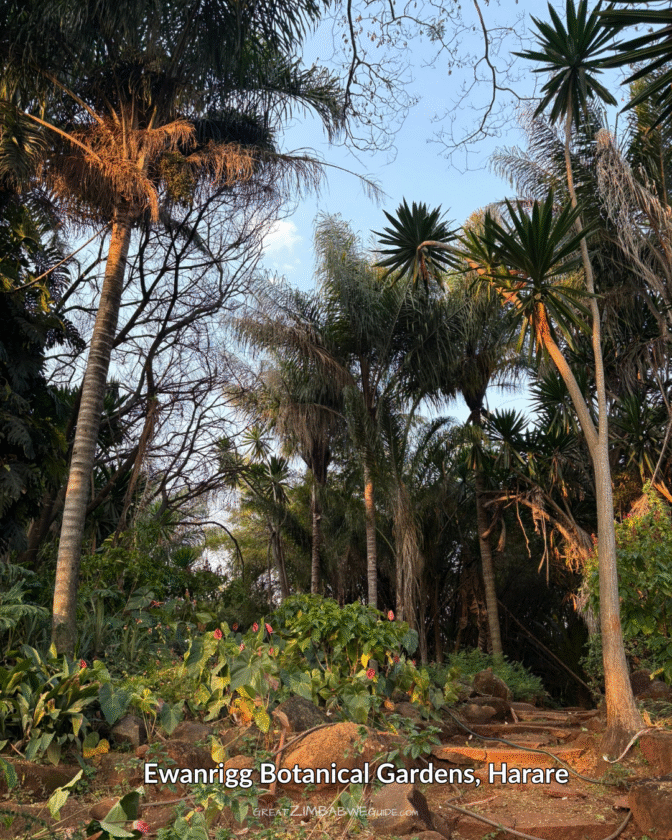
Ewanrigg Botanical Gardens Harare: Still worth the visit
Located 38 km from Harare city centre, Ewanrigg Botanical Gardens are run by ZimParks, the government agency responsible for conserving, protecting, and managing Zimbabwe’s national parks, wildlife estate, and plant reserves. This article gives key info on how to make the best of your visit.
My most recent trip to the gardens was in August 2026, and I’ve visited numerous times over the years. Ewanrigg has been a mainstay for Harare picnic-makers and nature lovers for generations. Honestly, the gardens are not currently at their peak – but they’re still an excellent, spacious place to visit, especially with kids. Staff are still watering plants and doing maintenance in the gardens, there’s still greenery, butterflies and birds aplenty. The more people who visit, the more resources can be invested back into the garden.
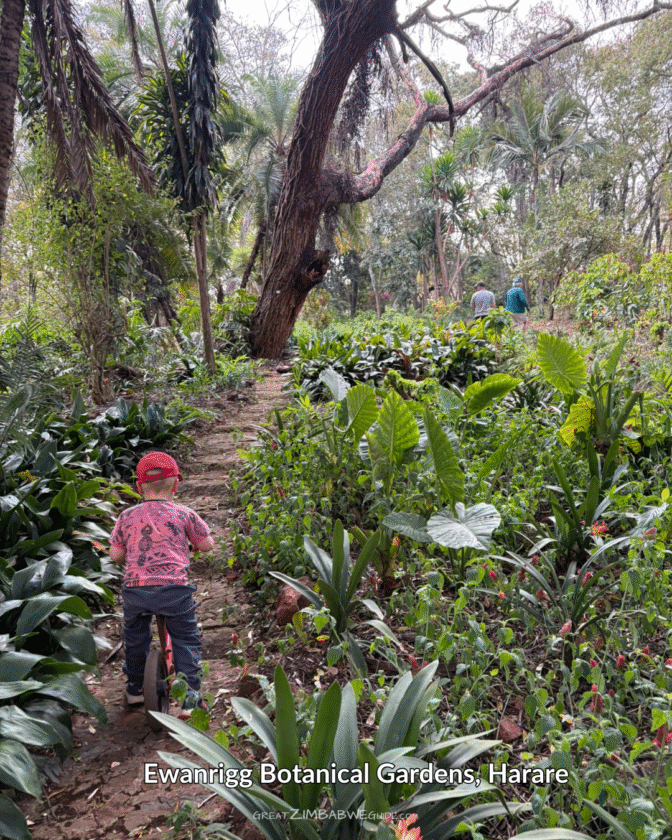
Key info about Ewanrigg Gardens
- Entry fees: US$3 for locals, $10 for SADC, $12 for international visitors, less for kids (2026). Google “Zimparks tarrifs” for latest prices.
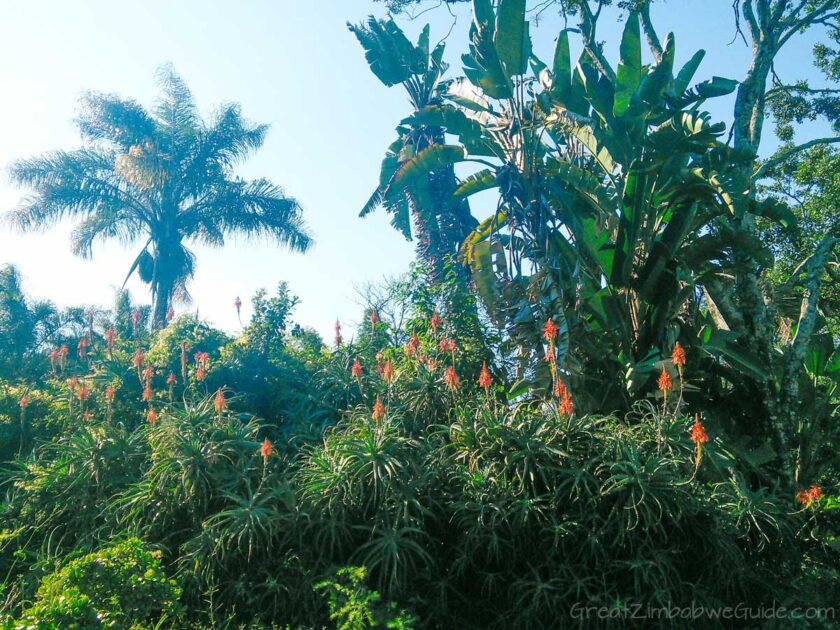
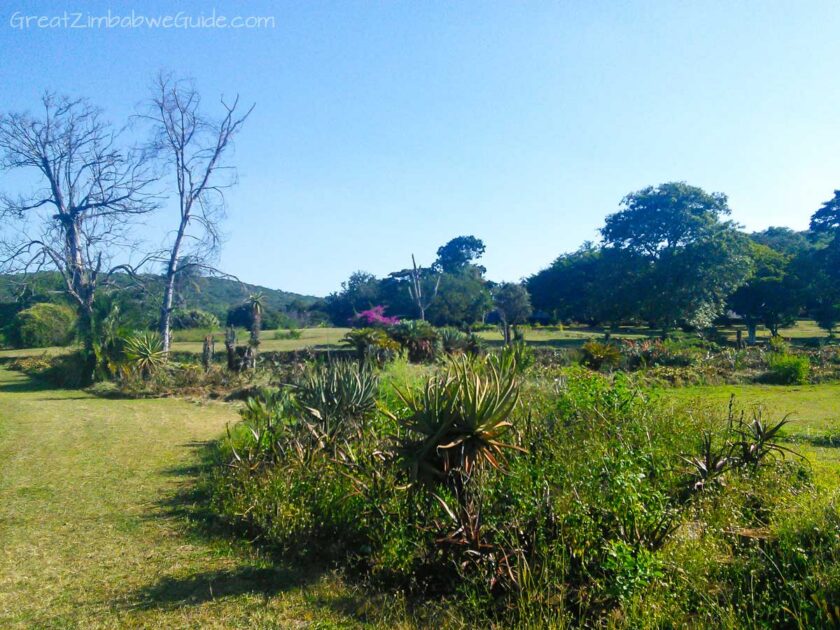
- The ‘habitats’ range from water gardens and ferns, to aloes and woodlands. There are small hills and a dam, so there are many different things to see.
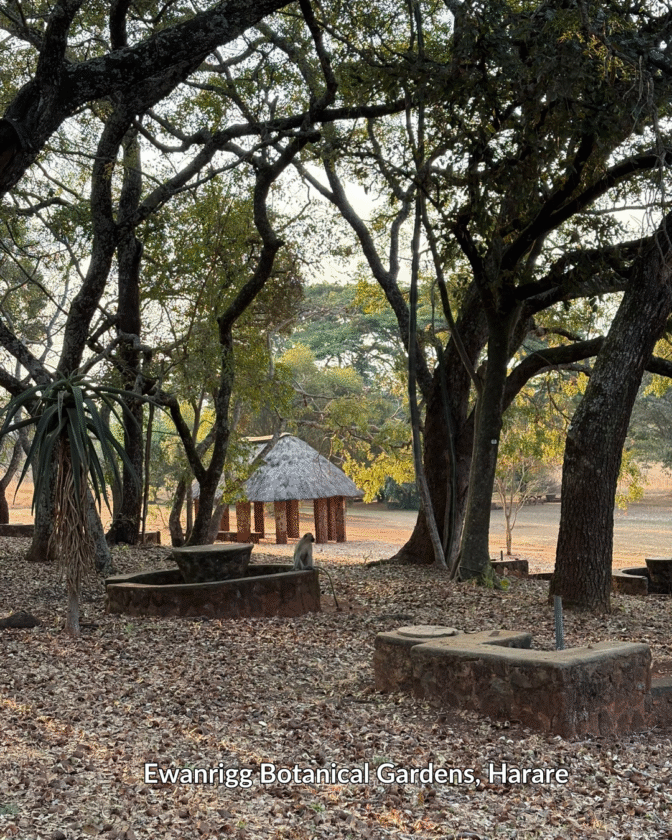
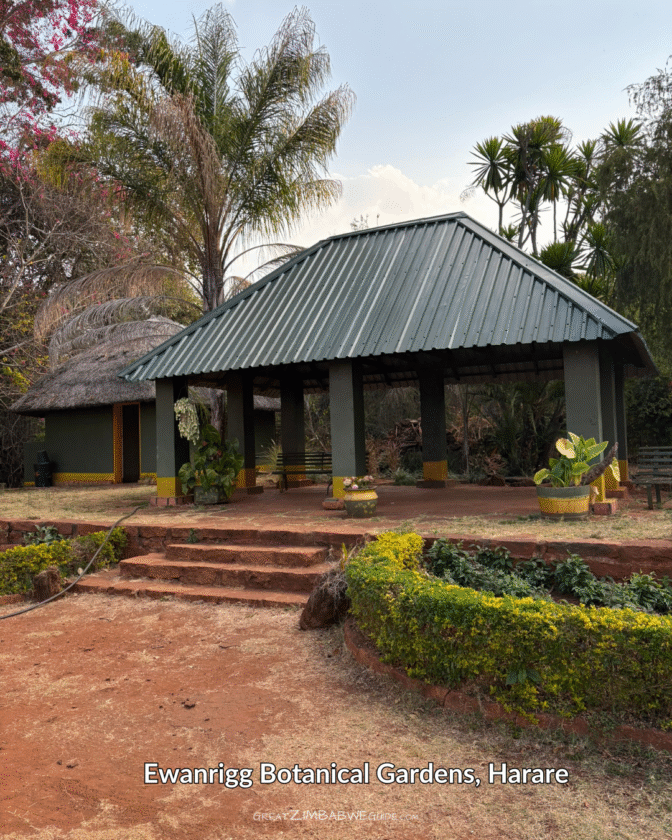
- There are multiple picnic sites with benches in varying styles for visitors to enjoy.
- Toilets are available and there are shelters to use if it rains.
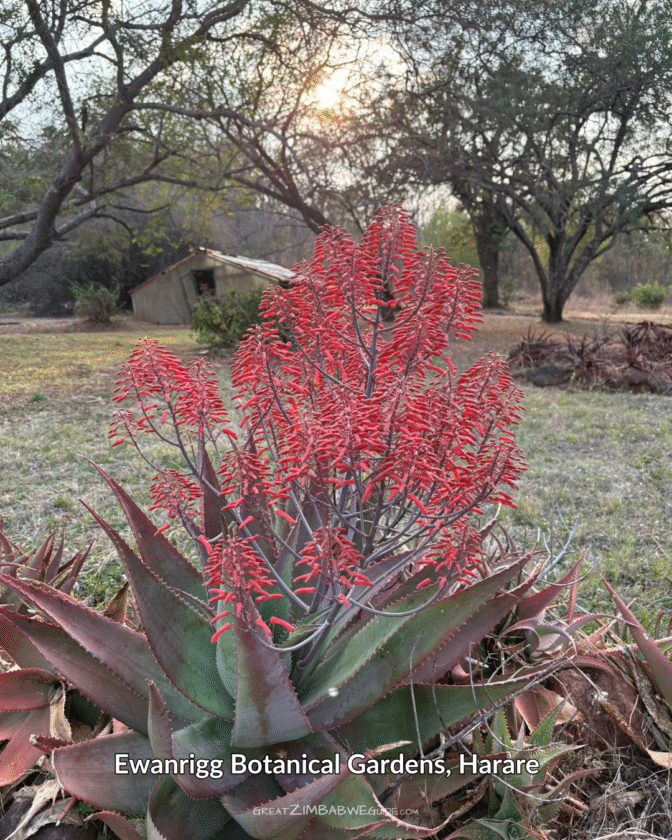
- Best time to see the aloes in flower: April to August. However, there are amazing things to see year-round.
- You don’t need to book ahead to visit Ewanrigg for the day.
- Activities include wilderness trails, bird spotting, cycling, picnics, plant nursery, event hire & camping (booked via Zimparks).
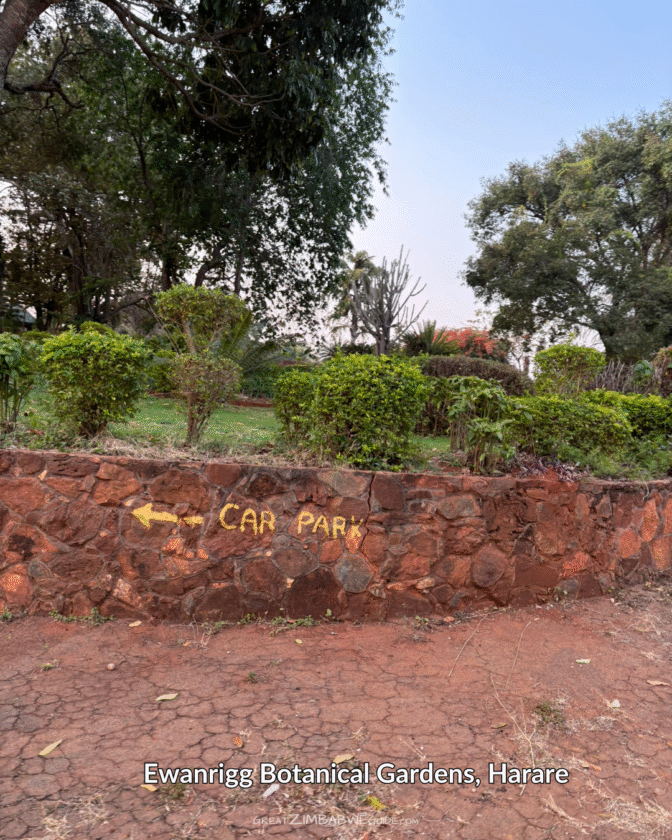
- Located around 38 km from Harare city centre; off the Shamva Road to the northeast of Harare. The location is on Google Maps and it is signposted.
- It is family friendly and children can walk around freely (there is no predatory wildlife here).
- A 4×4 vehicle is not required to get there.
- The cafe was not open in 2026.
History and significance of Ewanrigg Gardens
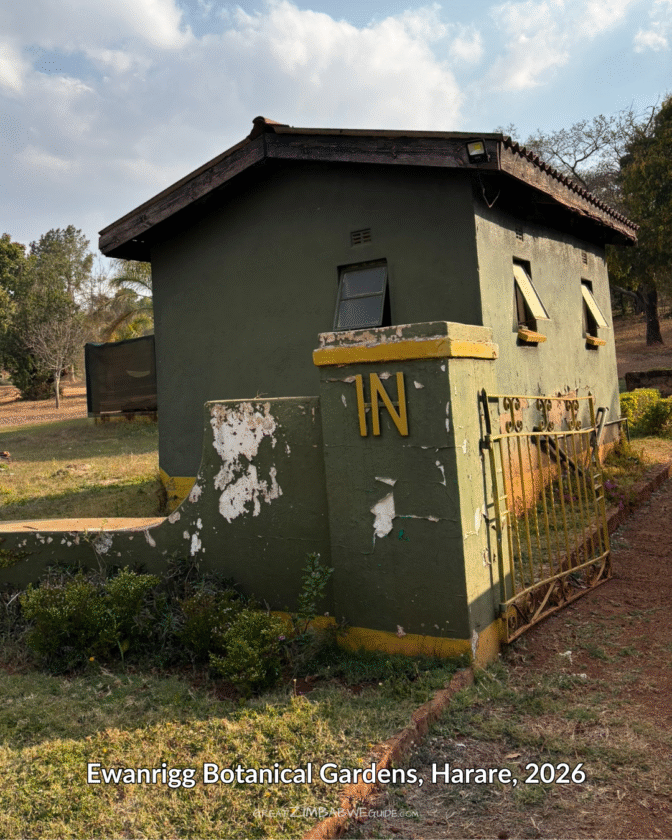
Harold Basil Christian bought the land started a collection of plants here around 1914. He carried out decades of extensive research and work on the area, then donated the gardens to the nation upon his death in 1950. The reason for the name is uncertain, but Christian’s English family home was called Ewanrigg Hall, and his brother was called Ewan, so one of these are most likely. ‘Rigg’ is derived from Old Norse (hryggr) and is common in Northern English and Scots dialects, meaning a “ridge” or long hill, which suits the terrain of this land.
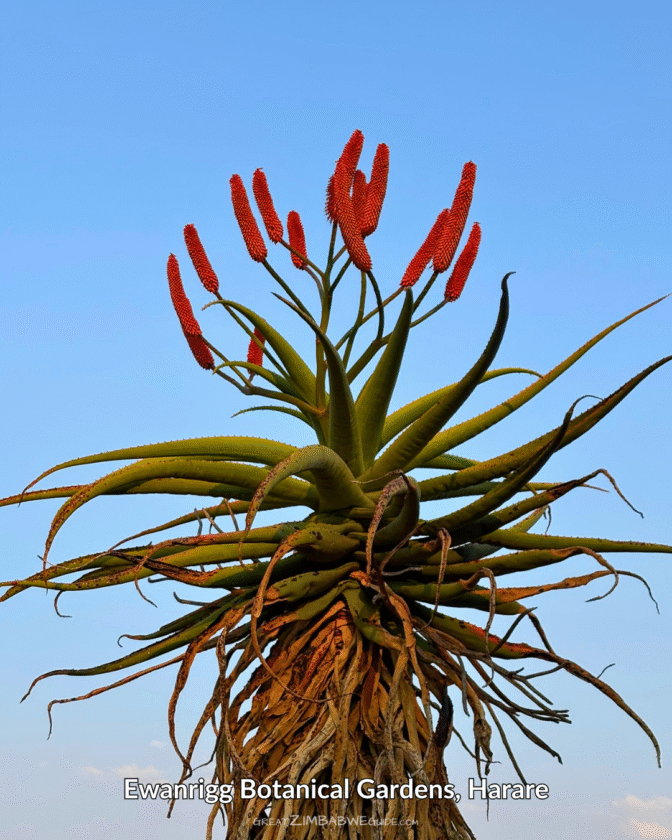
Ewanrigg is particularly famous for having one of the largest collections of aloes and cycads in the world. Aloes are considered one of the most evolutionary successful and unique groups in the plant kingdom. The countries of Zimbabwe, South Africa, Namibia, Botswana, and Mozambique are the biodiversity epicenter for aloe species.
More about the history of Basil Christian and his aloe research can be found here.
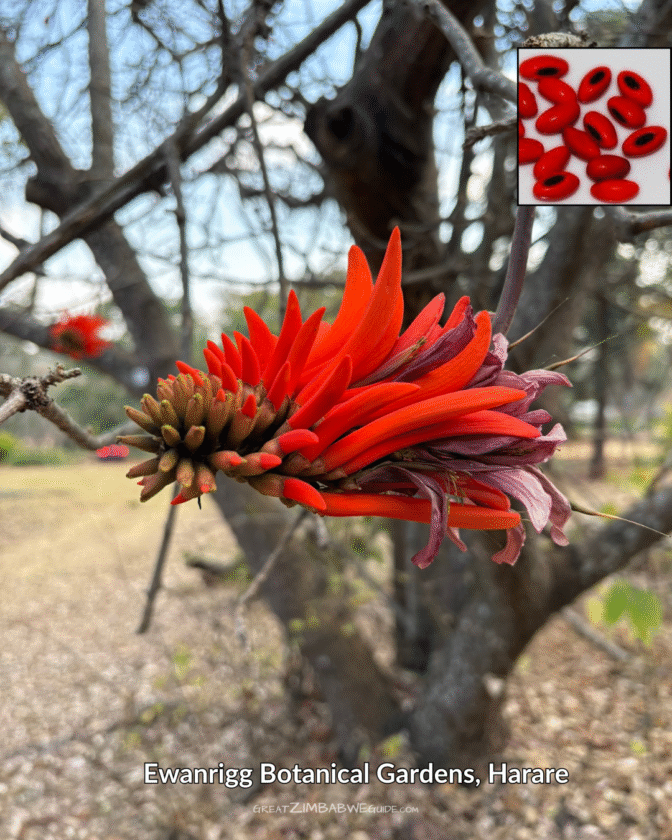
We saw an amazing Lucky Bean Tree (Erythrina lysistemon). The seeds (top right) are called lucky beans. They are traditionally collected as good luck charms, or threaded together to make necklaces and crafts.
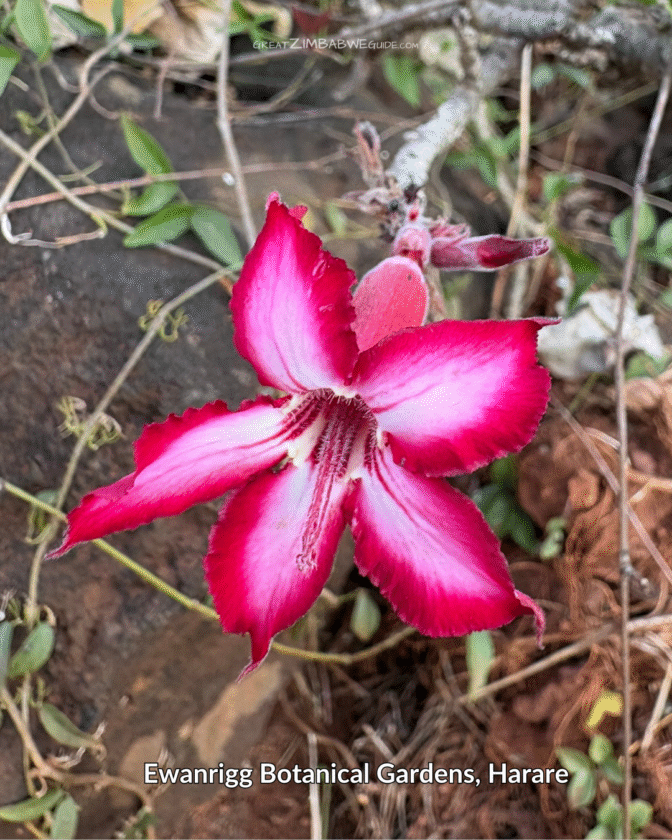
One of my favourite Zimbabwean plants is the Sabi star (Adenium multiflorum) (above), also called the Impala lily or Desert rose. In Zimbabwe it is a Specially Protected Plant, meaning it is strictly illegal to harvest, damage, or remove from its natural habitat without a government permit.
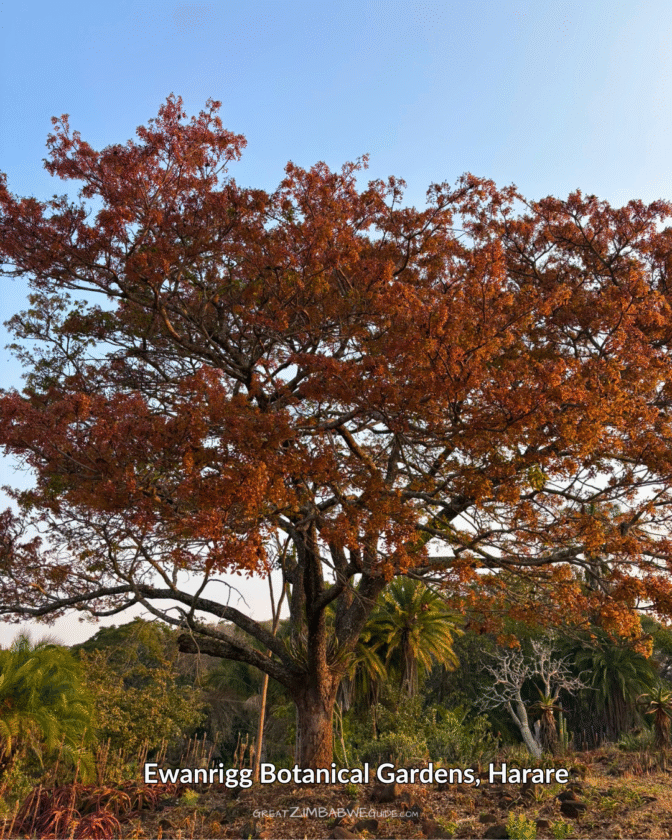
And you can’t not love the Msasa trees (Brachystegia spiciformis) (above): the queen of Zimbabwean trees – and very rare in neighbouring South Africa.
Areas of Ewanrigg Botanical Gardens
- Basil Christian’s house site
- Memorial plaque
- Original aloe garden: Aloes are considered one of the most evolutionary successful and unique groups in the plant kingdom. They have thick, fleshy leaves and tubular flowers.
- Cycad grove: Often called “living fossils,” cycads trace back to the age of dinosaurs. They look like small ferns or palm trees.
- Herb wheel
- Hybrid aloe hedge
- Water garden slope
- Indigenous cycads
- Arboretum
- Nursery
- Hill steps
- Tourist office
- Plant shop
- Main entrance and plant sales
- Bamboo
- Indigenous trees
- Curator’s office
- Brachystegia speciformis (Msasa / Musasa tree): A Miombo woodland celebrity, famous across Zimbabwe for its spring foliage (August–September) of vivid shades of bright crimson, purple, and copper-bronze
- Juniperus procera (African juniper / African pencil-cedar): Notable for being the only juniper species native to the Southern Hemisphere
- Aloe ortholopha (Serpentine aloe): Endemic strictly to the Great Dyke mineral belt in Zimbabwe
- Julbernardia globiflora (Munondo / Mnondo tree): One of the dominant tree species in the Miombo woodland ecosystem of Zimbabwe
- Kalanchoe: Known for their thick, water-retaining leaves, colorful flower clusters, and drought tolerance
- Clivia (Bush lily): flowering, shade-loving perennial plants native to Southern Africa
- Adansonia digitata (African baobab): iconic, tree species famously found in the hot, arid regions of sub-Saharan Africa
The above areas are listed on maps of Ewanrigg.
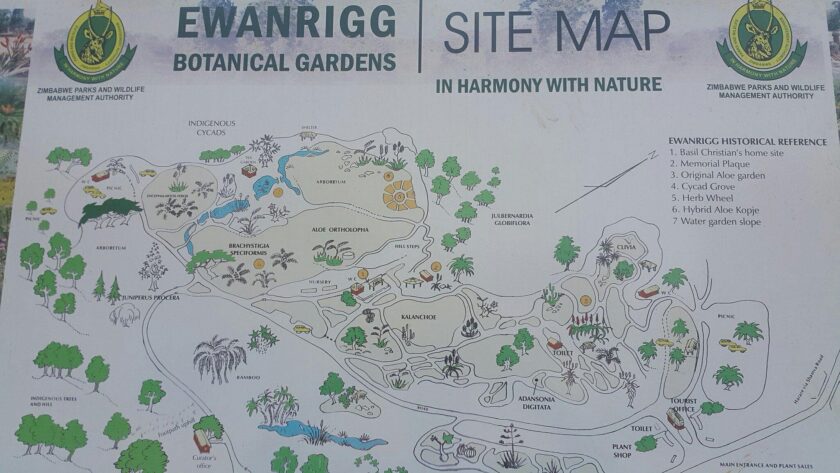
Top tip: If you’re into treasure hunting or want to set a challenge for the kids, find the brass plaque with Harold Christian’s name on it – this was the spot where he planted his first aloe. It is listed on the map, although the map was sun-bleached and almost unreadable when we were there. Perhaps save a digital version of the map to your phone first.
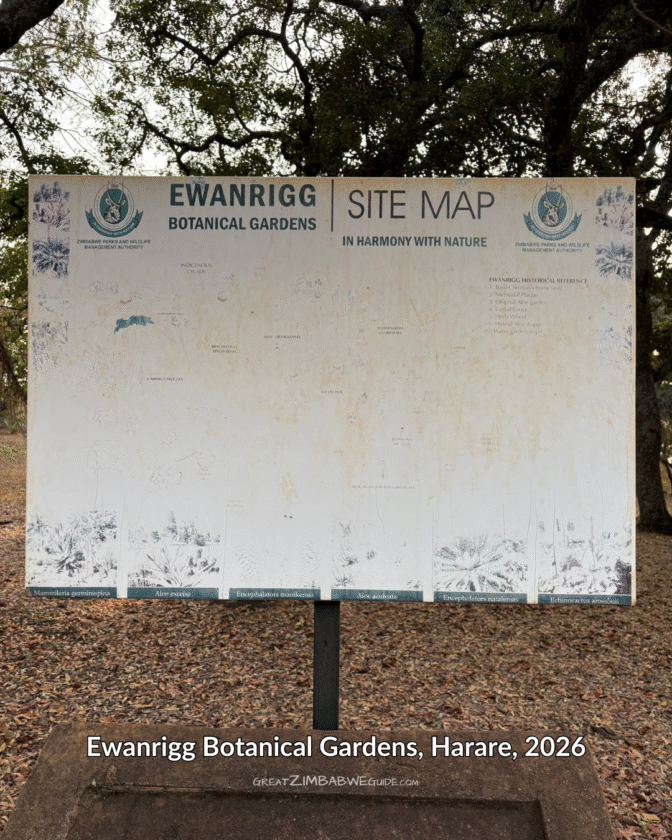
At the entrance, there is a numbered sign showing significant plants in the garden, with small matching plaques on the actual plants to help with identification.
I see that the Flora of Zimbabwe society has also published a list of plants at Ewanrigg – you could print this out ahead of time if so inclined.
Seasonal sights at Ewanrigg
April to August
- These are the cooler months in Zimbabwe, and June to August is generally less ‘green’ visually than other months of the year.
- However, April to August is probably the best time of year to go to Ewanrigg. The aloe gardens burst into brilliant shades of crimson, orange, and yellow.
- Sunbirds, such as Copper, Purple-banded, Miombo Double-collared, Variable, White-bellied, Scarlet-chested, Amethyst and Western Violet-backed, can be spotted.
- The Violet-backed sunbird is especially rare, but they can be seen on the large Acrocarpus coffee shade tree (Acrocarpus fraxinifolius / Pink Cedar) near the Warden’s house, rather than on the aloes (according to BirdLife Zimbabwe).
- The cracking of the pods of Msasa trees in July and August are one of the pure joys of being in Zimbabwe. Their russet-toned leaves are most apparent in August and September.
- Black-eared Seedeaters are recorded occasionally, with the best chance of spotting them around September, when the surrounding miombo woodlands come into flower.
October to February
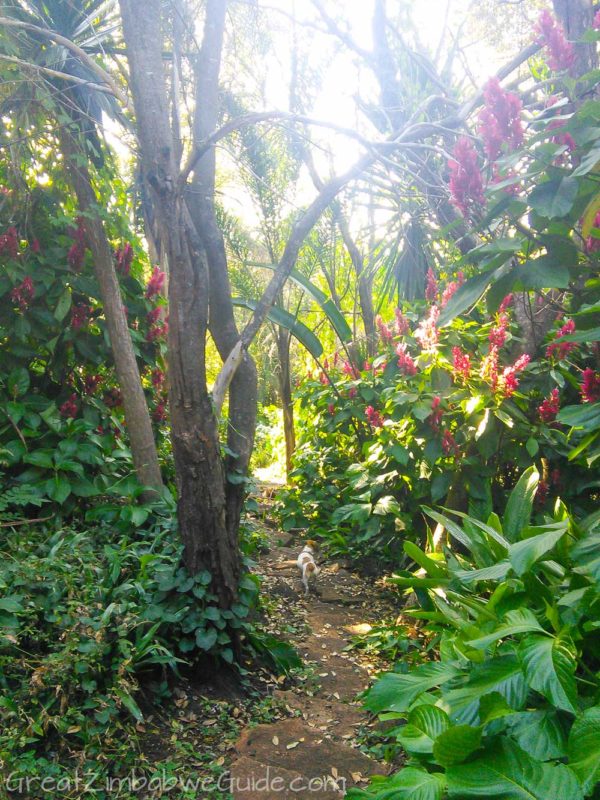
- When the rains usually arrive in November and December, the gardens become more lush and dense, especially in the water garden area.
- This is the flowering time for Aloe rhodesiana (Rhodesian Aloe): this unique, lower-growing succulent native to the Eastern Highlands breaks all the genus rules by coming into its peak flowering period between October and February.
- See the Plumeria (Frangipani) tree in the cultivated garden sections around the old house site. The large frangipani trees are usually in full summer bloom November to April, covered in highly fragrant pink, white, and yellow spiral blossoms.
- The Miombo woodlands are dense and full of fruit during December, so this is the peak season for summer breeding plumage among Ewanrigg’s birds. Look for bright yellow Yellow-mantled Widowbirds displaying over the long grasses, alongside a wide variety of migratory cuckoos.
- The Summer months of December to February bring in many migrant birds, and the Yellow-mantled Widowbirds show off their breeding plumage.
Bird watching tips for Ewanrigg Gardens
- BirdLife Zimbabwe has compiled a bird species list for Ewanrigg, which features birds such as the Bateleur Eagle, Hamerkop, Greater Honeyguide, Greater Blue-eared Starling, and Lilac-breasted Roller. Why not save it on your phone and use it during your visit.
- Rare species include the Streaky-breasted Flufftail, Black-eared Seedeater, and Grey-headed Parrot.
- Near the indigenous bamboo, look for mixed flocks of Bronze Mannikins, Red-backed Mannikins, and Magpie Mannikins which are frequently seen together.
- Explore the trail leading from the bamboo toward the ponds where you may catch a glimpse of the Red-throated Twinspot hiding in dense underbrush.
- The previous sections of this article includes notable bird sightings during particular months of the year.
List of plants found at Ewanrigg Botanical Gardens
I have extracted a list plants found at Ewanrigg Botanical Gardens from the raw data on the Flora of Zimbabwe website, displayed in a more accessible format.
Read it at List of plants found at Ewanrigg Botanical Gardens, Harare, Zimbabwe, Africa.
More photos of Ewanrigg Botanical Gardens
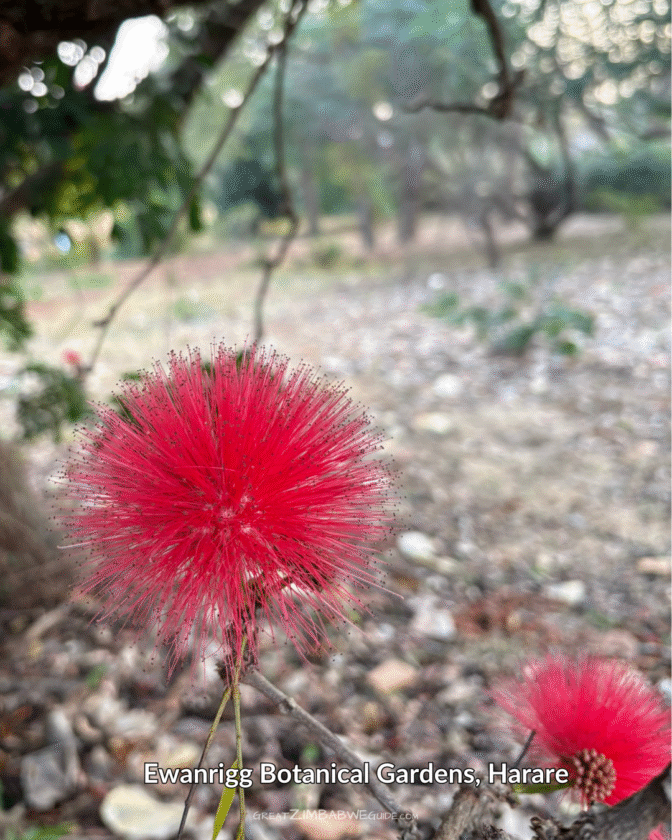
“But who is this hideous bird we can see, perched on a branch of the powder-puff tree?”
You might also like these articles:
- Mukuvisi Woodlands Harare: Key info 2026
- Best places to visit in Harare: Top activities and sights
- Day trips from Harare: Best excursions
- Great places to go with younger kids in Harare
- Holiday diary of Cape Town & Zim: The Zimbabwe leg
Follow Great Zimbabwe Guide on social media so that you don’t miss anything: Facebook (@GreatZimbabweGuide), YouTube, TikTok & Instagram(@GreatZimGuide). You can also ask me questions on social media if there’s anything specific you want to know.
Great Zimbabwe Guide gives travel tips, information and inspiration about Zimbabwe, Africa. We share stories of Zimbabwe’s talented people, world-class wilderness & wildlife safari experiences, all wrapped up in an unmatched climate.
Do you have a question about visiting Zimbabwe? Start with the Quick-reference list of travel advice.
Get our free Zimbabwe travel information via email! Sign up to our newsletter here.
If you would like to write an article for Great Zimbabwe Guide travel blog, just email greatzimguide@gmail.com.
Are you planning a Zimbabwe holiday but need specialist help? Just contact me and I’ll recommend a great travel advisor. Alternatively, I offer a consultation service to analyse your suggested itinerary and check for any problems.






Leave a Reply